Portraits in silhouette: the complete guide to shadow art
The word "silhouette" started as an insult. In 1759, Etienne de Silhouette became France's Finance Minister during the Seven Years' War. His austerity measures were so severe, so stripped-down, that his name became shorthand for anything done on the cheap. Outline portraits cut from black paper cost almost nothing. They became known as "a la silhouette." The insult stuck. The art form outlasted the man by centuries.
Portraits in silhouette have a long, strange, beautiful history. They were the democratic portrait, the affordable way to be remembered before photography existed. They traveled from European courts to American parlors, from Victorian fairs to modern nurseries. Today, silhouette art is having a genuine moment, appearing on gallery walls, in birth announcements, and across the ever-growing world of custom portrait gifts. Benjamin Moore named their 2026 Color of the Year "Silhouette," a rich warm neutral, which tells you something about where the cultural conversation is right now.
This guide covers everything. You'll find the full history of silhouette portraits, the four main styles, how they're made, which poses work best, what occasions call for them, how to frame and display them, and what real custom portrait art looks like when it goes beyond the shadow.
A short history of silhouette portraits
Long before "silhouette" meant anything, the idea was already ancient. Greek and Roman painters traced the outline of a person's shadow cast by lamplight or sunlight onto walls. The profile, not the full face, was how antiquity recorded a face. Roman coins showed emperors in profile. Italian Renaissance painters put noblewomen in strict profile to connect them to that same classical authority. Artists like Fra Filippo Lippi and Pisanello favored the profile view specifically because it referenced ancient coinage, connecting their subjects to permanence and power.
The formal art of cutting paper profiles became widespread through the mid-18th century in Europe. These weren't curiosities. They were serious portraits made for serious reasons: to remember someone, to mark a moment, to prove a person had been real. Common people couldn't afford oil painting. A silhouette cut from black paper cost a shilling or two. A painted portrait cost a small fortune.
During the golden age of silhouette art, roughly 1760 to the 1840s, these portraits served a genuine social function. Silhouette artists set up at markets, fairs, and shopping arcades. A skilled cutter could produce a likeness in under a minute. Auguste Edouart, the French-born artist widely considered the greatest silhouettist of the 19th century, cut full-length likenesses from life with scissors alone. In three years working in Edinburgh, he produced approximately 5,000 individual portraits. His subjects included Sir Walter Scott, Henry Wadsworth Longfellow, Henry Clay, Daniel Webster, and Victor Hugo. His work now lives in the Smithsonian National Portrait Gallery, the Museum of Fine Arts Boston, and the National Portrait Gallery London.
Photography killed the commercial silhouette around the 1840s. The daguerreotype offered something paper cutting couldn't: a face in full tonal range, without an artist's skill as mediator. Silhouettes didn't disappear, but they moved from commercial necessity to decorative tradition. They became heirlooms, keepsakes, nursery art.
Today, silhouette portraits exist across every medium: hand-cut paper, painted plaster and glass, photography, digital design, and AI-generated art. The market for personalized gifts, which includes custom silhouettes, is substantial. The global personalized gifts market was valued at $30.84 billion in 2024 and is projected to reach $63.28 billion by 2032. The global wall art market sits at $63.61 billion and is growing. Silhouette art is part of both stories.
The four types of silhouette portraits
Not all silhouettes are made the same way. The technique changes everything: the look, the price, the use case, the emotional weight. Here's what you're choosing between when you order or create a silhouette portrait.
Paper-cut silhouettes
This is the original format. An artist cuts the portrait from black paper using small, sharp scissors or a blade. There are two methods: standard cut, where the exterior paper is pared away to reveal the shape, and hollow cut, where the profile itself is removed and black paper or silk is placed behind the opening.
Hand-cut silhouettes have warmth that no digital process can replicate. The slight irregularities in the line, the evidence of human hand and human decision, are not flaws. They are the point. Pre-dyed black paper wasn't commercially available until 1826, which means earlier silhouettes were made from white paper the artist had to blacken themselves, a fact that makes antique pieces especially interesting from an art history standpoint.
Hand-cut pieces are the most labor-intensive and the most expensive silhouette format. A skilled artist typically charges $75 to $150 or more for a single portrait. The contemporary market for hand-cut originals is small but devoted.
Painted silhouettes
Popular between 1760 and 1860, painted silhouettes were applied in black ink or paint to paper, plaster, glass, or porcelain. The line quality differs from cut pieces. Edges are softer, and the artist could imply texture in hair and collar detail that cutting couldn't achieve. John Miers, one of the most prolific silhouettists of the late 18th century, used soot mixed with beer to render delicate details of hair, lace, and the curve of a neck.
Some artists painted on the underside of glass and left a deliberate gap between the silhouette and its backing paper. That gap created a shadow within the frame: a portrait that literally cast its own shadow. This three-dimensional optical effect is one of the most striking technical achievements the form ever produced, and it prefigures the shadow box framing conventions still used today.
Photography-based silhouettes
The photographic silhouette works through backlighting: place the subject between the camera and a bright light source, expose for the background, and the subject falls into shadow. The profile becomes pure form.
Golden hour, the period just after sunrise and before sunset, is the natural environment for this work. The warm, colored sky creates a rich backdrop, and the low, directional light makes backlighting intuitive. Wedding and engagement photographers work this style extensively. A couple facing each other against a burning sunset sky, reduced to pure outline and the space between them, is one of the most enduring images in contemporary photography.
The photographic silhouette is distinct from its paper-cut ancestor in one important way: it isn't always a profile. Front-facing and three-quarter-view photographic silhouettes work because the lighting does the abstraction rather than the angle. The profile is still the strongest composition, but photography gives more compositional flexibility.
Digital and AI-generated silhouettes
Modern digital tools allow artists to convert a photograph into a clean silhouette using image editing software. The process is technical but relatively quick: isolate the subject, remove the background, fill the subject shape with solid black, place on a chosen background. Contrast and edge controls determine how much fine detail survives.
AI image generation has expanded the category further. Portrait platforms now produce stylized silhouette-influenced art, blending the graphic clarity of the silhouette with the tonal richness of painted portraiture. The broader AI portrait market is growing quickly: some platforms report 400% increases in user-generated portraits over recent years.
Digital and AI silhouettes are the most accessible format by price, ranging from a $15 Etsy digital download to custom AI-generated artwork at higher price points. For gifts for art lovers, art gifts for teens, and art gifts for teachers, digital portrait formats offer a wide accessible range.
The portrait that rises above the shadow
Here's the honest thing about silhouettes. They're beautiful. They're elegant. They carry 250 years of human meaning. But they capture the edge of a person, not the person.
The silhouette gives you the profile. It doesn't give you the color in someone's eyes, the warmth in their expression, the laugh lines beside their mouth, the particular way their face holds light. The silhouette is the outline. It's the shape without the substance.
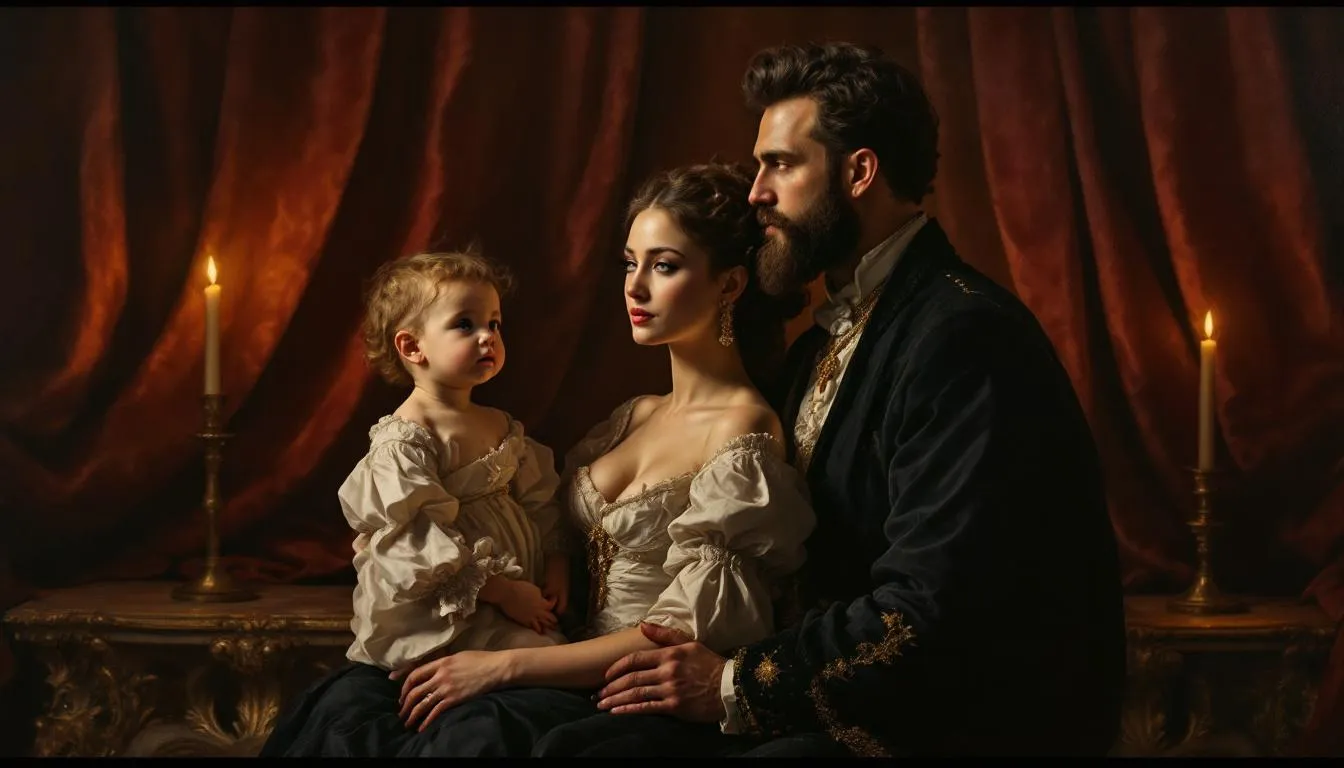
That's exactly where Fable comes in. Fable transforms your personal photographs into richly rendered classical and renaissance-style portraits, the kind that used to require weeks from a master painter and the budget of minor nobility. A custom portrait from Fable gives you everything the silhouette can't: color, expression, personality, and that unmistakable sense of someone being truly seen and commemorated in full.
When you think about silhouette portraits as gifts, think about what you actually want to give. The silhouette is elegant shorthand. A Fable family portrait is the full painting. One is the shadow. The other is the light source that casts it.
For birthdays, anniversaries, Mother's Day, nursery dedications, wedding gifts, and almost every occasion where a silhouette portrait would feel meaningful, a custom classical portrait from Fable does more. It lasts longer. It says more. It captures the specific face of the specific person you love, in full, with everything that makes them recognizable.
You can explore couple portraits, kids portraits, and self portraits alongside family portraits on Fable's platform. The how it works page walks through the upload-and-order process. The pricing page covers current options.
Popular silhouette portrait poses
The pose makes or breaks a silhouette. Because the art form strips away color, texture, and expression, everything lives in the outline. A weak pose produces a weak silhouette. A strong pose produces something immediately recognizable and impossible to forget. These are the poses that work.
Profile head and bust
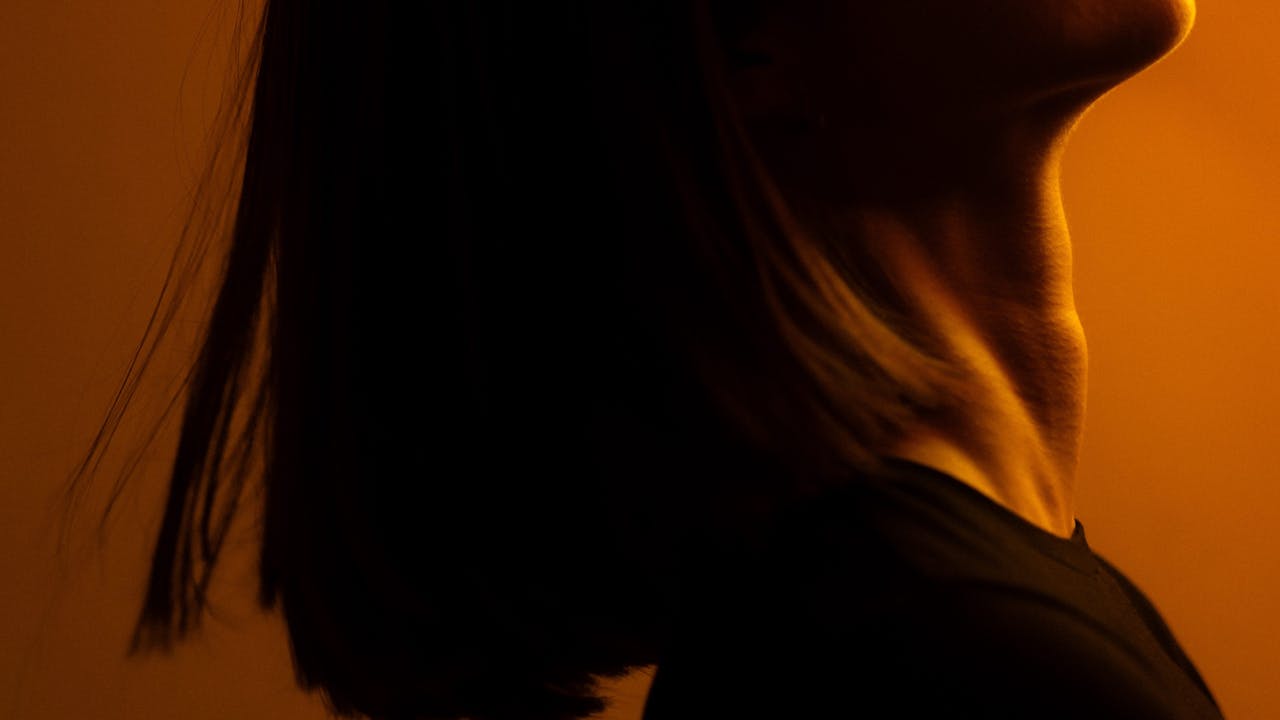
This is the direct descendant of the 18th-century paper-cut tradition. The subject turns 90 degrees to camera or artist. The shoulders are squared or turned slightly toward camera. The head is in strict profile.
The profile reveals what a front-facing view obscures: the nose bridge, the curve of the brow, the lip line, the jawline. These features are unique. An experienced cutter can identify specific individuals from profile alone. The silhouette works because the profile is already a signature.
For a senior portrait or formal adult portrait, the profile bust reads as dignified, composed, classical. It connects the subject to the long history of profile portraiture stretching back to Roman coins and Renaissance painting. The format has survived 2,000 years because it works.
Full body standing
Full-body silhouettes work particularly well for children at specific milestone ages, athletes mid-movement, or couples. The full body demands more of the pose: arms and legs must be slightly separated from the torso, or they read as a single merged shape. Posture matters enormously. Slumped shoulders flatten the entire composition.
For children, capturing a full-body silhouette at newborn, first birthday, first day of school, or another significant age is a popular nursery art tradition. The silhouette at age three versus age ten tells a story of growth that no other portrait format quite matches. The child becomes art, and art doesn't age the way a snapshot does.
Mother and child
One of the most enduring silhouette compositions in both painted and photographic tradition. A mother holding an infant, or bending toward a young child, creates an immediately readable composition: two bodies, one relationship, no explanation needed. The emotional content lives entirely in the geometry.
Maternity portrait ideas frequently include silhouette photography as one of the most flattering and timeless formats for pregnancy. The profile view shows both the mother's face and the curve of the belly in a single clean line, capturing a body at a moment that will never return.
Couples and romantic poses
Two people facing each other, foreheads nearly touching, or kissing against a bright sky. The photographic silhouette strips romantic portraits to pure feeling. No wardrobe decisions. No skin concerns. Just shape and connection and light.
Couples silhouettes are strongly associated with engagement photography, wedding portraits, and anniversary art. A custom anniversary gift portrait based on a silhouette moment is one of the more original and lasting formats for couples who want something different from a standard framed photograph.
For wedding gift art specifically, a silhouette of the couple from their wedding day photograph makes a particularly meaningful first-anniversary gift. The traditional first-anniversary material is paper, and a paper-cut or printed paper silhouette fulfills that tradition with genuine elegance.
Family groups
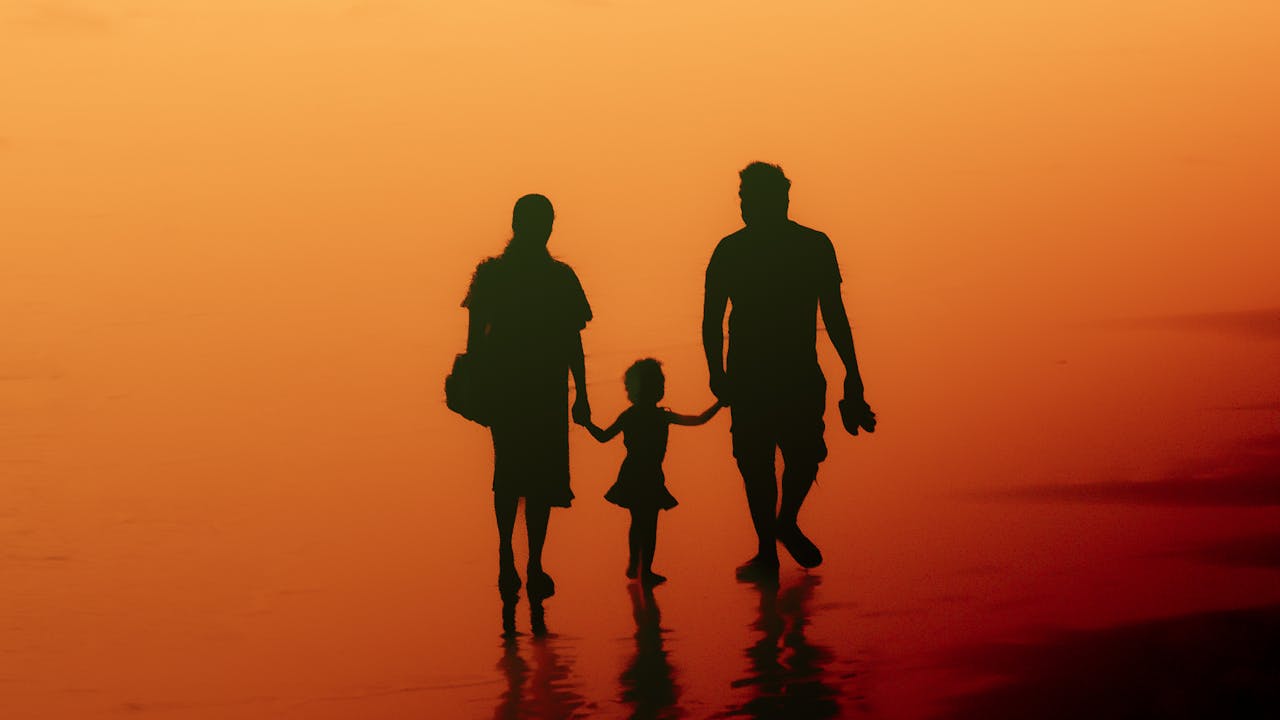
Family silhouette portraits present a specific posing challenge: every person must be clearly separated in the frame, or the group reads as an undifferentiated mass. Space between bodies is the priority. In photography, this often means staggering heights so each person has clear sky or background visible above their head.
Family portrait outfits matter in silhouette work more than you might expect. Loose, shapeless clothing muddles the outline. Form-fitting clothes, or clothing with distinct structural shapes, like a full skirt, a blazer shoulder line, or a dress with defined waist, create cleaner silhouettes.
Pets complicate family silhouettes in the best possible way. A dog sitting between family members, or a cat perched on a parent's shoulder, adds personality to a composition that otherwise relies entirely on geometry. Pet family portraits in silhouette format are a growing category for exactly this reason.
For more on composing families in outdoor settings, the guide on fall family portrait ideas covers posing principles that apply equally well to silhouette photography.
Pet silhouettes
Pet portraits in silhouette have a dedicated following. The reason is simple: different breeds have unmistakably different outlines. A Dachshund silhouette is completely distinct from a Greyhound's. A Persian cat looks nothing like a Maine Coon in profile. Breed-specific shape is already the identity, and the silhouette format makes that identity graphic and immediate.
Dog portraits and cat portraits in silhouette style are particularly popular as custom home decor and as memorial art following the loss of an animal. A memorial pet portrait rendered in silhouette has a quiet gravity that more illustrative formats sometimes lack. The restraint of the form suits grief.
For more elaborate custom pet art, custom dog portraits, royal pet portraits, regal pet portraits, and renaissance pet portraits offer fully rendered alternatives that give pets the full classical treatment, with color, costume, and painterly detail no silhouette can provide.
Action and movement poses
Running, jumping, throwing, dancing: silhouettes excel at capturing motion because the outline captures the gesture without the visual noise of photographic detail. A dancer mid-leap, a child mid-run, a horse at full gallop, these compositions work in silhouette in a way that's difficult to achieve in conventional portraiture. The movement becomes the portrait.
For gift ideas for horse lovers, a horse silhouette in motion, particularly a rearing or galloping composition, is a consistently popular format that reads beautifully in any equestrian home.
How silhouette portraits are made
The techniques are different enough to be worth understanding, whether you're making one yourself or commissioning a custom piece.
The paper cutting method
The traditional process begins with the profile. Either the artist traces the shadow of the sitter cast by a lamp or candle onto paper attached to a wall, or the artist works freehand from observation. The traced line is then cut with small, sharp scissors working from the outside in.
The physiognotrace, invented in 1786 by French instrument maker Gilles-Louis Chretien, mechanized this process. The device coupled two drawing instruments: one traced the sitter's profile on a viewing screen while the other simultaneously mapped a miniaturized version on paper. In Philadelphia from 1802 to 1805, Charles Willson Peale promoted the physiognotrace to such effect that it became what Peale himself described as "the rage." The physiognotrace prefigures the mechanization of portrait production that photography would complete 40 years later.
Contemporary hand-cutting is still done entirely by hand, with scissors. A skilled artist working from a profile photograph can produce a clean likeness in under an hour. Working from life, the best cutters are faster.
Photography technique
For photographic silhouettes, the technical priorities are:
Backlighting is everything. The subject must be placed between the camera and the light source. The camera is exposed for the bright background, not the subject. The subject underexposes and drops into shadow. Expose slightly darker than the meter recommends.
Golden hour is optimal. The warm, low-angle light of sunrise or sunset creates natural backlighting, rich background color, and a soft glow around the subject's edges that adds visual richness without revealing the subject's features.
Profile is the strongest composition. Shoot perpendicular to the subject, at eye level or slightly below. The low angle maximizes sky as background and elongates the subject's form.
Clothing defines the shape. Structured, form-fitting clothing creates cleaner silhouette outlines. Loose fabric creates amorphous shapes at the edge.
Separation is critical for groups. Each person in the frame must be visually distinct. Overlapping bodies read as a single mass. Stagger heights and leave visible space between subjects.
For photographers interested in the technical side, the guide on senior portrait poses covers body positioning principles that translate directly to silhouette composition, and the notes on senior portrait outfits address the clothing question from a practical standpoint.
Digital creation
The digital process works backward from photography. A clear, sharp photograph of the subject is imported into image editing software. The subject is isolated from the background, the background is removed, and the subject shape is filled with solid black. A white, cream, or colored background is placed behind. Edge adjustment controls determine how much fine detail, like hair texture or clothing folds, is retained or smoothed.
For more stylized digital silhouettes, vector conversion tools create clean geometric shapes from photographic subjects, producing a more graphic, illustration-quality output. This style is particularly popular for nursery art and branded design work.
What makes a strong silhouette portrait source photo
If you're commissioning a silhouette from a photograph, the quality of the source determines everything. Here's what to look for.
Profile angle. The strongest silhouette portraits start from a strict profile photograph: subject turned 90 degrees to camera, chin level, clean background. A three-quarter view can work for full-body compositions but loses the definitive profile line that makes silhouettes immediately readable.
Clean background. For photographs that will be converted to silhouette art, the background behind the subject should be as clear as possible. A busy background complicates isolation and edge definition. A white wall or open sky works well.
Good posture. Slouched shoulders and a tucked chin flatten a silhouette. The neck extends, the chin is level or slightly elevated, the shoulders are back. Good posture creates strong lines. This is the single most common correctable mistake in silhouette portraits.
Distinct facial features. The nose, brow, and lip profiles are the signature elements of a head silhouette. Clear, distinct features read more powerfully in outline than subtler, flatter features.
Hair definition. Loose flyaway hair creates noise in the silhouette's edge. Pulled-back hair or naturally defined hair produces a cleaner outline. Hair doesn't need to be tied back, but awareness of the edge quality matters for the final result.
Clothing that defines the body. Structured jackets, fitted dresses, and clothes with clear shoulder lines create stronger silhouettes than loose t-shirts and baggy pants. The clothing is as much part of the composition as the body itself.
Separation for groups. Each person in a group silhouette source photo must be clearly separated from every other person, with visible space between bodies. If two people are touching or overlapping, they'll read as one merged shape in the final silhouette.
Best occasions for silhouette portrait gifts
Silhouette portraits are strong across a wide range of gift occasions. Their graphic simplicity and personal specificity make them appropriate for almost any relationship and milestone.
First anniversary (paper gifts)
The traditional first-anniversary gift material is paper. A hand-cut or printed paper silhouette of the couple, whether from their wedding day or a recent photograph, fulfills this tradition with real elegance. Silhouette couples portraits specifically marketed as first-anniversary gifts are widely popular on Etsy and through custom studios.
For anniversaries more broadly, a custom anniversary gift portrait is one of the more enduring options in the personalized category. A silhouette framed in matching ornate frames makes a striking presentation.
Wedding gifts
A custom silhouette of the couple, designed from their wedding portrait, is a wedding gift that stands apart from registry items. Wedding gift art in silhouette format is understated in a way that works in almost any home, regardless of decor style. It requires no knowledge of the couple's taste in objects. The portrait is inherently personal.
Mother's Day
Children's silhouettes gifted to mothers and grandmothers are one of the most consistently popular personalized gift options for a mom's first Mother's Day and for established mothers who have everything material. A silhouette captures a child at a specific age in a way that a photograph doesn't quite achieve. The child becomes art, and art doesn't age the way a snapshot does.
For art gifts for mom more broadly, the silhouette sits in a category of gifts that says "I thought about this specifically for you." It's not bought off a shelf. It's made for one person.
Baby shower and new parent gifts
A silhouette created from a newborn's first profile photograph is one of the most tender and thoughtful baby shower gifts. A push present in silhouette form, particularly a mother-and-baby composition, makes permanent something that passes too quickly.
Nursery silhouette art is a design staple for exactly this reason. The clean, graphic nature of profile silhouettes integrates into any nursery decor palette, and the personalization lifts it above mass-produced wall art.
Christmas and holiday gifts
Custom Christmas art gifts in silhouette style work for almost every recipient. A family silhouette, a pet silhouette, a portrait of a child as a holiday gift for grandparents: these consistently appear in top Christmas portrait ideas guides. The personalized element is particularly valued during the holidays, when generic gifts are the norm and something specific to the recipient stands out immediately.
Graduation
A graduation gift portrait in silhouette style, particularly a profile of the graduate in cap and gown, is an underused but excellent format. The formality of the silhouette complements the milestone nature of graduation. The traditional profile bust connects the graduate, visually, to a long history of portraits made to mark significant moments.
Memorial and pet loss
Memorial silhouettes are a growing category, particularly for animals. A silhouette rendered from a beloved pet's profile photograph, framed and displayed, is a quiet and dignified way to commemorate an animal that was part of the family. For memorial pet portraits specifically, the silhouette offers something different: it's an artistic interpretation rather than a photograph, and that slight distance can make grief easier to carry.
Father's Day and grandparents
A custom silhouette of grandchildren given to a grandfather makes a gift for grandfather that occupies a completely different category from socks and gift cards. A framed family silhouette is the kind of gift that gets moved to a desk or bedroom wall and stays there for decades.
Valentine's Day
A custom couple's silhouette is among the most personal Valentine's Day gifts. For a Valentine's gift for a wife, a silhouette of the two of you, or of her with your children, communicates something that flowers and chocolates cannot.
For people searching for the perfect gift ideas for seniors, a family silhouette portrait of children and grandchildren is a category that nearly always lands well. It's personal, it's art, and it doesn't require knowing what appliance they need.
How to display and frame silhouette portraits
The frame is part of the art. Silhouettes, with their strong contrast and graphic simplicity, need framing that responds to their nature.
Traditional framing
The Victorian convention was black art on white mat in a black or gilt frame. This high-contrast treatment maximizes the graphic impact of the silhouette and connects the piece to its historical context. Oval frames, extremely common in the 18th and 19th centuries, read as particularly traditional and appropriate for profile busts.
White frames with black mats, or colored mat boards (navy, forest green, burgundy), give silhouettes a contemporary feel while maintaining visual weight. The frame choice is a statement about how much of the historical silhouette tradition you want to reference and how much you want to modernize.
Shadow box frames
Shadow box frames create a gap between the art and the glass, producing dramatic depth. The gap creates a literal shadow behind the piece: a portrait that casts its own shadow. For hand-cut paper silhouettes, the shadow box presentation is the most authentic historical context. 18th and 19th-century cutters regularly displayed work this way.
Shadow boxes range from small 5.9 by 5.9-inch frames to large formats. The depth of the box, from less than half an inch to over two inches, determines how pronounced the shadow effect is. Deeper boxes create more drama.
Gallery walls
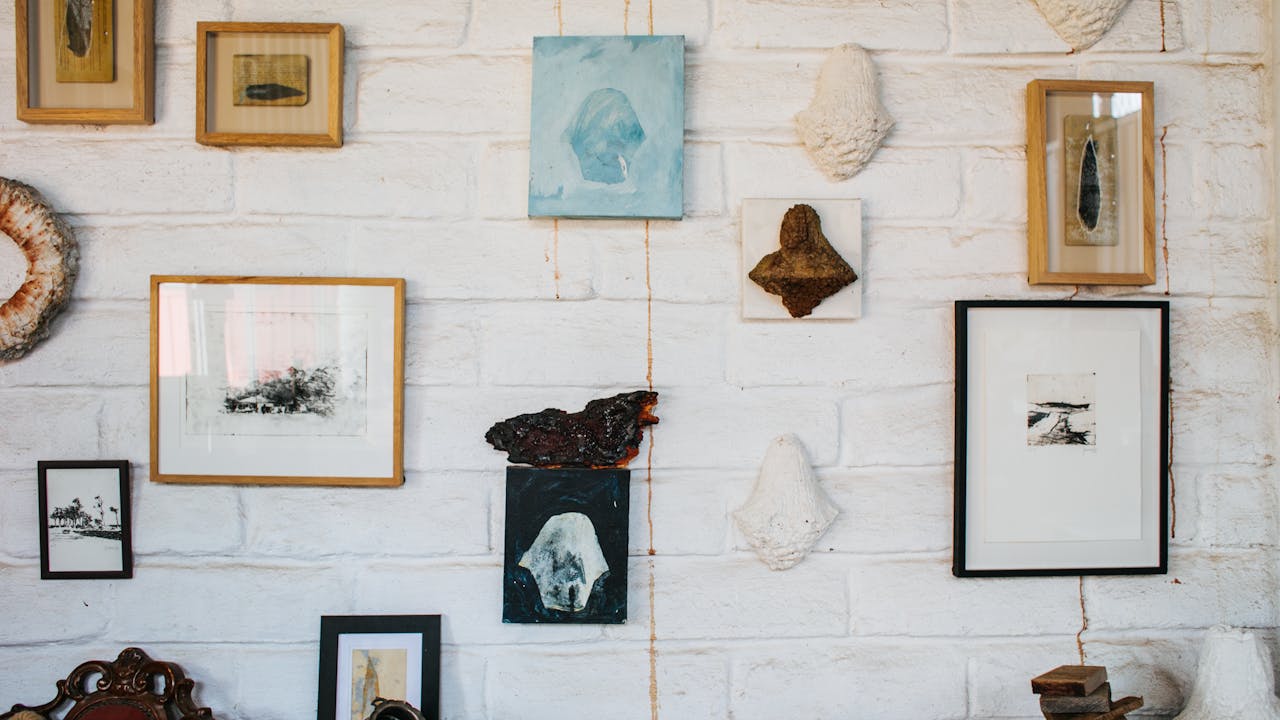
Silhouette portraits integrate cleanly into gallery walls because their monochromatic, graphic nature doesn't fight with other artwork. A set of silhouettes, framed consistently, makes a coherent gallery wall statement that works in traditional, contemporary, and eclectic homes alike.
For a family gallery wall, a row of profile silhouettes of each family member in matching oval frames is a classic treatment. One portrait per frame, same size, hung in a horizontal line: organized, personal, and visually satisfying in a way a collection of photos often isn't.
Abstract portraits and animal portraits mix productively with silhouettes on gallery walls. The key is consistent framing or consistent scale. Different art styles share a wall easily if the frames share a common logic.
Standard sizes for silhouette portrait prints
A 5x7-inch print works for desk frames and smaller accent walls. An 8x10 is the standard portrait size that fits almost any commercial frame. An 11x14 is the sweet spot for silhouette art displayed as a feature: large enough to read from across a room, proportionally right for most wall spaces.
For more on portrait orientation versus landscape for wall art planning, the portrait vs. landscape guide covers the decision-making process. For silhouettes, portrait (vertical) orientation almost always works best for head and bust compositions. Full-body and group compositions may work in either direction.
For more on portrait framing and presentation, the self portrait drawer guide touches on display principles that apply to silhouette work as well.
Pricing for custom silhouette portraits
Prices range widely depending on medium, complexity, and provider.
Digital silhouette files from Etsy artists run $15 to $35 for a single subject. These are print-ready files you print yourself at a local print shop or at home. Small additional fees typically apply per additional person in a group composition.
Professionally printed and mounted digital silhouettes range from $40 to $100 depending on size and framing. Framed pieces at boutique portrait studios typically run $80 to $200 or more depending on size and frame quality.
Hand-cut paper silhouettes by professional artists start around $75 for a single subject and can reach $150 or more for complex compositions with multiple figures. Hand-cut originals by established artists command the highest premiums, reflecting the skill and time involved.
Disney World, which maintains a live silhouette cutting program at the Magic Kingdom, charges $14 to $18 per person for a hand-cut silhouette produced in under a minute. It's one of the last examples of commercial silhouette cutting as real-time public entertainment.
Custom AI portrait art, which goes beyond the silhouette into fully rendered classical portraiture, sits at various price points. Check Fable's pricing for current portrait options that deliver more than an outline.
Famous silhouette artists and their legacy
Understanding who made silhouette art matter helps appreciate what the form can accomplish at its best.
Auguste Edouart (1789-1861) is the towering figure. French-born, he emigrated to Britain and later the United States. He cut full-length likenesses in profile using scissors alone, working entirely from life, requiring only one session with each sitter. His subjects included the exiled French royal family, Sir Walter Scott, Victor Hugo, Daniel Webster, Henry Wadsworth Longfellow, and Henry Clay. His work is held in major institutions on both sides of the Atlantic. In three years in Edinburgh alone, he produced approximately 5,000 portrait silhouettes. The scale of his output is staggering even by modern production standards.
John Miers (1758-1821) specialized in painted silhouettes on plaster, with soot mixed with beer as his medium. He was among the most prolific painted silhouettists of the late 18th century, with a practice spanning London and the provinces.
The Jane Austen silhouette, a portrait believed to depict the novelist, was made by her sister Cassandra. It is now one of the most recognized silhouette images in literary history, reproduced on British currency, book covers, and museum exhibits worldwide. It demonstrates the extraordinary cultural weight that a simple outline can carry.
Johann Wolfgang von Goethe was an avid collector of silhouettes. His personal collection documents the form's celebrity appeal in 18th-century Europe, where exchanging portrait silhouettes served a function not unlike the modern exchange of photographs.
Silhouette art and the classical portrait tradition
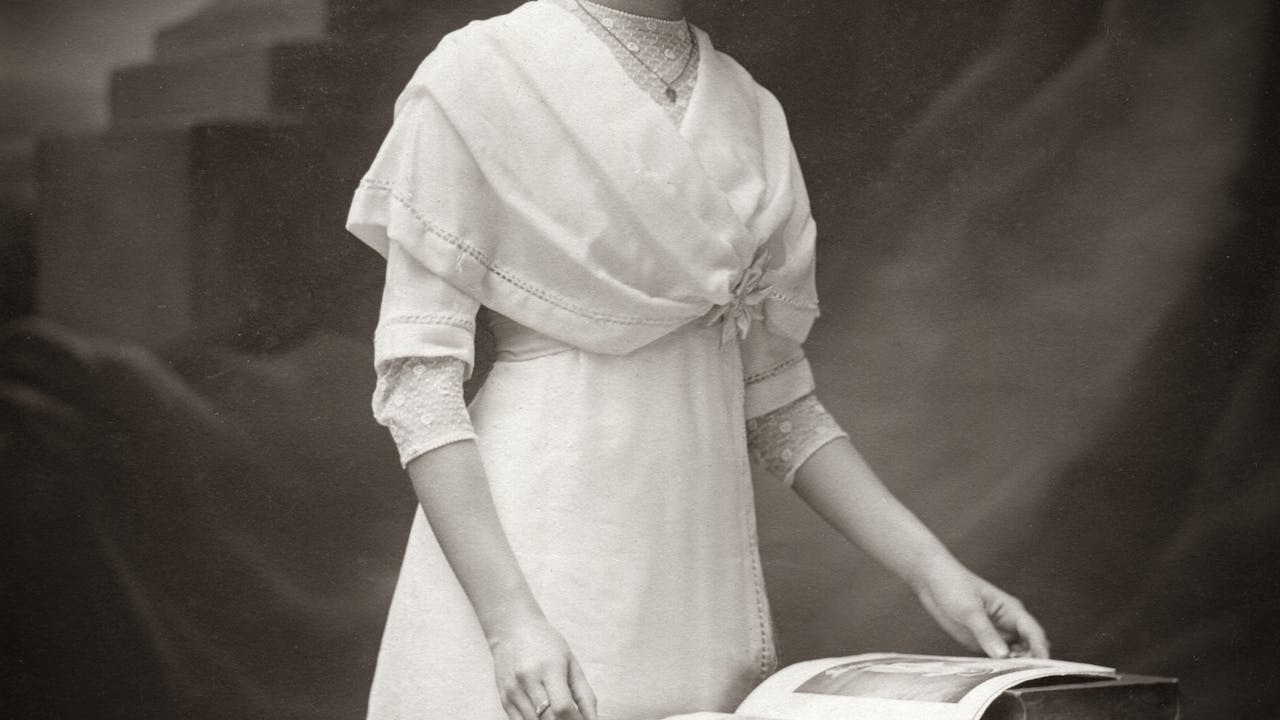
The silhouette and the Renaissance portrait share a lineage worth understanding. The profile view, the direct compositional ancestor of the silhouette, was a prestige format in 15th-century Italian painting. Artists painted noble subjects in strict profile specifically to reference Roman coinage, to connect sitters to classical authority, to permanence, to the language of monuments.
When 18th-century silhouette artists cut profile portraits in black paper, they were tapping into that same visual language. The silhouette is the stripped-down version: same format, same dignity, no pigment. The "cheap" version of the Renaissance profile portrait carried, paradoxically, the same compositional weight and the same implicit claim to being remembered.
The modern evolution of that tradition runs through classical portrait painting into AI portrait art. Where the silhouette is the shadow, the renaissance-style portrait is the full-color, full-detail painting. The silhouette captures the outline. The classical portrait captures everything the outline is a reduction of.
Abstract portraits, animal surrealism art, and art deco gifts represent other evolutions of the same portrait tradition, each taking the fundamental format (a specific face or figure rendered with intention) in a different direction.
For anyone who has ever been moved by a silhouette portrait, the natural question is: what would this look like with everything the silhouette removed? That question is the origin of portrait painting. And it's what platforms like Fable exist to answer.
Silhouette art in modern home decor
The silhouette is having a genuine design moment. Market analysts cite "minimalist silhouettes" and "abstract portraits" as among the top wall art trends for 2026. The graphic quality of silhouette portraits, their visual cleanliness and high contrast, gives them versatility that detailed paintings and photographs don't always have.
Silhouettes work in minimalist interiors because they don't add visual noise. They work in traditional rooms because they reference historical portrait culture. They work in nurseries, living rooms, home offices, hallways, and bedrooms across virtually every design context.
The personalization element is what separates a custom silhouette from generic wall art. A personalized dog portrait, a family silhouette, a child's profile rendered as art: these are pieces that belong to a specific home. They couldn't hang anywhere else. That specificity is the entire value proposition of custom portrait art in every format.
For surreal art prints and other portrait-adjacent formats, the same principle applies: specificity and personal connection separate meaningful art gifts from decorative objects.
For unique gifts for art lovers, custom portrait art, whether silhouette or fully rendered classical painting, is consistently among the most valued categories. The most meaningful gifts for art lovers tend to be pieces that required skill, thought, and time, not just a credit card.
For art gifts for students who are learning about portrait traditions, exploring silhouette art alongside classical painting gives useful historical context about how portraiture democratized over time.
Practical tips for commissioning a silhouette portrait
If you're ordering a custom silhouette, a few practical points make the difference between a piece you love and one that disappoints.
Choose the right source photo. A strict profile photograph is the ideal starting point. The subject should be at eye level, the background clear. Photograph against a white wall or open sky if you're sourcing the image yourself. If you're using an existing photograph, choose one taken outdoors in bright light rather than an indoor snapshot.
Decide on medium before you start searching. Do you want a digital file for self-printing? A printed and mounted piece? A hand-cut original? The medium determines the price, the timeline, and the quality ceiling. For gifts, a printed and framed piece typically delivers the best combination of quality and value for the money. Hand-cut originals are more personal but slower and more expensive.
Think about the frame as part of the budget. A silhouette in an appropriate frame looks completely different from the same silhouette in a standard box frame from a big-box store. Oval frames, shadow box frames, and antique-style gilt frames are all appropriate choices and each produces a different reading of the same artwork.
Order with lead time. Hand-cut originals from working artists take two to four weeks. Printed and framed custom pieces typically take one to two weeks. Digital files are often delivered in 24 to 48 hours. For holiday or anniversary gifts specifically, order early. The custom portrait category has strong seasonal demand in November and December.
For photographers shooting their own silhouettes: The single most important technical decision is the exposure. Expose for the background. Let the subject go dark. Underexpose slightly from what the camera meter recommends. The background should be bright and pure. The subject should be nearly or completely black. Get the exposure right in camera rather than trying to fix it in editing afterward.
For groups: Shoot each person separately if the group composition isn't working. Many custom silhouette artists will composite individual profile photographs into a group composition. This is standard practice and produces better results than trying to get every family member to stand still in exactly the right position at the same time.
Frequently asked questions
What is a portrait in silhouette?
A silhouette portrait is an image that shows the subject as a solid filled shape, usually black against a light background, defined entirely by their outline. The profile of a face or body carries all the meaning: no color, no shading, just the edge. Traditional silhouette portraits were cut from black paper, but modern versions include painted pieces, photographs, digital art, and AI-generated work. They have a history stretching back to 18th-century Europe, where they served as the affordable democratic portrait before photography existed.
What pose works best for a silhouette portrait?
The profile, with the subject turned 90 degrees to camera or artist, is the strongest silhouette pose. It reveals the distinctive features of a person's face as a clean, readable edge: the nose bridge, the brow, the lip line, the jawline. These are the signature elements that make a silhouette recognizable as a specific person. Full-body poses, couples facing each other, mother-and-child compositions, and family groups in staggered heights are all effective. But the profile head is the most historically significant and the most immediately legible form.
What makes a good source photo for a custom silhouette?
A strict profile photograph is ideal: subject turned 90 degrees to camera, chin level, clean background, no distracting elements around the head. For full-body silhouettes, arms and legs should be slightly separated from the torso so they don't merge into a single shape. Form-fitting clothing creates cleaner outlines than loose or baggy clothes. Hair that is neat and defined produces a stronger edge than loose flyaways. Good posture, with shoulders back and chin up, creates strong compositional lines.
How much does a custom silhouette portrait cost?
Prices range widely. A digital silhouette file from an Etsy artist typically costs $15 to $35 per subject. A printed and framed custom silhouette runs $60 to $200 or more depending on size and framing. Hand-cut paper originals by professional artists start around $75 for a single portrait and can reach $150 or more. Disney World's live-cut silhouette program charges $14 to $18 per person. For fully rendered classical portrait art that goes well beyond the silhouette format, Fable's pricing page lists current options.
What occasions are silhouette portraits best for?
Silhouettes work across a wide range of occasions. First anniversaries, where the traditional gift material is paper, are particularly well suited to hand-cut or printed paper silhouettes. Baby showers and newborn gifts, Mother's Day, Christmas gifts for grandparents, graduation gifts, wedding gifts, and memorial portraits for lost pets are all strong use cases. Birthday portrait gifts in silhouette format work especially well for recipients who appreciate art history or have a traditional aesthetic.
How should silhouette portraits be framed?
The high-contrast nature of silhouette art demands frames that complement rather than compete. Oval frames in black lacquer or gilt are the most historically appropriate for profile bust silhouettes. Shadow box frames, which create a gap between the art and the glass, add dimensional depth and a literal shadow effect. Gallery-wall presentations work well with consistent framing across multiple silhouettes. Standard mat board colors for silhouette art are white, cream, navy, or burgundy, depending on whether the treatment is traditional or contemporary.
Are pet silhouettes popular?
Yes, and increasingly so. Custom pet silhouette portraits in profile are widely available and particularly valued by dog and cat owners as both home decor and memorial art. The reason they work so well is that breed-specific silhouette shapes are immediately recognizable. A Dachshund silhouette is completely distinct from a Greyhound's in outline. The silhouette captures what is most distinctive about a specific breed without requiring color or texture. For fully rendered pet portrait art that goes beyond the silhouette, Fable's portrait options include classical and renaissance styles that give pets the full royal treatment. For ideas on gifting pet art, the pet painting from photo guide covers what's available across styles and price points.
What's the relationship between silhouettes and classical portrait painting?
They share a direct lineage. The profile view, the compositional ancestor of the silhouette, was a prestige format in 15th-century Italian Renaissance painting. Artists used the profile to connect subjects to ancient Roman coins and classical authority. The silhouette is the democratized, paper-cut version of that same format: same composition, same implicit claim to being remembered, no pigment. Classical portrait painting and AI-generated portrait art are the evolved versions of the tradition that the silhouette simplified. Where the silhouette is the outline, the classical portrait is the painting it summarizes.
Related guides
- Fall family portrait ideas
- Anniversary gift portrait ideas
- Memorial pet portraits
- Unique gifts for art lovers
- Family portraits
Sources
- Silhouette portraiture history - Britannica
- Auguste Edouart - Wikipedia
- Personalized gifts market - Technavio
Portraits in silhouette are about reduction. They find the essential shape of a person and hold it. They've been doing that for more than 250 years, and they'll keep doing it long after the technologies for making them change again.
But there's a limit to what a shadow can hold. The silhouette gives you the edge. It gives you the line. It gives you the shape of the person you love.
Fable gives you the rest.