Animal Surrealism Art: Where Pets Meet the Impossible
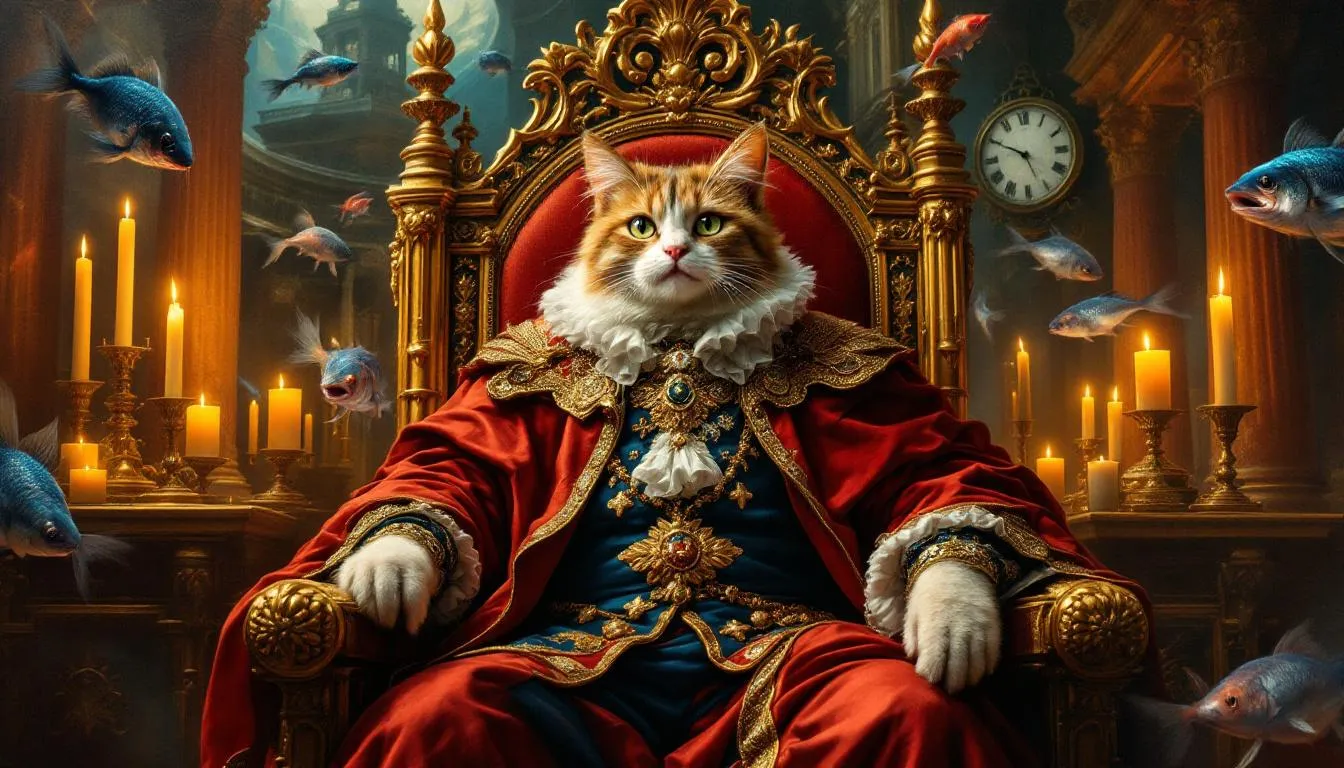
A cat sits on a gilded throne. She wears a velvet robe trimmed with ermine. Her eyes, golden and knowing, stare directly at you with the confidence of someone who has always ruled this particular kingdom. Behind her, fish swim through the air. Clocks drip from the ceiling. A staircase curls into a sky that shouldn't exist.
This is animal surrealism art. And once you see it, ordinary wall art feels flat.
The surrealist movement began as a rebellion against reason. Artists in the 1920s wanted to unlock the unconscious mind, to paint what logic couldn't explain. And animals, with their mysterious inner lives and ancient symbolic power, became the perfect vehicles for that mission. Salvador Dali painted elephants balanced on impossibly thin legs. Max Ernst became a bird he called Loplop. Frida Kahlo surrounded herself with monkeys that whispered about desire.
Nearly a century later, animal surrealism art is experiencing its biggest moment yet. Surrealism's share of the global art market nearly doubled from 9.3% to 16.8% between 2018 and 2024. Record auction prices keep falling. Contemporary artists are fusing animals with impossible landscapes, dreamlike settings, and classical portrait traditions to create works that stop people in their tracks.
This guide covers everything worth knowing about animal surrealism art. You'll learn why animals became central to the surrealist movement, which masters created the most iconic works, what different animal symbols mean, and how to bring this extraordinary art form into your own home. Whether you're drawn to renaissance pet portraits or mind-bending wildlife paintings, you're about to find something you can't stop thinking about.
Why animals became the beating heart of surrealism
The surrealists didn't choose animals randomly. Animals offered something no human subject could. They represented the primal, the instinctual, the part of consciousness that exists beneath words and reason. Sigmund Freud's theories about the unconscious mind gave the movement its philosophical foundation, and animals fit perfectly into that framework. If a hidden Id lurked beneath the rational intellect, animals were its ambassadors.
Andre Breton published the first Surrealist Manifesto in 1924. He defined the movement as "pure psychic automatism," a way of expressing thought free from reason's control. The early surrealists experimented with automatic writing, collaborative drawing, and techniques designed to bypass conscious thought entirely. They wanted raw access to the unconscious. Animals provided it.
Think about what animals represent in dreams. A wolf isn't just a wolf. It's fear, or hunger, or something wild that refuses domestication. A bird isn't just a bird. It's freedom, or death, or the soul taking flight. These symbolic meanings run deep in human psychology, across cultures, across centuries. The surrealists understood this intuitively.
The Minotaur became the movement's unofficial mascot. Half human, half bull, trapped in a labyrinth that mirrors the structure of the unconscious mind. The surrealist magazine Minotaure launched in 1933 with Picasso's cover art and ran until 1939, featuring work by Dali, Duchamp, Miro, and Matisse. The creature's duality, both monster and victim, both rational and savage, spoke to everything the surrealists believed about human nature.
But individual artists went further. They didn't just paint animals. They became them. Ernst created an avian alter ego named Loplop. Leonora Carrington identified with horses and hyenas. Leonor Fini made the sphinx her personal symbol. Remedios Varo's alter ego was a cat. These weren't whimsical choices. They were deep psychological identifications, ways of accessing parts of the self that words couldn't reach.
Women surrealists especially embraced animal identities. In a movement dominated by men who often treated women as muses rather than creators, animal alter egos offered a way to reclaim power. Through their dream creatures, women artists "regained a piece of their freedom." A sphinx doesn't ask permission. A horse doesn't wait to be invited. These symbols carried weight that went beyond aesthetics.
Today, this tradition continues in pet portraits and animal portraits that place beloved companions in surreal, classical, and dreamlike settings. The impulse is the same one that drove Dali and Ernst. We sense something in animals that transcends the rational, and we want art that captures it.
The masters and their animal obsessions
Every major surrealist had an animal. Sometimes several. These weren't casual motifs chosen for visual interest. They were deep, often lifelong relationships between artist and symbol, driven by personal trauma, cultural mythology, and psychological need.
Salvador Dali and his impossible elephants
Dali's elephants are among the most recognizable images in art history. Massive creatures balanced on legs thin as spider silk, carrying obelisks and naked figures across barren landscapes. The Temptation of St. Anthony from 1946 shows a procession of these impossible elephants marching toward a kneeling saint, burdened with the weight of human desire and greed.
The symbolism hits hard. Strength distorted by fragility. Power made weightless by the dream state. Heavy burdens carried with impossible grace. Dali described his approach as the "paranoiac-critical method," deliberately inducing hallucinations to generate imagery. His elephants emerged from that altered consciousness, which is why they feel both real and utterly impossible at the same time.
But elephants weren't his only animal obsession. Lobsters appeared throughout his work, representing sexuality and eroticism. His Lobster Telephone from 1938 remains one of the best-known surrealist objects ever created. Ants swarmed across the melting clocks in The Persistence of Memory, symbolizing decay and the relentless passing of time. And Dali kept a pet ocelot named Babou, frequently photographed alongside him in restaurants and taxis. Even his personal life had a surreal quality.
The surreal art prints inspired by Dali's animal work remain bestsellers in galleries and online retailers, proof that his vision still resonates decades after his death.
Max Ernst and Loplop, the bird superior
Ernst's relationship with birds traces back to a childhood trauma he described in his autobiography. His cherished pet bird died at the moment his younger sister was born. This created a permanent association between birds and death, transformation and loss, that haunted his work for life.
From this trauma, Ernst created Loplop, a curious, shapeshifting avian entity who served as the artist's alter ego. While birds commonly symbolize freedom and vitality, in Ernst's imagination they carried an oracular, forbidding quality. Loplop appeared in paintings, collages, and assemblages across decades of work.
The Elephant Celebes from 1921 features a mechanical, elephant-like figure that feels both threatening and absurd. Two Children Are Threatened by a Nightingale from 1924 uses a bird as a distant, menacing presence. Une semaine de bonte, his collage novel from 1934, presents human-animal hybrids in dreamlike scenes where creatures that are part human, part bird inhabit impossible worlds.
Ernst also pioneered techniques like frottage, rubbing graphite over textured surfaces, which he invented in 1925 while staring at a wooden floor. The patterns that emerged suggested wings, feathers, forest canopies. Nature speaking through accident. His techniques influenced generations of artists who followed.
Frida Kahlo and her menagerie of meaning
Kahlo painted approximately 150 works during her life. Fifty-five of them were self-portraits. Animals appear in nearly all of them.
Monkeys curl around her shoulders in Self-Portrait with Monkey from 1938 and Self-Portrait with Monkeys from 1943. In Mexican culture, monkeys represent desire and primal impulse. Kahlo knew this. She used the symbolism deliberately, placing these creatures close to her body as acknowledgments of forces that polite society preferred to ignore.
Her most devastating animal painting might be The Wounded Deer from 1946, where Kahlo depicted herself as a deer pierced by nine arrows. The deer runs through a forest with no escape visible. The sky above is empty. The painting came during a period of intense physical suffering, one of many she endured after a bus accident at age eighteen shattered her spine, pelvis, and collarbone.
In Self-Portrait with Thorn Necklace and Hummingbird from 1940, a dead hummingbird hangs from a necklace of thorns that cuts bloody lines into her neck. In Mexico, the hummingbird symbolizes hope. Dead, it becomes the absence of hope. The thorns reference Christ's passion. A black cat lurks behind one shoulder. A monkey sits on the other.
Kahlo rejected the surrealist label. "They thought I was a Surrealist, but I wasn't," she said. "I never painted dreams. I painted my own reality." Fair enough. But that reality was surreal. The animals in her work bridge the gap between personal experience and universal symbolism in ways that no other artist has matched.
 Animal surrealism art draws from landscapes where reality and dreams collide
Leonora Carrington and her wild horses
Carrington's Self-Portrait from 1937, subtitled Inn of the Dawn Horse, hangs in the Metropolitan Museum of Art. She sits wild-haired in riding clothes, extending her hand toward a female hyena that imitates her posture exactly. A white horse gallops freely through a window into a green landscape beyond.
The horse represented freedom. The hyena represented rebellion. Carrington once said, "I'm like a hyena. I get into the garbage cans." She meant it as a statement of identity, not self-deprecation. The hyena refuses to conform. It scavenges rather than hunts because it doesn't care about status. It's ambiguous, hard to categorize, easy to underestimate.
As Carrington aged, geese replaced her earlier animal symbols. The shift was natural. Geese fly. They migrate. They represent escape through exile and a certain equanimity that comes with years of living on your own terms.
The market has noticed. Her painting Les Distractions de Dagobert sold for $28.5 million in 2024, a 700% increase from her previous record. La Grande Dame sold for $11.3 million the same year. Women surrealist artists overall saw a 411.4% increase in auction sales between 2018 and 2024, with Carrington leading the surge.
Leonor Fini and the sphinx as self
Fini cared for as many as 23 cats at various points in her life. But it was the sphinx, not the house cat, that became her signature symbol.
The Shepherdess of the Sphinxes from 1941 shows a powerful woman standing over a group of smaller sphinxes in an arid landscape. The sphinx in Fini's world wasn't the Greek riddle-poser who destroyed those who answered wrong. It was something more nuanced. Part guardian, part nurturer, part destroyer. A feminine power that didn't need permission.
The Art Dealers Association of America considers Fini "the most undervalued artist of the 20th Century." That's changing. Her Self-Portrait with Scorpion sold at Sotheby's for $2.3 million in 2021, three times its estimate. The market is catching up to what art historians have known for decades.
More masters and their creatures
Rene Magritte used birds to explore concealment and transformation. In Man in a Bowler Hat from 1964, a dove obscures the man's face instead of the apple from The Son of Man. The Healer features a figure whose torso is a birdcage containing actual birds. Freedom and captivity existing simultaneously. His L'empire des Lumieres sold for $121.16 million in 2024, the highest price ever paid for a surrealist artwork.
Joan Miro rendered animals as indeterminate forms that seemed to generate themselves on the canvas. Andre Breton called him "the most Surrealist of us all." Dog Barking at the Moon from 1926 and the Constellations series from the early 1940s, twenty-three paintings scattered with birds, stars, and cosmic elements, remain among his greatest achievements.
Remedios Varo made the cat her alter ego. Creation of the Birds from 1958 features owl-human hybrids representing wisdom. Her painting Revelation sold for $6.2 million in 2025, a personal record. She worked with brushes made from a single hair, spending months on pieces that feel like they were dreamed rather than painted.
Wifredo Lam painted The Jungle in 1943, his masterpiece. Four part-human, part-animal figures with exaggerated hands and faces recalling African masks stand amid sugarcane and banana leaves. Two have horse tails. The horse-human hybrids came from Santeria rituals where worshippers are "ridden" by spirits. The painting hangs at MoMA.
What animals mean in surrealist art
Surrealist artists didn't choose animals for their cuteness. Every creature carried symbolic weight rooted in mythology, psychology, and personal experience. Understanding these symbols transforms how you see animal surrealism art.
Elephants represent strength twisted by impossibility. Dali's spindly-legged giants carry the weight of human desire with grace that defies physics. They're power made vulnerable, stability made precarious. The obelisks and figures on their backs suggest burdens we all carry but rarely acknowledge.
Birds carry dual meanings. They symbolize freedom and transcendence, obviously. But for Ernst, they represented death. For Magritte, concealment. For Miro, cosmic energy. The bird is the most versatile animal symbol in surrealism because it operates differently for every artist who uses it.
Horses mean freedom and the untamed self. Carrington's horses gallop through windows into green landscapes, representing escape from constraint. Lam's horse-human hybrids reference spiritual possession. The horse refuses to be fully domesticated, which makes it the perfect symbol for artists who felt the same way.
Cats represent independence, sensuality, and the feminine. Varo's cat alter ego moved through impossible spaces with the quiet confidence that cats actually possess. Fini's cats were companions and mirrors, reflecting aspects of her personality that human society wanted her to suppress.
Dogs symbolize loyalty, identity, and transformation. Dorothea Tanning used her dog Katchina as a recurring motif across decades of work, calling it "as constant as a talisman." In dog portraits and custom dog portraits created in surrealist style, this tradition continues. Your dog wearing a Renaissance robe isn't just funny. It's a statement about the dignity and importance you see in that animal.
The Minotaur represents everything hidden in the unconscious. Picasso created approximately seventy works featuring the Minotaur between the 1920s and 1950s. Half human, half bull, it embodied "the dark centre of man's violent, irrational and lustful desires." The labyrinth it inhabits mirrors the structure of the mind itself.
Monkeys speak to desire and instinct. Kahlo's monkeys acknowledged the primal forces that civilized life wants us to deny. They sit on shoulders, curl around necks, touch faces. They're intimate in ways that make viewers slightly uncomfortable, which is exactly the point.
Sphinxes combine the human and the animal into something more powerful than either. Fini's sphinxes weren't riddle-posing monsters. They were guardians, nurturers, and destroyers all at once. The sphinx says that feminine power isn't one thing. It's everything.
These symbols still work. When Fable transforms a pet photo into a regal portrait or royal portrait, the result taps into the same symbolic traditions. Your golden retriever in a velvet robe channels centuries of meaning about loyalty, dignity, and the bond between humans and animals. That's not decoration. That's art with roots.
 Animal surrealism art creates gallery-worthy focal points in any room
Types of animal surrealism art for your home
Animal surrealism art comes in more varieties than most people realize. The style ranges from classical oil paintings inspired by the masters to digital compositions that push the genre into completely new territory. Knowing what's available helps you find the right piece for your walls and your personality.
Renaissance and royal animal portraits
This is the style most people picture first. Your pet wearing period costume, posed like 17th-century nobility, rendered with museum-quality technique. The surreal element comes from the collision between an animal face and a human context. A bulldog in a military uniform. A tabby cat wearing a pearl necklace against a backdrop of oil-painted drapery.
The genre has exploded in popularity, and for good reason. These portraits are funny, beautiful, and surprisingly moving. They say something real about how much we love our animals. Placing a pet in royal context isn't mockery. It's elevation. It says this creature deserves the same reverence that kings and queens once demanded.
Renaissance pet portraits and royal pet portraits have become some of the most popular gift ideas for art lovers. The style works for dogs, cats, birds, horses, rabbits, and basically any animal with a face that can wear a ruff collar convincingly. Which turns out to be most of them.
Fable creates exactly this kind of portrait. Upload a photo, choose a style, and your pet gets the treatment that once took court painters months to complete. The result hangs on your wall like something inherited from a very eccentric ancestor. Check how it works to see the process.
Dreamlike animal landscapes
Some artists place animals in impossible environments rather than human costumes. A whale floating above a desert. A fox walking through a sky made of water. A herd of deer dissolving into mist at the forest's edge. These pieces lean harder into pure surrealism, creating scenes that feel like half-remembered dreams.
This style traces directly back to Dali's elephants and Tanguy's alien landscapes. The animal becomes a figure in a larger vision, a character in a story that the viewer has to complete. These paintings work beautifully as focal points in living rooms and offices because they invite extended contemplation. You notice new details each time you look.
Human-animal hybrid art
The tradition that began with Ernst's bird-people, Lam's horse-women, and Fini's sphinxes continues in contemporary art. Matthew Grabelsky paints humans with animal heads in hyperrealistic subway settings. Phil Langer's "Hybrid" series blends portraits with animals, plants, and mechanical elements. The effect is uncanny, beautiful, and slightly unsettling in the best way.
This style makes strong statements about identity. It suggests that the boundary between human and animal is thinner than we pretend. It asks viewers to confront their own animal nature, their instincts, their wildness, the parts of themselves that don't fit neatly into professional headshots and social media profiles.
Pop surrealism with animals
Pop surrealism, sometimes called Lowbrow art, emerged from Los Angeles in the late 1960s and merged surrealist techniques with popular culture. Mark Ryden, called "the godfather of Pop Surrealism" by Interview magazine, leads the movement. His work features animals alongside pop culture imagery in scenes that feel like children's books gone wrong.
This style tends toward bright colors, graphic clarity, and cultural references twisted into strange new shapes. It's more accessible than classical surrealism but no less powerful. If you want animal art that brings energy and humor to a room while still carrying real artistic weight, pop surrealism delivers.
Digital and AI-generated surreal animal art
Technology has opened animal surrealism to everyone. AI tools now generate surreal animal imagery that would have taken traditional artists weeks to produce. Some platforms report that 62% of AI art shared on social media features cats, outpacing dogs by a ratio of two to one.
The debate about whether AI-generated work qualifies as "real" art misses the point for most buyers. What matters is how the piece makes you feel when you see it on your wall every morning. Digital surreal animal art offers extraordinary variety at accessible prices, making the genre available to people who might never set foot in a gallery.
That said, custom work created from your own photos carries emotional weight that generic AI pieces can't match. A personalized dog portrait in surrealist style connects you to both the art tradition and your specific animal. That combination is hard to replicate with a prompt.
Contemporary artists pushing animal surrealism forward
The genre isn't stuck in the 1940s. Living artists are expanding what animal surrealism can look and feel like, bringing new perspectives and techniques to a tradition that Dali and Ernst established.
Jon Ching celebrates animals' markings in dreamlike paintings that fuse creatures with natural elements. "Nature is already insanely diverse and surreal," he says, "so it was a natural course for me to create my own creatures." His work treats the natural world as already surreal, then pushes it further.
Ellen Jewett creates mixed-media animal sculptures that merge real-world fauna with fantastical elements. Plants grow from animal bodies. Coral sprouts from fox skulls. Her work collapses the boundary between creature and ecosystem, suggesting that animals aren't separate from nature but continuous with it.
Andreas Haggkvist serves as a World Wildlife Fund Ambassador and creates colorful digital collages highlighting endangered species. His surreal animal compositions draw attention to conservation through beauty rather than guilt. The work sells from his studio in prints ranging from affordable to premium sizes.
Julien Tabet, a young French digital artist, reimagines animals in surreal composites. Zebras sprout stripe-patterned wings. Oceans appear inside the belly of a bear. His social media following proves that surreal animal imagery resonates strongly with younger audiences who might never search for "surrealism" but instantly recognize its appeal.
Matthew Grabelsky paints humans with animal heads in realistic New York City subway settings. Inspired by Greek mythology and his daily observations, his hyperrealistic technique applied to surreal subjects creates a tension that's impossible to ignore. A businessman with a lion's head reading a newspaper. A woman with a fox's face checking her phone. These aren't just paintings. They're questions about identity.
Raphaela Vogel caused a sensation at the Venice Biennale with milky-white polyurethane giraffes. She frequently uses spiders, lions, horses, and her own pets in installations that occupy entire rooms, turning gallery spaces into surreal ecosystems.
These artists prove that animal surrealism isn't a historical curiosity. It's a living tradition with room for new voices and new visions.
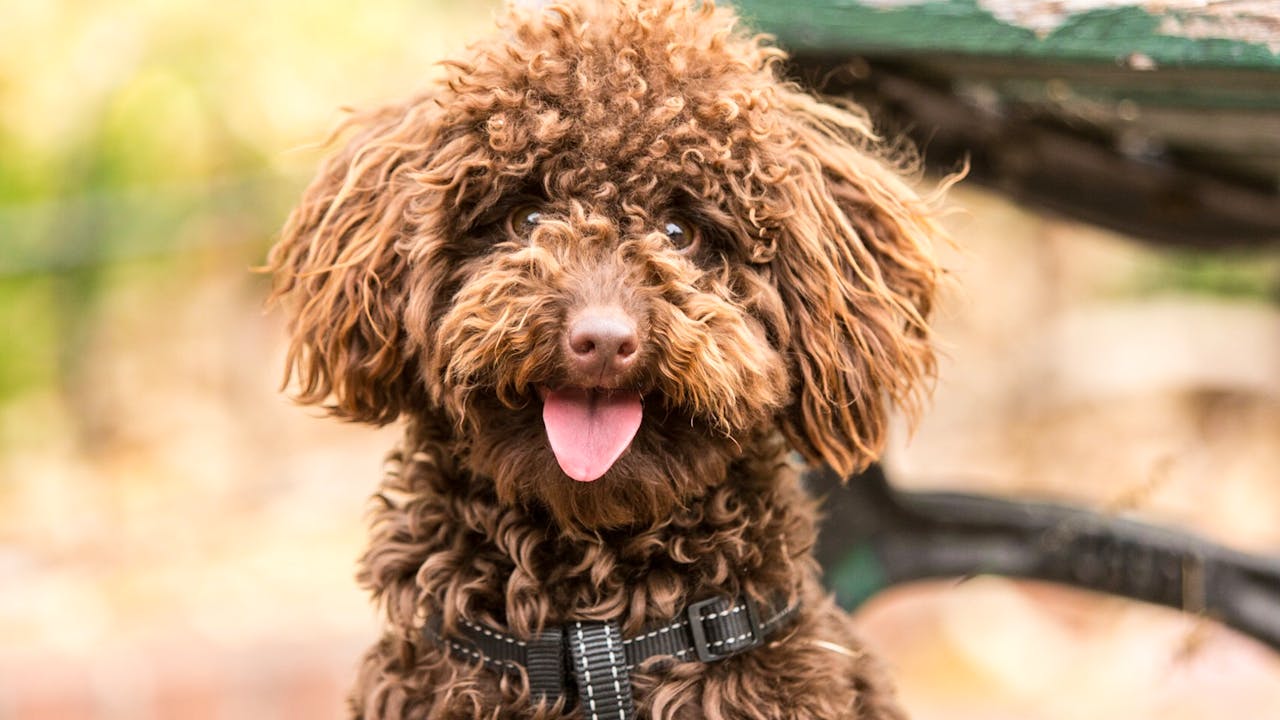 The deep bond between people and their animals fuels the appeal of surreal animal art
Bringing animal surrealism art into your home
The global wall art market was valued at $63.61 billion in 2024 and is projected to reach $118.79 billion by 2032. Surrealism, bold maximalist art, and nature-inspired themes rank among the top trends driving that growth. If you're thinking about adding surreal animal art to your space, the timing couldn't be better.
But choosing the right piece matters more than following trends. Here's how to think about it.
Start with emotion, not design rules
Ask yourself how you want your space to feel. Surreal animal art ranges from whimsical and light to dark and psychologically intense. A Renaissance cat portrait creates a very different mood than a Dali-inspired landscape with elephants dissolving into mist. Both are excellent. Neither is wrong. But they serve different emotional purposes.
When a piece stirs something inside you, a sense of wonder, a laugh, a moment of connection, that's how you know you've found it. Trust the reaction. Design rules can be adjusted. Emotional resonance can't be manufactured.
Think about scale and placement
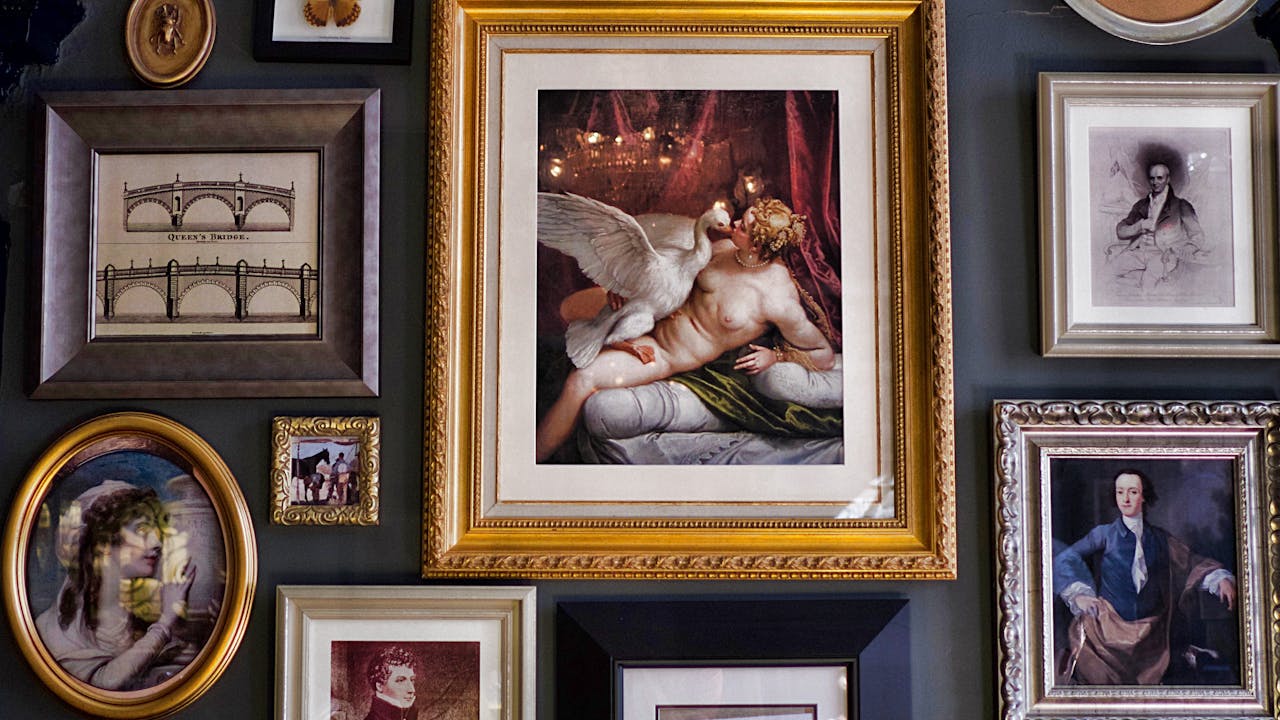
One large surreal animal piece creates a focal point that anchors an entire room. A gallery wall of smaller pieces creates a conversation that visitors can explore at their own pace. Both approaches work beautifully with surrealist imagery.
Living rooms benefit from pieces that invite conversation. Guests will ask about a Renaissance dog portrait. They'll stare at a dreamlike landscape with floating animals. The art becomes a social catalyst, something that gives your home personality beyond furniture and paint colors.
Bedrooms call for softer interpretations. Abstract surrealism with animal forms, or classical portraits with warm color palettes, creates atmosphere without overwhelming. You want art that feels good to wake up to.
Home offices thrive with surrealism's connection to unconventional thinking. A piece that challenges perception can actually help you think more creatively during the workday. Pop surrealism works especially well here, bringing energy without heaviness.
The blog has more ideas for integrating portrait art into various home styles and rooms.
Color and mood matter
Surreal animal art spans the full spectrum from moody earth tones to electric neon. Consider your existing color scheme, but don't be enslaved by it. Sometimes the best art choice is the one that introduces a color your room didn't have before. Interior designer Rachel Chudley advises: "An art collection should be an extension of your personality. It should bring joy. I really believe that living with art makes people happier."
Warm golden tones and rich jewel colors characterize classical surreal animal portraits and work beautifully in traditional or transitional interiors. Brighter, bolder palettes from pop surrealism suit contemporary spaces. Monochromatic pieces add sophistication to minimalist rooms.
Mix and match fearlessly
Don't feel locked into one style. A Renaissance pet portrait hanging next to a modern abstract landscape creates an eclectic conversation that tells visitors you think for yourself. Blend vintage furniture with modern surrealist animal pieces for a look that feels both timeless and contemporary.
Explore family portraits, couple portraits, kids portraits, and self portraits alongside animal art to create a gallery wall that represents your whole family, humans and animals alike. That mix of styles and subjects creates a home that feels genuinely personal rather than curated from a catalog.
Why surreal animal art makes an unforgettable gift
Finding a gift that someone actually keeps is harder than it should be. Most presents get shoved in a drawer within weeks. A surreal animal portrait stays on the wall for years.
The numbers explain why. Studies on art buying motivation show that 60% of buyers cite emotional connection as the primary reason they purchase art. Financial value comes second at 41%, and social value third at 36%. A personalized dog portrait in surrealist style hits all three. It's emotionally meaningful because it features their actual pet. It has lasting value because quality art appreciates over time. And it generates social capital because every visitor will comment on it.
Pet lovers are especially receptive. Ninety-four million American households now own a pet. Ninety-seven percent of pet owners say their animals are family. Not "like family." Family. A portrait that elevates their pet to royal status, renaissance nobility, or surrealist dreamscape tells that person you understand the bond they share with their animal.
Custom surreal animal portraits work for occasions that other gifts can't handle. A memorial portrait honors a pet who has passed. A birthday portrait surprises someone who already has everything. A couple portrait that includes the family dog captures a household's real dynamics. An art gift for a teacher or art gift for a teen who loves animals stands out in a pile of generic presents.
The gift becomes a conversation piece. Visitors ask about it. The story of how it was made and who gave it gets told again and again. That's the kind of present most people dream about giving but rarely find.
For more gift inspiration, explore our guides on gifts for art lovers and unique gifts for art lovers.
What to expect when you buy surreal animal art
Prices range enormously depending on what you're after. Understanding the spectrum helps you find something that fits both your taste and your budget.
Digital prints and posters start around $15 and top out near $100 for premium sizes. These work well for people exploring surreal animal art for the first time. The quality varies significantly between sellers, so look for premium paper options and read reviews.
Fine art prints from established artists run between $150 and $800, typically printed on archival-quality paper in limited editions. These hold value better than mass-produced prints and come with certificates of authenticity that matter if you ever want to resell.
Original paintings from emerging artists start around $200 on platforms like Saatchi Art, which lists over 800 surreal animal paintings. Established artists command $500 to $50,000 and beyond. If you're investing in originals, research the artist's exhibition history and gallery representation.
Custom commissions offer the most personal option. Simple digital commissions run $20 to $100. Custom pet portraits in Renaissance, royal, or surrealist styles range from $50 to $500 depending on medium and detail level. Hand-painted commissions from traditional artists can reach $1,000 or more for large, detailed works.
Fable's pricing sits in the custom portrait category, offering museum-quality results at accessible prices. Upload a photo, pick a style, and your animal gets the treatment it deserves. The process takes a fraction of the time traditional commissions require.
For perspective on the high end, museum-level surrealist works with animal subjects command extraordinary prices. Magritte's dove and sky paintings sell for tens of millions. Carrington's animal-rich compositions recently broke $28.5 million at auction. You don't need to spend that much to own something meaningful, but knowing those numbers helps you appreciate what this genre has become.
Works priced under $5,000 now account for 85% of all contemporary art sales worldwide. The online art market reached $11.09 billion in 2024. Buying art has never been more accessible, and surreal animal art is one of the most popular categories driving that growth.
 A surreal animal portrait makes a gift that stays on the wall for years
Frequently asked questions
What is animal surrealism art?
Animal surrealism art combines animals with dreamlike, illogical, or impossible visual elements drawn from the surrealist tradition. It ranges from classical paintings by masters like Dali and Ernst to contemporary pet portraits that place animals in Renaissance costumes or fantastical settings. The genre explores the symbolic, psychological, and emotional connections between humans and animals.
Who are the most famous surrealist artists known for animal imagery?
Salvador Dali (elephants, lobsters), Max Ernst (birds, Loplop), Frida Kahlo (monkeys, deer, hummingbirds), Leonora Carrington (horses, hyenas), Leonor Fini (cats, sphinxes), Remedios Varo (cats, owls), Rene Magritte (birds, fish), Joan Miro (birds, dogs), and Pablo Picasso (Minotaur, bulls). Each used animals as deep psychological and symbolic elements rather than simple decoration.
How much does surreal animal art cost?
Prices span a wide range. Digital prints start around $15. Fine art prints from established artists run $150 to $800. Original paintings from emerging artists begin at $200. Custom pet portraits in surrealist styles range from $50 to $500. Museum-quality originals from collected artists can reach thousands or tens of thousands. Check Fable's pricing for custom surreal portrait options.
Can I get a custom surreal portrait of my pet?
Yes. Services like Fable transform pet photos into custom portraits in Renaissance, royal, and classical styles that carry surrealist qualities. You upload a photo, select a style, and receive a museum-quality portrait. The process is straightforward, check how it works for details. Other options include commissioning traditional artists or using AI-generation platforms.
What animals work best in surreal art?
Any animal can work in surrealist style, but certain species have stronger traditions. Dogs and cats are the most popular subjects for custom regal portraits and royal portraits. Elephants, birds, horses, and mythological creatures dominate classical surrealism. Even exotic pets like rabbits, parrots, hedgehogs, and reptiles can make striking surrealist subjects when placed in the right context.
Is surreal animal art a good investment?
The market says yes. Surrealism's share of global art sales nearly doubled from 9.3% to 16.8% between 2018 and 2024. Neo-surrealist pieces have experienced 156% price growth since 2000. Women surrealist artists saw a 411.4% increase in auction sales over the same period. At the personal level, custom animal portraits hold emotional value that appreciates every year you own them.
Related guides
- Pet portraits: the complete guide to immortalizing your companion
- Animal portraits: capturing personality in every brushstroke
- Surreal art prints: transform your walls with dreamlike beauty
- Renaissance pet portraits: timeless art for modern pet lovers
- Royal pet portraits: turn your pet into nobility
Sources
- The Metropolitan Museum of Art: Surrealism
- Art Basel/UBS: Global Art Market Report 2025
- Sotheby's: Surrealists and Their Pets
The best art doesn't just sit on a wall. It reaches into the room. It changes the air. It makes visitors stop talking and start looking. Animal surrealism art does this because it speaks two languages at once, the language of the creatures we love and the language of dreams we can't quite explain. Start creating yours and give your home something worth staring at.