Dog Portrait Ideas: From Photo to Masterpiece
You took the photo three years ago. Your dog was sitting on the back porch, late afternoon light catching the side of her face, ears relaxed, eyes looking at you with that quiet certainty dogs have. You remember the moment because it felt like more than a snapshot. It felt like her.
That photo is still on your phone. Buried somewhere between grocery lists and screenshots. You scroll past it sometimes and stop. You think about printing it, maybe framing it. But a print doesn't feel like enough. Not for that photo. Not for that face.
This is where dog portraits come in. Not a filter. Not a print from the drugstore. A real piece of art that takes your dog and elevates them into something permanent, something beautiful, something that belongs on your wall as much as any painting in any gallery. A dog portrait transforms a moment you love into art you'll keep forever.
This guide covers every dog portrait style worth considering, from classical oil paintings to bold pop art to the renaissance portraits that have taken the internet by storm. You'll learn how to take the perfect reference photo, how to choose a style that fits your home, what different portrait options cost, and how to display the finished piece. Whether you're ordering for yourself or giving the most thoughtful gift an art lover could receive, everything you need is here.
Why dog portraits have become a cultural phenomenon
Something changed in how people think about their dogs. The shift happened slowly over a decade, then accelerated in ways nobody predicted.
Sixty-eight million American households now include at least one dog. That number has been climbing for years, but it only tells part of the story. The more interesting number is this: two-thirds of dog owners refer to their pets as their children. Among younger generations, the percentage is even higher. Dogs aren't pets anymore. They're family. And families deserve portraits.
The U.S. pet industry crossed $150 billion in annual spending. Not just food and vet bills. People are throwing birthday parties for their dogs. Buying them holiday gifts. Ninety-two percent of millennial pet owners buy their pets presents, and half do it monthly. When people spend like that on their animals, commissioning a portrait doesn't feel extravagant. It feels natural.
Custom pet portraits have surged in popularity across every platform. On Etsy alone, there are over two million pet-related listings, and custom portraits consistently rank among the top sellers. One shop generated over $180,000 in revenue selling nothing but pet portrait art. The average price hovers around $42 for digital options, though hand-painted pieces command significantly more.
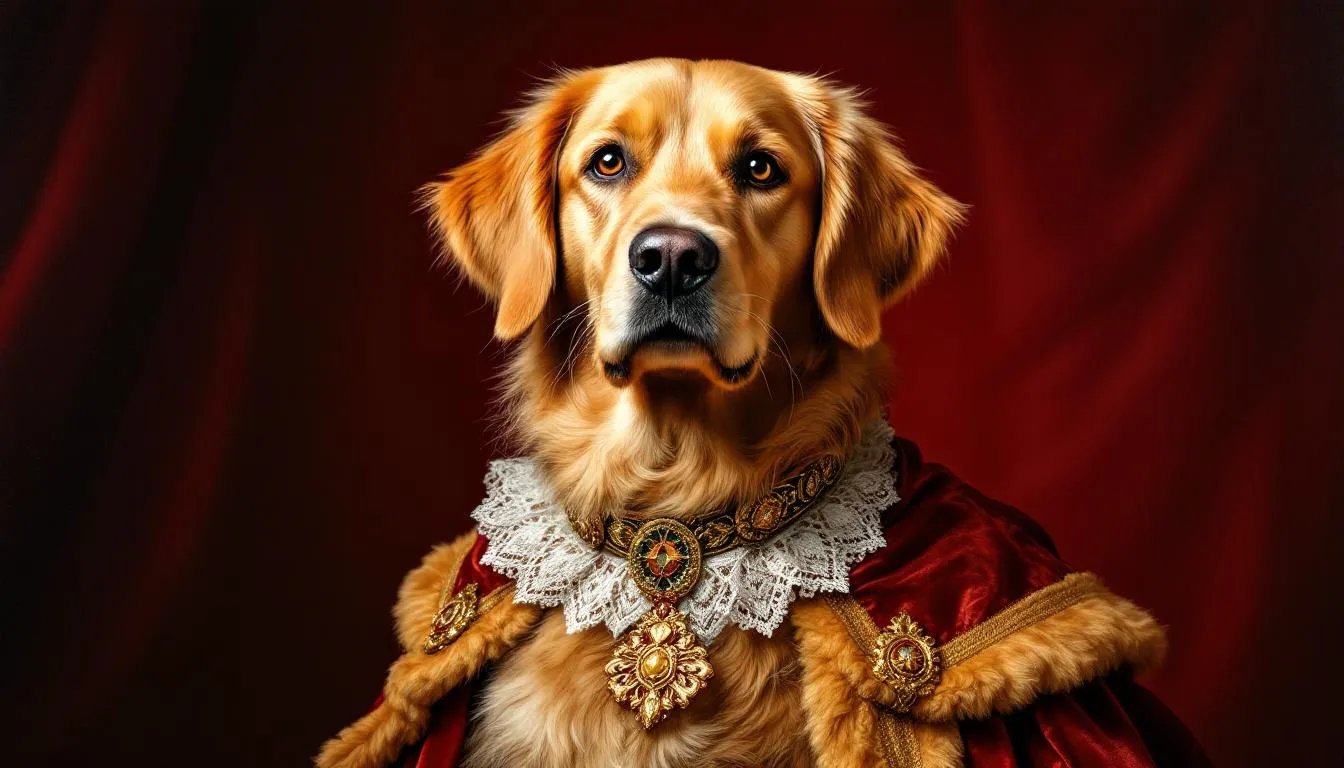
The rise of social media poured gasoline on this trend. People share their dog portraits constantly. A golden retriever dressed as a Renaissance duke. A French bulldog in a baroque military uniform. These images go viral because they're simultaneously hilarious and beautiful. They combine deep affection with genuine artistry, and that combination is irresistible.
Fable was born from this exact moment, the intersection of pet love and portrait art. We turn ordinary dog photos into museum-quality portraits because every dog deserves to be seen as the work of art they already are.
But choosing a portrait style matters. The wrong style in the wrong room looks off. The right one becomes the centerpiece of your home. Let's walk through every option worth knowing.
Dog portrait styles that actually belong on your walls
Oil painting
This is the original. The gold standard that has defined portraiture for five centuries. Rich, layered colors. Visible brushstrokes that catch light differently depending on where you stand. A depth and warmth that no other medium can replicate.
Oil portraits of dogs capture texture in ways that feel almost physical. The soft sheen of a labrador's coat. The wiry scruff of a terrier's chin. The fluff of a Pomeranian's ruff. Each layer of paint builds on the last, creating complexity that reveals new details every time you look.
Traditional oil portraits take the longest to complete. The medium requires drying time between layers, and a detailed piece can take several weeks from start to finish. But the result is heirloom quality. A well-made oil painting on stretched canvas can last centuries with basic care. If you want something that your grandchildren will inherit, oil is the medium.
Prices range widely. A small digital-to-canvas oil-style portrait might start around $100. A fully hand-painted piece from an established artist can run $300 to over $1,000 depending on size, detail, and the number of subjects. The investment pays for itself in longevity and impact. Nothing else on your wall will get as many comments. Browse Fable's portrait options to see how oil-style portraits translate from photo to finished art, or check pricing to compare across styles.
Watercolor
Soft. Ethereal. Gentle in a way that suits certain dogs perfectly.
Watercolor portraits work through transparency. Colors layer over each other, letting light pass through the pigment and bounce off the paper beneath. The effect is luminous and dreamlike, with edges that bleed and blend naturally. There's a delicacy to watercolor that makes it ideal for dogs with lighter coloring, or for anyone who wants a portrait that feels tender rather than imposing.
This style shines for memorial pieces. When you're honoring a dog who's no longer here, the softness of watercolor captures something that harder mediums can't. It suggests memory. It feels like looking at someone through time, which is exactly what you're doing.
Watercolor also pairs beautifully with minimal framing. A white mat, a simple frame, and the painting breathes. If your home leans toward light, airy decor, a watercolor dog portrait complements the space without competing with it. Check Fable's pricing to see how accessible portrait art has become, whether you're drawn to watercolor softness or bolder styles.
Digital illustration
Modern, versatile, and faster to produce than any traditional medium. Digital dog portraits are created on tablets using professional software, and the range of possible styles is enormous. Hyper-realistic renderings that look like photographs. Stylized illustrations that flatten and simplify. Cartoon-inspired pieces that exaggerate your dog's most endearing features.
The biggest advantage of digital work is creative freedom. Want your dog in a field of wildflowers that doesn't exist? Against a sunset you never photographed? With a completely custom background that matches your living room's color palette? Digital makes it all possible without the physical constraints of paint and canvas.
For budget-conscious buyers, digital is usually the most affordable entry point. Prices on platforms like Etsy average around $40 to $60 for a digital portrait, though premium artists charge more. When printed on archival-grade canvas with quality inks, digital portraits can last over a century without noticeable fading. The medium doesn't determine the longevity. The printing materials do.
If you're exploring personalized dog portraits for the first time and want to test the waters without a major commitment, digital is a smart starting point.
Renaissance and royal
This is the style that broke the internet. And honestly, it deserved to.
Renaissance dog portraits take your pet and dress them in the elaborate costumes of historical nobility. Velvet doublets. Lace collars. Jeweled crowns. Military regalia with brass buttons and epaulets. Your labrador becomes a Flemish merchant prince. Your pug becomes a Baroque empress. Your mutt becomes whatever absurd, magnificent thing suits their personality best.
The appeal is dual. These portraits are genuinely funny. There's something inherently hilarious about a dog who eats shoes for fun being depicted as Renaissance royalty. But they're also genuinely beautiful. The best renaissance pet portraits combine classical painting techniques with your dog's real expression, creating art that makes people laugh and then lean in closer because the craftsmanship is real.
Royal pet portraits push the concept even further. Crowns, thrones, ermine-trimmed robes, and gilded frames. The over-the-top nature of the style is the point. It says, "My dog is ridiculous and magnificent and I love them completely." That message resonates with every dog owner on earth.
For a deeper look at the regal approach, our guide to regal pet portraits covers everything from costume selection to historical accuracy. These pieces work as statement art in living rooms, offices, entryways, and anywhere guests will see them and immediately want one for their own dog.
Pop art
Bold outlines. Saturated color. High energy. Pop art dog portraits borrow from the Warhol tradition and translate your dog's face into something graphic and electric. Think bright pinks, acid greens, electric blues, and thick black contour lines that make the image jump off the wall.
This style works best in modern or eclectic spaces. A pop art portrait of your dog over a mid-century modern sofa creates visual tension that's exciting without being chaotic. The colors can be customized to match your room, or they can deliberately clash for maximum impact.
Pop art portraits are also among the most shareable on social media. The visual contrast is eye-catching in thumbnail form, which means your portrait will look as good on Instagram as it does on your wall. If you want art that doubles as content, this is the style. Pair a pop art dog portrait with a surreal art print for a gallery wall that feels like a modern museum. Or go the opposite direction with a matching self portrait in the same pop art style, so you and your dog get the Warhol treatment together.
Pencil and charcoal
Quiet. Detailed. Deeply personal.
Pencil and charcoal portraits strip away color entirely and rely on value, texture, and precision to capture your dog's likeness. The results can be astonishingly realistic. A skilled pencil artist can render individual hairs, the reflection in an eye, the subtle shadow beneath an ear, all in graphite.
The monochrome palette gives these portraits a timeless, classic quality. They don't date. A pencil portrait from ten years ago looks as current as one drawn yesterday, because the style exists outside of trends. If you want something that will never feel fashionable or unfashionable but simply feels true, this is the medium.
Charcoal adds boldness. The strokes are broader, the contrasts sharper, and the overall feeling more dramatic. Charcoal suits dogs with strong features, dark coats, or intense expressions. Pencil suits dogs with delicate features, lighter coloring, or softer personalities. Both mediums start around $75 for smaller pieces and scale up from there. If pencil appeals to you, our guide to custom dog portraits walks through the full range of traditional mediums and what to expect from each one.
Minimalist line art
One continuous line. Or a handful of precise strokes. Your dog's essence captured in the fewest marks possible.
Minimalist portraits are the opposite of everything else on this list. Where oil paintings add layer upon layer, minimalist art removes everything that isn't absolutely necessary. What remains is the purest distillation of your dog's silhouette, the tilt of their head, the curve of their ear, the way they sit. Nothing more.
This style suits modern interiors perfectly. Clean lines, lots of white space, and a graphic quality that reads well at any size. Minimalist dog portraits also work beautifully in groupings. If you have multiple dogs, a series of minimalist portraits displayed together creates a cohesive, gallery-like effect without overwhelming the wall.
Prices tend to be lower for minimalist work because the style is inherently faster to produce. But don't mistake simplicity for ease. Capturing a dog's personality in a few lines requires a different kind of skill than rendering every hair. The artist needs to understand what makes your dog look like your dog and distill it into the absolute minimum.
How to take the perfect reference photo
Every great dog portrait starts with a great photo. The artist can only work with what you give them, so the quality of your reference image directly affects the quality of the finished piece. Here's how to get it right.
Lighting is everything
Natural light produces the best reference photos for portraits. Period. The soft, even illumination of an overcast day or indirect window light reveals your dog's features without harsh shadows or blown-out highlights.
Avoid direct midday sun. It creates hard shadows under the eyes and nose that flatten facial features. Avoid flash entirely. It produces flat, unflattering light and often creates red-eye or green-eye in dogs.
The ideal setup: your dog near a large window during the morning or late afternoon. The light should come from the side or slightly in front, creating gentle shadows that define the shape of the face. This is the same lighting principle that portrait photographers have used for centuries, and it works just as well with a phone camera.
Get on their level
Most people photograph their dogs from standing height, looking down. This produces a foreshortened perspective that makes the head look too big and the body too small. It's fine for casual snapshots, but not for portrait reference.
Kneel down. Get on your dog's eye level. Better yet, lie on the floor if you need to. A straight-on or slightly elevated angle captures your dog's face as you actually see it when you're sitting together, which is the perspective that feels most natural and most intimate.
For family portraits that include dogs alongside people, the angle consideration becomes even more important. Everyone in the frame needs to feel like they're in the same space, at the same level, sharing the same moment.
Capture personality, not just appearance
The difference between a good dog photo and a great one is expression. You want the photo that makes you say, "That's so them."
Every dog has a look. The head tilt. The side-eye. The dopey grin with the tongue out. The alert, ears-forward intensity when they spot a squirrel. Whatever expression captures your dog's personality most accurately is the one you want for your portrait.
Don't try to force a pose. Let your dog be themselves. Take dozens of photos over several sessions. Use treats or toys to get their attention, but let the moments happen naturally. The candid shots where your dog isn't posing are almost always the ones with the most character.
Technical tips that matter
A few practical details that make a real difference in portrait quality:
Resolution matters. Use the highest resolution setting on your phone or camera. Portrait artists zoom in to capture detail, and a low-resolution image turns into a pixelated mess when enlarged. Most modern smartphones shoot at more than enough resolution, but double-check your settings.
Focus on the eyes. Tap your dog's eyes on your phone screen to set the focus point there. Sharp eyes are the single most important element in any portrait. Everything else can be slightly soft and the portrait will still work. Blurry eyes ruin it.
Shoot multiple angles. Even if you have one favorite photo, send your artist a few extras from different angles. This gives them reference for the shape of your dog's ear, the pattern of markings on the other side, and other details that a single photo might hide.
Avoid heavy filters. Instagram filters, heavy editing, and AI enhancement tools can distort colors and remove details that the artist needs. Send the original, unedited photo. The artist will handle the aesthetics.
Understanding how it works helps set expectations for the whole process, from photo submission to final delivery.
Choosing the right portrait style for your space
A dog portrait isn't just art. It's a piece of your home. The style needs to work in the room where it'll hang, or it will always feel slightly off. Here's how to think about the match.
Match the mood of your room
A Renaissance portrait of your dachshund in full military dress needs a room that can handle it. Dark walls, traditional furniture, bookshelves, a fireplace. These backgrounds give the portrait context and make the humor land harder because the setting plays it straight.
A pop art portrait needs the opposite. Clean walls, modern furniture, minimal competing elements. The portrait becomes the focal point, and everything else in the room supports it by staying quiet.
Watercolors and minimalist line art work in neutral, light-filled spaces. Oil paintings work almost anywhere because the medium has centuries of context behind it. Pencil drawings pair well with other framed art in a gallery wall arrangement. If you're considering a royal pet portrait or a full renaissance pet portrait, the room should have enough visual weight to anchor the portrait's grandeur.
The point isn't to match perfectly. It's to be intentional. Think about the conversation between the portrait and the room, and make sure that conversation makes sense.
Size and placement
A small portrait on a large wall disappears. A massive portrait in a tight hallway overwhelms. Scale matters more than most people realize.
The general rule: the portrait should take up about two-thirds to three-quarters of the available wall space above whatever furniture sits beneath it. A portrait over a sofa should be roughly the width of the sofa or slightly narrower. A portrait in an entryway can be bigger than you think, because entryways benefit from a strong visual statement.
Height matters too. The center of the portrait should sit at roughly eye level, which is about 57 inches from the floor. If it's going above a piece of furniture, raise it slightly so there's 6 to 8 inches of space between the furniture and the bottom of the frame.
For couple portraits or pieces that include multiple subjects, you'll need more wall real estate. Plan the space before you order the size.
Frame selection
The frame is the border between your portrait and your room. Get it right, and the portrait feels like it was always meant to be there. Get it wrong, and something feels off even if you can't pinpoint why.
For traditional portraits (oil, watercolor, pencil): Classic wood frames in gold, walnut, or black. Ornate frames work with Renaissance and royal styles. Simple frames suit watercolors and minimalist work.
For modern portraits (digital, pop art, minimalist): Thin metal frames in black or white. Floating frames that show the edge of the canvas. No frame at all, with the canvas wrapped and hung directly.
For statement pieces: Go bigger and bolder with the frame than you think you should. A wide, ornate gold frame on a Renaissance dog portrait turns it from a conversation piece into an event.
What a dog portrait actually costs
Price varies enormously depending on medium, size, artist reputation, and complexity. Here's a realistic breakdown so you know what to expect.
Digital portraits
The most accessible option. Basic digital dog portraits start as low as $30 for simple styles on platforms like Etsy, with the average sitting around $40 to $80. Premium digital artists who produce highly detailed, realistic work charge $100 to $250. These prices typically include a high-resolution digital file. Printing and framing are separate.
Watercolor portraits
Hand-painted watercolors generally start around $100 for smaller sizes (8x10 inches) and climb to $300 to $500 for larger, more detailed pieces. The price reflects the skill required and the physical materials involved. You're getting an original, one-of-a-kind artwork.
Oil painting portraits
The traditional prestige medium commands premium pricing. Small oil portraits start around $200. Medium sizes (16x20 inches) typically run $400 to $800. Large statement pieces from established artists can exceed $1,000. The price includes the canvas, materials, and weeks of skilled labor. For many buyers, the investment makes sense because the piece will last generations.
Pencil and charcoal
Among the more affordable traditional mediums. Small pencil portraits start around $75 and scale to $200 to $400 for larger, more detailed work. Charcoal tends to price similarly. The value proposition is strong because the results can be extraordinarily realistic at a fraction of what oil paintings cost.
Renaissance and royal portraits
Because these require compositing your dog's face onto a historical costume and background, they typically fall in the $50 to $200 range for digital versions. Hand-painted versions cost more, overlapping with oil portrait pricing. The style has become popular enough that competition keeps prices reasonable. Check Fable's pricing page to see current options for turning your dog into royalty.
What affects the price
Several factors push the price up or down:
Number of subjects. A portrait with two or three dogs costs more than a single subject. Some artists charge per additional subject, others have tiered pricing.
Size. Bigger costs more. Always. A 24x30 inch piece requires more material and more time than an 8x10.
Background complexity. A simple solid background is cheaper than a detailed landscape or interior setting.
Revisions. Most artists include one or two rounds of revisions. Additional changes may cost extra.
Rush orders. Standard turnaround for most dog portraits is three to six weeks. Need it faster? Expect to pay a rush fee, typically 25 to 50 percent more.
The journey from photo to finished portrait
The process is simpler than most people expect, especially with online portrait services. Here's what happens from start to finish.
Step one: choose your photo. Pick the image that captures your dog's personality best. Follow the photo tips above, and don't stress about perfection. A good artist can work with an imperfect photo as long as the face is clear and well-lit.
Step two: select your style. This is where the fun begins. Browse styles, look at artist portfolios, and decide what fits your vision. Fable makes this step easy by offering curated portrait styles that range from classical to contemporary, all designed to turn your photo into wall-worthy art.
Step three: submit and communicate. Upload your photo, provide any special instructions (background preference, color palette, specific pose adjustments), and let the artist begin. Good communication at this stage prevents surprises later.
Step four: review the proof. Most services send a digital proof before producing the final piece. This is your chance to request adjustments. Check the likeness carefully. Does the portrait capture your dog's expression? Are the colors right? Speak up now, because changes after printing are costly.
Step five: receive your art. The finished portrait arrives ready to display. Many services ship framed and ready to hang. Others ship the print or canvas for you to frame yourself. Either way, the moment you unwrap it and see your dog looking back at you as a work of art is worth the wait.
Explore how it works for a step-by-step walkthrough of the entire process, from upload to delivery.
Display ideas that make your portrait shine
You've got the portrait. Now where does it go?
The statement wall
Pick one wall. Make the portrait the only thing on it. This works best with larger pieces, particularly oil paintings and Renaissance-style portraits. The isolation gives the artwork authority. It becomes an anchor for the room, the thing that defines the space.
A statement wall works especially well in living rooms, dining rooms, and home offices. The portrait becomes a focal point that draws the eye and starts conversations. Pair it with a picture light mounted above the frame for gallery-level impact. A regal pet portrait in an ornate gold frame on a statement wall is about as commanding as home art gets.
The gallery wall
Mix your dog portrait with other art, photos, and objects. The key is variety. Different sizes, different frame styles, different mediums, but a common color palette or visual theme that ties everything together.
A dog portrait works brilliantly in a gallery wall because it adds personality to what might otherwise be a generic arrangement. Surround it with family photos, travel snapshots, and maybe a surreal art print or two. The portrait becomes one voice in a visual conversation about your life.
The hallway series
If you have multiple dogs (or multiple portraits of the same dog in different styles), a hallway is the perfect gallery. Line them up at consistent spacing and height. Use matching frames for cohesion, or deliberately mix frames for an eclectic feel.
The hallway series works because hallways are transitional spaces. People walk through them, glance at the walls, and move on. Having a series of dog portraits turns a forgettable passage into a moment of joy. Guests will slow down, look at each one, and ask about them. That's art doing its job.
The nursery or kids' room
Dog portraits in children's rooms create warmth and comfort. A watercolor portrait of the family dog hanging near a child's bed becomes a source of security. The dog is there, watching over them, even when the real dog is downstairs eating crumbs off the kitchen floor.
Softer styles work best here. Watercolors, gentle digital illustrations, and minimalist art suit the tender atmosphere of a child's space. For more ideas about art for younger family members, explore kids portraits for options that include the whole family.
Above the fireplace
If you have a mantle, you have a ready-made portrait gallery. The fireplace has been the traditional home for important art since fireplaces existed. A dog portrait above the mantle carries a specific kind of significance. It says, "This is the heart of our home, and our dog is at the center of it."
Use a frame that matches or complements the mantle material. Wood frames for wood mantles. Lighter frames for white or painted mantles. The portrait should be slightly wider than the mantle or roughly the same width, never significantly smaller. A family portrait above the mantle that includes the family dog brings everyone together in a single, meaningful composition.
Dog portraits as gifts
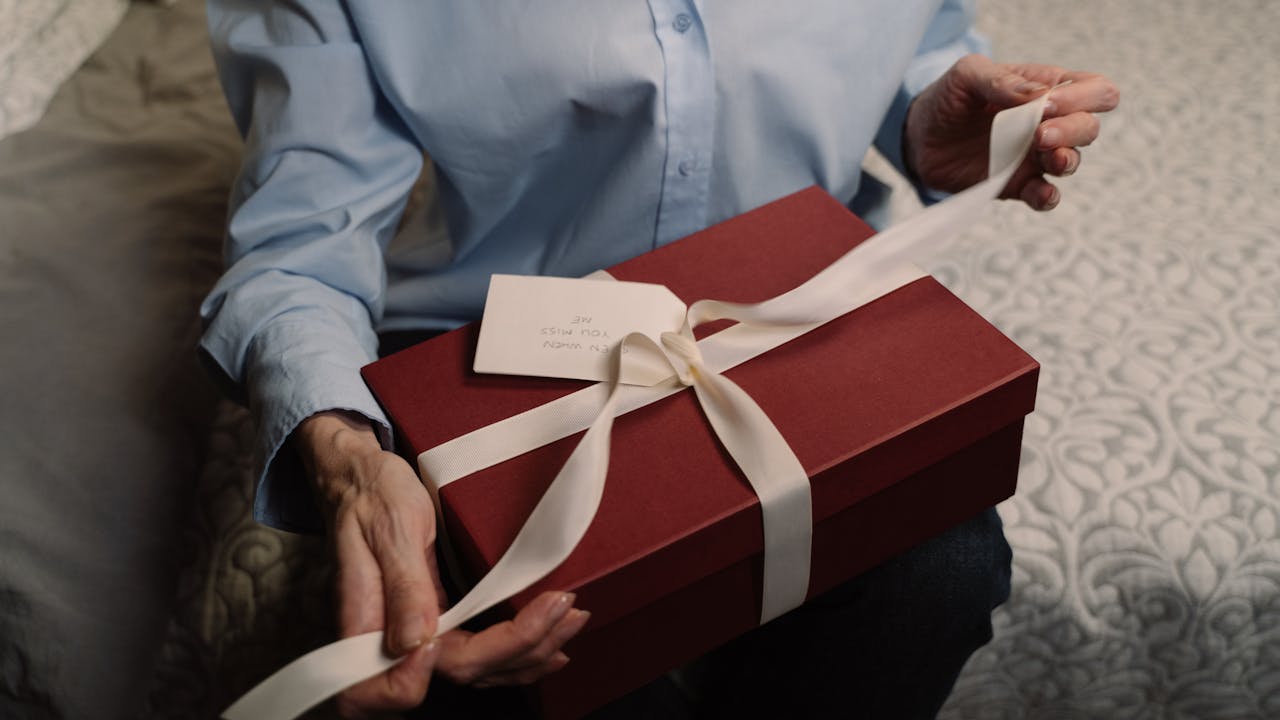
Few gifts land as hard as a dog portrait. The reaction is almost always the same. A pause. Wide eyes. A hand over the mouth. Then tears. Every single time.
Why it works
A dog portrait works as a gift because it requires thought. You had to choose the photo. You had to pick the style. You had to know the person well enough to know which photo of their dog matters most to them. That level of intention communicates love in a way that a gift card or a piece of jewelry simply can't match.
It's also deeply personal without being intrusive. You're not making assumptions about their taste in clothes or books or wine. You're honoring something they already love unconditionally. Their dog. That's a safe and powerful emotional target.
For the art lover in your life, a custom dog portrait combines their love of art with their love of their pet. It's the intersection of two passions, and that makes it memorable.
Best occasions
Birthdays. A dog portrait makes a birthday gift that doesn't get returned, regifted, or forgotten. It goes straight to the wall. For younger recipients, check out art gifts for teens for more ideas that pair well with a portrait.
Holidays. Order early. Holiday demand for custom dog portraits surges in November and December, and turnaround times stretch. Start shopping by mid-October for holiday delivery.
Memorials. When someone loses a dog, the grief is real and profound. A portrait of that dog, created with care, becomes one of the most meaningful tributes possible. It acknowledges the loss and honors the relationship in a way that flowers and cards can't.
Housewarming. Someone just moved? A portrait of their dog for the new house says "welcome home" in the most personal way possible. Combine it with a couple portrait of the new homeowners for a gift set that covers the whole household.
Just because. The best reason. No occasion. Just "I know how much your dog means to you, and I wanted you to have this."
Ordering a portrait as a surprise
The tricky part is getting the photo without tipping off the recipient. A few strategies that work:
Ask them to send you their favorite photo of their dog for some made-up reason. "I'm making a photo book." "I want it as my phone wallpaper." People love sharing dog photos and won't question the request.
Check their social media. Dog people post dog photos constantly. Find the one with the most likes or the most heartfelt caption. That's probably the photo that means the most to them.
If you have access to their phone's camera roll (with permission), scroll through and screenshot the winner. Then delete the screenshot from your recently deleted folder so it doesn't show up.
For teachers who are dog lovers, a portrait of their pet makes an end-of-year gift they'll actually keep. It stands apart from mugs and candles because it shows you noticed what matters to them.
Famous dogs in art history
Dogs have been subjects of fine art for as long as art has existed. Understanding this history adds context and appreciation to the portrait of your own dog.
Sir Edwin Landseer is perhaps the most famous dog painter in history. His Victorian-era works include "A Distinguished Member of the Humane Society," a portrait of a Newfoundland named Bob who was honored for rescuing drowning people from the Thames. Landseer also painted "Portrait of Dash" for Queen Victoria's birthday in 1836. His work captured the dignity and emotion of dogs with a skill that still influences pet portrait artists today.
Cassius Marcellus Coolidge created the most recognizable dog paintings in popular culture. His "Dogs Playing Poker" series, painted between 1894 and 1910, features anthropomorphized dogs sitting around card tables. The eighteen paintings in the series have become cultural icons, reproduced on everything from posters to playing cards. They're also worth significant money. A pair of the original paintings sold at auction for over $650,000.
Pablo Picasso formed an unlikely bond with Lump, a dachshund belonging to photographer David Douglas Duncan. The dog visited Picasso's studio and never left. Picasso painted and drew Lump repeatedly, using his characteristic abstract style to capture the dachshund's form in simplified, playful lines. The relationship between artist and dog became the subject of a book, "Picasso and Lump: A Dachshund's Odyssey."
David Hockney spent three months painting nothing but portraits of his dachshunds Stanley and Boodgie. The two dogs followed him everywhere, and the resulting body of work captures their sleeping, playing, and lounging in Hockney's signature bright, flat color style. These aren't formal portraits. They're intimate documents of daily life with dogs, and they're some of the most honest animal art ever made.
Andy Warhol applied his pop art treatment to dogs as well. His "Portrait of Maurice," a commissioned piece featuring a dachshund, uses the same bold color blocks and screen-printed aesthetic that defined his human celebrity portraits. When Warhol put a dog through his pop art machine, the result said something profound: our pets are our celebrities.
This tradition continues today. Every dog portrait commissioned, from a $30 digital illustration to a $1,000 oil painting, extends a line of artistic love that stretches back centuries. Your dog's portrait joins an ongoing conversation between humans and the animals they can't stop admiring. The popularity of royal pet portraits and renaissance pet portraits proves that the impulse to dress our animals in period costume is as old as art itself. We've just made it easier than ever with modern tools and platforms like Fable.
Common mistakes to avoid
A few things can derail an otherwise great dog portrait experience. Here's what to watch for.
Choosing style over substance. Don't pick a style just because it's trending. Pick the one that matches your dog's personality and your home's aesthetic. A pop art portrait of a gentle, elderly golden retriever might not capture who they really are. A soft watercolor might be perfect.
Sending low-quality photos. The number one cause of disappointing portraits is a blurry, dark, or low-resolution reference photo. Take the time to get a good one. It makes everything else easier.
Skipping the proof review. When the artist sends a proof, don't just glance at it and approve. Look carefully. Compare it to your dog. Check the markings, the eye color, the ear shape. This is your chance to catch issues before they're permanent.
Ignoring framing. A beautiful portrait in a cheap frame is like a sports car with plastic hubcaps. The frame is part of the art. Budget for a good one, or choose a service that includes framing.
Waiting until the last minute. Custom art takes time. If you need it by a specific date, order well in advance. Standard turnaround is three to six weeks for most artists. Holiday seasons and gift-giving periods stretch timelines further. Review the ordering process before you start so you know exactly what to expect at each stage.
Portraits for every kind of dog owner
Dog portraits aren't one-size-fits-all. Different people want different things.
The sentimental owner wants a realistic portrait that looks exactly like their dog. Oil paintings and detailed pencil drawings serve this need best. The goal is accuracy and emotional resonance.
The fun-loving owner wants something playful and shareable. Renaissance pet portraits and pop art styles deliver humor and personality. These owners want guests to laugh and then say, "Where did you get that?"
The design-conscious owner wants art that fits their curated space. Minimalist line art, custom-colored digital illustrations, and carefully chosen frames matter as much as the portrait itself. For this person, the portrait is an interior design decision as much as an emotional one.
The gift-giver needs something universally appealing. Personalized dog portraits hit the sweet spot between personal and tasteful. Almost no one has ever looked at a custom portrait of their dog and felt disappointed.
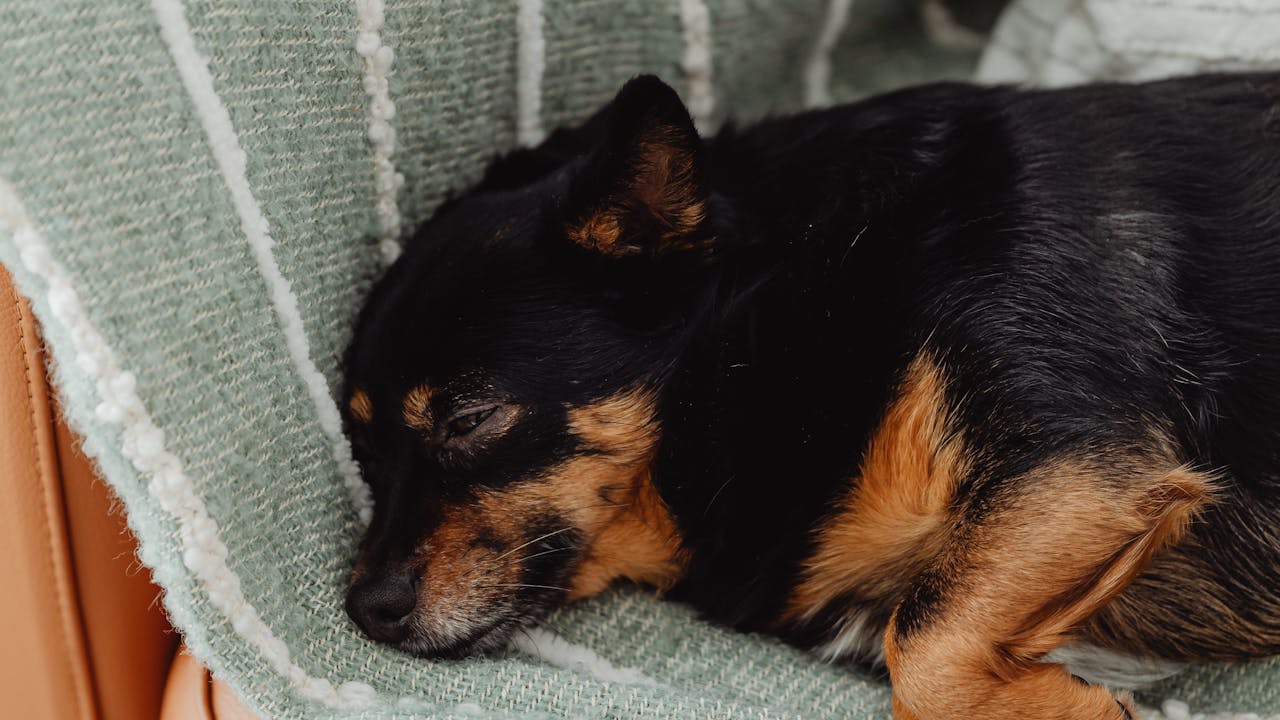
The memorial owner needs something tender and respectful. Watercolor's softness works. Pencil's quiet detail works. Whatever the medium, the portrait becomes a way to keep a lost companion present in the home. It's not about replacing what's gone. It's about honoring what was.
Whatever category you fall into, exploring self portraits and family portraits alongside your dog portrait can create a cohesive collection that tells the full story of your household. Dogs included.
Frequently asked questions
How long does a dog portrait take to complete?
Most dog portraits take three to six weeks from order to delivery. Digital illustrations are the fastest, sometimes completing in one to two weeks. Hand-painted oil portraits take longer due to drying time between layers. Rush orders are available from many artists for an additional fee, typically 25 to 50 percent more than the standard price.
Can I get a portrait of a dog who has passed away?
Yes. Memorial portraits are one of the most common and meaningful types of dog portraits. As long as you have a clear, well-lit photo, any portrait artist can create a beautiful tribute. Many people find that a portrait of a lost companion provides comfort and keeps their memory present in the home. Explore pet portraits for more on honoring pets through art.
What if I don't have a great photo of my dog?
Most artists can work with imperfect photos as long as the face is visible and reasonably sharp. Send the best photo you have, and include a few additional angles if possible. Many artists are skilled at compositing details from multiple photos into a single, cohesive portrait. Check how it works for guidance on photo requirements.
How many dogs can be in one portrait?
Most portrait services accommodate multiple dogs in a single piece. Pricing typically increases per additional subject. Two dogs work well in a standard composition. Three or more may require a larger canvas size to avoid crowding. If you want the whole pack, consider a larger format piece that gives each dog room to breathe. A family portrait that includes all your dogs, and maybe the humans too, makes for a stunning centerpiece.
What's the best portrait style for a gift?
Renaissance and royal styles are the safest bet for gifts because the reaction is almost guaranteed to be joy and laughter. They work for any breed and any dog personality. For someone with more traditional taste, a realistic custom dog portrait in oil or pencil style is a classic choice that always feels thoughtful and personal.
Do I need to frame the portrait myself?
It depends on the service. Some portrait providers ship finished pieces ready to hang, with framing included. Others ship the print or canvas unframed. Fable delivers prints ready for display. Check pricing for details on what's included with each portrait option. If you're framing yourself, take the portrait to a professional framer rather than using a standard off-the-shelf frame. The difference in quality is noticeable.
Related guides
- Pet portraits: turn your companion into timeless art
- Custom dog portraits: how to create the perfect pet keepsake
- Renaissance pet portraits: timeless art for modern pet lovers
- Royal pet portraits: turn your pet into nobility
- Gifts for art lovers: unique ideas they'll actually keep
Sources
The best portrait of your dog won't be the most expensive one. It won't be the trendiest style or the biggest canvas. It will be the one that makes you stop every time you walk past it. The one that captures the look your dog gives you when it's just the two of you and the house is quiet. That look is already there in a photo on your phone. All it needs is an artist who can see what you see. Start creating yours and give your dog the wall they've always deserved.