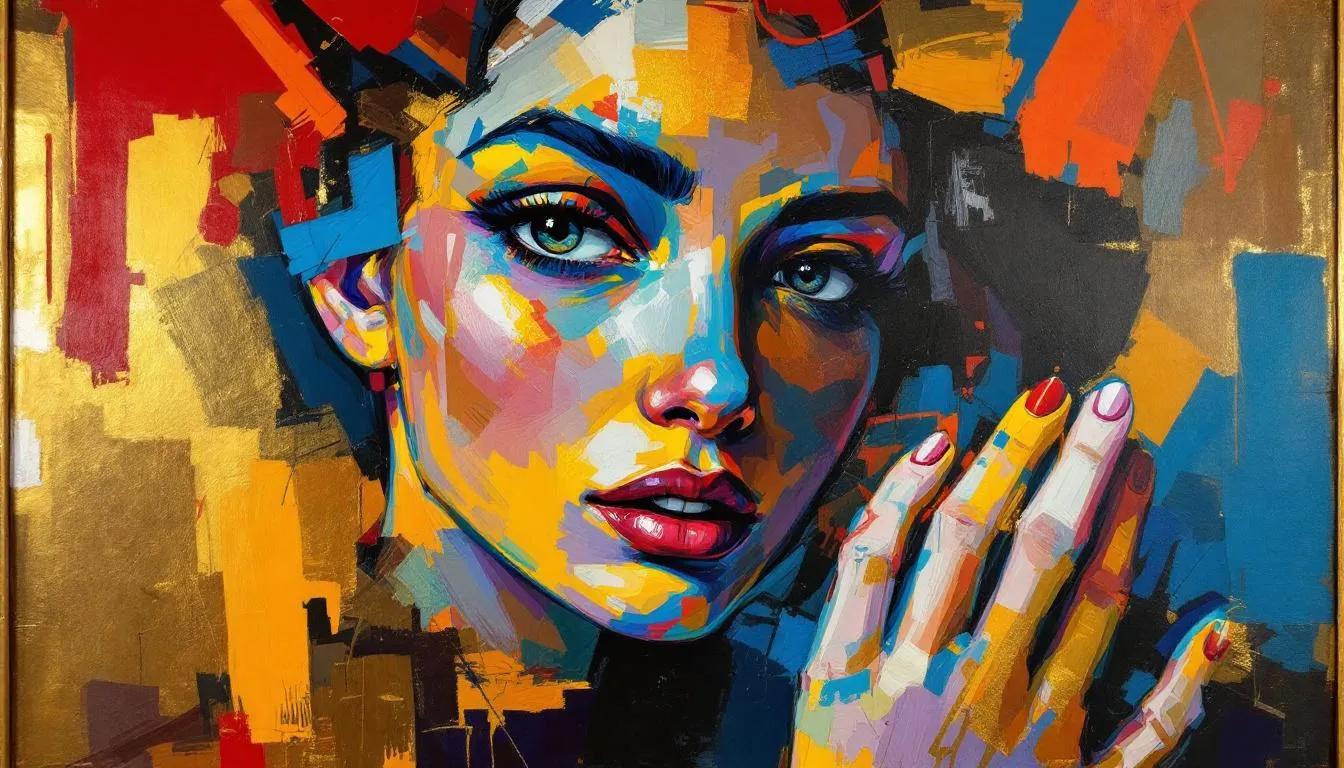
Abstract portraits: the complete guide to expressive portrait art
There is a portrait of a woman hanging in the San Francisco Museum of Modern Art. Henri Matisse painted it in 1905. He called it "Woman with a Hat." Critics called it the nastiest smear of paint they had ever seen.
They were wrong.
That painting launched a movement. It changed what portrait art could be. Instead of capturing the exact shade of Madame Matisse's skin, the brushwork captured something harder to describe. Her mood. Her weight in a room. The feeling of sitting with her. A photographic likeness would have missed all of that.
That is the argument for abstract portraits. Not that accuracy is bad. But that accuracy alone is never enough.
This guide covers everything you need to know. The history, the major styles, the artists who shaped them, how they are made, and what to look for when you want one on your wall or as a gift for someone you love. It also explains why the best abstract portraits you can give someone today are not prints from a gallery or downloads from the internet. They are custom works built around a specific person. Someone irreplaceable.
The best abstract portrait gift: a custom portrait from Fable
Before we get into art history, let's talk about the thing that actually matters.
Most portrait gifts are forgettable. A photo on a phone case. A canvas print of a stock image. Something that says "I tried" without saying much else.
A custom portrait is different. It is one of the few gifts that tells the person receiving it that they are worth commemorating. That their face, their relationship with you, their presence in your life is worth creating something for. Not just buying something. Creating.
Fable does exactly this. It transforms a photo you already have into a museum-quality portrait painted in a rich classical style. Renaissance. Royal. Old master. You upload the photo, choose the style, and Fable produces a custom portrait that looks like it belongs in a gallery.
The Fable-first argument is simple. Anyone can order flowers. Anyone can find a nice candle. But a custom family portrait, a couple portrait, a kids portrait, or a self portrait created in a painterly, timeless style is something no one else will give. It lives on the wall. It gets noticed by every visitor. It becomes part of the home's story.
For the person who has everything, a Fable portrait is the answer. For the person who has nothing, it is still the answer. It is personal in a way that no off-the-shelf product can touch.
If you are here because you want to give a great portrait gift, start at Fable's how it works page. Then check pricing to find the option that fits. And then come back here if you want to know everything about the art form itself.
Because abstract and classical portraits have a fascinating history. And understanding it makes a custom portrait feel even more meaningful.
What is an abstract portrait?
A traditional portrait has one job. It must look like the person it depicts. Hans Holbein's portraits of Henry VIII are essentially historical photographs in paint. The sitter's status, costume, and physiognomy are documented for the record. This is what portraiture was for most of human history.
Abstract portraits have a different job. They must be portraits. And they must avoid purely objective representation of reality. Both conditions must be true simultaneously.
That sounds paradoxical. But it works.
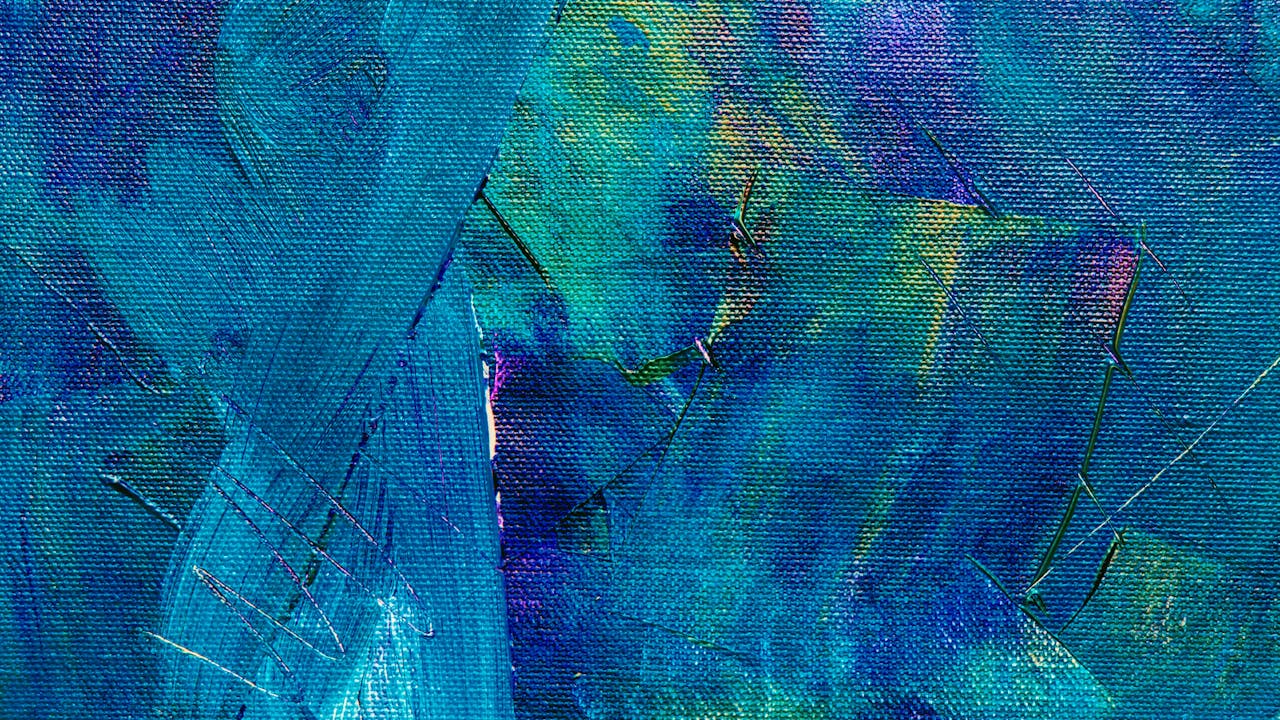
When the artist departs from photographic accuracy, several things happen. Color becomes expressive rather than descriptive. A face might be rendered in blues and greens to convey sadness, or in harsh reds to suggest heat or intensity. Form becomes emotional rather than anatomical. The nose on a Cubist portrait shows both frontal and profile views at once because the artist wants you to know something about depth and time, not about the exact angle of the subject's nose. Brushwork becomes a record of feeling. Thick, violent impasto carries urgency. Thin, transparent glazes suggest vulnerability.
The great theorists of abstract portraiture agree on this point. Where hyperrealistic portraiture closes interpretation, abstract portraiture opens it. The viewer brings their own emotional reading. The painting becomes a conversation rather than a document.
This is why abstract portraits often feel more intimate than photographs. They are built from perception and feeling. Not from light hitting a sensor.
The relationship between portrait and landscape formats is worth noting here too. Portrait orientation, the vertical format, exists because it follows the proportions of the human body. Abstract portraits play with this convention constantly. Some compress and fragment it. Some stretch it. Some abandon it entirely, spilling the subject across horizontal space.
Major styles of abstract portraiture
Abstract portraiture is not one thing. It is a family of related approaches, each developed in a specific historical moment, each with its own visual logic.
Fauvism
Fauvism was the first major rupture in portrait convention. The Fauves were a loose group of French painters, including Henri Matisse, Andre Derain, and Maurice de Vlaminck, who exhibited at the 1905 Salon d'Automne in Paris. A critic named Louis Vauxcelles walked into the room and said they were like wild beasts. "Les Fauves." The name stuck.
What horrified Vauxcelles was the color. Fauvist portraits used color not to describe light falling on skin, but to express the emotional life of the subject and the artist. "Woman with a Hat" showed Matisse's wife with a green stripe down her nose. Not because she had a green stripe on her nose. Because the green stripe communicated something true about the experience of looking at her.
The Metropolitan Museum of Art describes Fauvism as using intense color as "a vehicle for describing light and space" and redefining "pure color and form as means of communicating the artist's emotional state." That redefinition is the foundation of every abstract portrait made since.
Cubism
Pablo Picasso and Georges Braque invented Cubism around 1907. It was the most radical rupture in portrait tradition in all of art history.
Cubism's central claim was this: a face seen from one fixed viewpoint at one frozen moment is a lie. Or at least, an impoverished version of truth. We experience faces over time, from multiple angles. We know what a nose looks like in profile because we have seen it in profile. Why should a portrait only show one view?
The Cubist answer was to show many views simultaneously. A face fragmented and reassembled. Eyes facing forward, nose in profile, jaw at a third angle. Tate describes Cubist paintings as "fragmented and abstracted," showing "the subject from a multitude of viewpoints." "Les Demoiselles d'Avignon" (1907), now in MoMA in New York, began this conversation. It depicted five figures whose faces drew on African masks and Iberian sculpture, abandoning every convention of representation. Art historians now call it "the first unequivocally 20th-century masterpiece."
Cubism's influence on portrait art is total and permanent. Every artist who came after had to respond to it.
Expressionism
German and Austrian Expressionism ran roughly from 1905 through the 1930s. It drew on Fauvism's color discoveries but added psychological intensity of a different order.
Groups like Die Brücke and Der Blaue Reiter used simplified forms, urgent brushwork, and raw emotional charge to externalize psychological states. Ernst Ludwig Kirchner, Egon Schiele, Oskar Kokoschka, and Max Beckmann all made portraits that function less as records of a face and more as records of an inner life.
Schiele's self-portraits are among the most psychologically raw images in the Western canon. He died at 28 during the 1918 influenza epidemic. In fewer than three decades, he created a body of portraiture that MoMA identifies through his "drawing" as the vehicle for "sexually or psychologically charged body language to bore into the human psyche." His subjects look exposed in ways that photograph-based portraits rarely achieve.
Kokoschka's "The Bride of the Wind" (1913-14) depicts his relationship with Alma Mahler through swirling, chaotic brushwork. He painted portraits of Viennese intellectuals as psychological landscapes more than physical records.
Abstract Expressionism
American Abstract Expressionism emerged in New York in the late 1940s. It synthesized Fauvism, Cubism, Surrealism, and Expressionism into something distinctly American and post-war.
Many Abstract Expressionists abandoned figuration entirely. But others, like Willem de Kooning, maintained a fraught, gestural relationship with the human figure. De Kooning's "Woman" series is a landmark of portrait art that teeters between recognizable figure and total abstraction. The paint is applied with violence. The woman is there. And she is not quite there.
This tension between presence and dissolution is one of the most interesting formal ideas in abstract portraiture. The subject appears. And threatens to disappear.
Photorealism and conceptual portraiture
Chuck Close took a completely different approach. He photographed his subjects, divided both photograph and canvas into grids, and transferred the image square by square. Each section of the grid became an independent abstract color study. From across the room, the result was startlingly photorealistic. Up close, it dissolved into pure abstraction: dots, loops, fingerprints, or color fields, depending on the period of work.
Close's 1978 series used inked fingerprints pressed directly onto the canvas in varying densities to model form. The resulting portraits are simultaneously the most documentary and the most abstract images he made. They ask a genuinely strange question: at what point does accumulation of abstract marks become a recognizable face?
His subjects included Philip Glass, Richard Serra, Alex Katz, and himself. His self portraits are among his most discussed works.
Contemporary abstract figuration
Today, abstract portrait practice is eclectic and pluralistic. The conversations of the 20th century are ongoing. Artists combine gestural abstraction, color field, digital methods, and traditional media. Kehinde Wiley painted Barack Obama's official portrait for the Smithsonian Institution's National Portrait Gallery in a grand manner that placed contemporary Black experience inside European royal portrait conventions. Neo-Expressionists like Jean-Michel Basquiat brought raw street energy to portraits that borrowed from both the Old Masters and subway graffiti.
Abstract portraiture today is as much about the politics of representation as about painterly technique. Who gets painted. Who has historically been deemed worthy of formal commemoration. These questions are now part of the work.
Famous abstract portrait artists you should know
The history of abstract portraiture is defined by a handful of figures whose work changed what was possible.
Pablo Picasso (1881-1973)
Picasso is the central figure in abstract portraiture for the same reason gravity is the central force in physics. Everything orbits him. He co-invented Cubism with Braque. His auction records are staggering: "Les Femmes d'Alger (Version O)" (1955) sold for $179.4 million in 2015. "Fillette a la corbeille fleurie" sold for $115 million in 2018.
But the numbers are not the point. The point is that Picasso permanently shattered the convention of the single-viewpoint portrait. That shatter is still echoing.
Henri Matisse (1869-1954)
Matisse's "Woman with a Hat" (1905) is the founding document of abstract portraiture's color revolution. The Stein family purchased it despite Leo Stein initially calling it "the nastiest smear of paint I had ever seen." It now lives permanently at SFMOMA in San Francisco.
Matisse spent the rest of his career exploring what color could do when freed from descriptive obligation. His late paper cutouts are portraits in a sense: simplified human forms rendered through pure color relationships. They are among the most joyful objects in 20th-century art.
Francis Bacon (1909-1992)
Irish-born British painter whose portraits are among the most psychologically violent in art history. Bacon painted popes, lovers, and himself with distorted forms isolated within geometric structures. The human figure in Bacon's work looks simultaneously alive and in agony.
His "Three Studies of Lucian Freud" (1969), a triptych in oil on canvas, sold at Christie's New York in November 2013 for $142.4 million. It was the most expensive work of art sold at auction at the time. The buyer was casino billionaire Elaine Wynn. In 2025, Wynn's estate donated the triptych posthumously to the Los Angeles County Museum of Art.
Bacon and Freud were close friends. The way Bacon painted Freud, and the way Freud painted Bacon, constitutes one of the most fascinating double portraiture exchanges in art history.
Lucian Freud (1922-2011)
German-British painter. No living artist received more critical recognition for figuration than Freud in the second half of the 20th century. His naked portraits rendered people without idealization. Skin sagging. Bodies heavy. Faces showing every year lived. His sitters included Kate Moss, Queen Elizabeth II, David Hockney, and his own children.
"Benefits Supervisor Resting" sold at Christie's New York in 2015 for $56.2 million. "Portrait of David Hockney" sold at Sotheby's London for $20.7 million. These are not abstract portraits in the sense of Cubist fragmentation. But they are deeply anti-documentary. Freud's method of building paint through accumulated marks produces images that feel both hyper-present and strangely elsewhere.
Alice Neel (1900-1984)
One of the greatest American portraitists of the 20th century. Neel painted friends, poets, artists, and strangers in Spanish Harlem with psychological intensity and vibrant color. She worked in a figurative style during the height of Abstract Expressionism, when non-representational painting dominated, and received almost no mainstream attention until the 1970s.
Her portrait of Andy Warhol, depicting him shirtless with scars from Valerie Solanas's assassination attempt, is one of the defining portrait images of the late 20th century. Neel made Warhol vulnerable in a way no photograph could.
Kehinde Wiley (born 1977)
Wiley paints Black subjects in the grand manner of Old Master portraiture. He places contemporary figures in the compositional conventions of European royal portraits. Rich ornamental backgrounds. Poses borrowed from Velazquez, Titian, and Ingres. Contemporary clothing. The effect interrogates who has historically been deemed worthy of formal commemoration.
His commission for Barack Obama's official portrait, unveiled at the Smithsonian in 2018, brought abstract portrait practice to a global audience. The painting shows Obama seated in a chair surrounded by flowering greenery. It looks like nothing else in the portrait gallery. Which is entirely the point.
The interest in what Wiley does connects directly to the appeal of renaissance pet portraits and royal pet portraits that Fable specializes in. The move to place a subject in a historical, grand manner style is not new. It is as old as portrait art itself. It asks: what if this person had been deemed worthy of a formal painting?
The answer is always: they are.
Egon Schiele (1890-1918)
Austrian Expressionist. Taut, angular lines. Distorted body shapes. Raw psychological exposure. Schiele used his own body and the bodies of his models as landscapes of anxiety and desire. He died at 28. His self-portraits are among the most discussed in Vienna, where he is a cultural figure of considerable magnitude.
A brief history of abstract portraiture
Portrait art is ancient. The Fayum portraits, painted on wood in Egypt between the 1st and 3rd centuries CE, were placed over the faces of mummies. They were painted with extraordinary specificity. The sitter's features, jewelry, and social status were rendered with care. These are among the oldest surviving painted portraits in the world.
For most of the next sixteen centuries, the portrait's job was documentation. Likeness, status, and memory. Renaissance masters like Leonardo da Vinci, Hans Holbein the Younger, and Raphael perfected the portrait as a technology of power. Kings and merchants used it to project authority and preserve their features for posterity.
The rupture begins in the 1880s. Cezanne, Van Gogh, and Gauguin began treating the portrait as a vehicle for personal expression rather than documentary accuracy. Van Gogh's self-portraits are exercises in psychological intensity. He used distorted color and visible, emotionally charged brushwork to communicate inner states that a photograph of his face could never convey. In his letters, he wrote explicitly about wanting to use color like a musician uses sound: to express feeling directly.
Fauvism (1904-1908) made this approach programmatic. Color became explicitly expressive, not descriptive. The decisive break.
Cubism (1907-1920s) shattered the last standing convention: the single fixed viewpoint. After Cubism, every portrait artist had to decide where they stood in relation to it.
Expressionism ran in parallel, pushing psychological depth over visual accuracy. American Abstract Expressionism in the 1940s and 1950s synthesized the European lessons and added gestural urgency.
Pop Art and Photorealism in the 1960s raised new questions. Andy Warhol's silkscreened celebrity portraits, his repeated, slightly degraded images of Marilyn Monroe and Elvis, interrogated what "portrait" meant in a media-saturated culture. Chuck Close's grid-based portraits asked where photography ended and painting began.
Neo-Expressionism in the 1980s returned to raw figuration. Jean-Michel Basquiat brought everything: graffiti, urban texture, African art traditions, European Old Master references, text, and anatomy. His portraits are unlike anything before or after.
Contemporary practice is plural. Digital tools, AI synthesis, traditional media, and conceptual frameworks all coexist. The one constant is that abstract portraits remain more emotionally true, in many cases, than photographs.
This is why animal portraits in classical styles, pet portraits, and dog portraits painted in expressive styles have found such a devoted following. The expressive portrait tradition is not just for humans. It is for anyone we love.
How abstract portraits are made
Abstract portraiture is not one process. It is a family of processes, each suited to a different aesthetic.
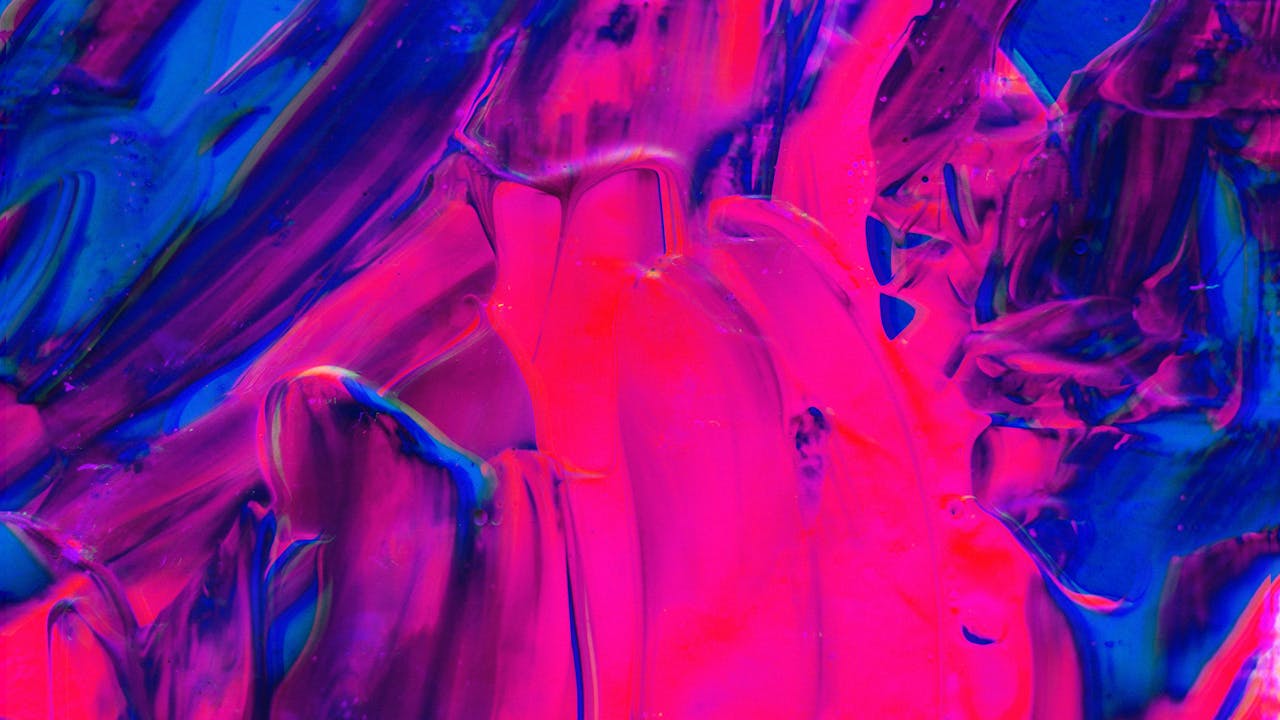
Color distortion is the most common starting point. The artist chooses colors for emotional effect rather than descriptive accuracy. A blue or green face communicates sadness, distance, interiority. Red and orange faces communicate heat, passion, urgency. The choice is interpretive, not observational. Even within a single portrait, different areas might employ different palettes, creating internal tensions that a photograph could never generate.
Fragmentation breaks the face or figure into component parts. Cubism did this to show multiple viewpoints simultaneously. Contemporary fragmentation might mean showing only a portion of a face, or layering multiple exposures of the same subject, or dissolving the edges of the figure into the background in ways that suggest uncertainty or transition.
Expressive brushwork turns the physical mark of the brush into an expressive element. Thick impasto applied with palette knives creates texture and three-dimensional presence. Gestural strokes carry the artist's physical energy directly into the surface. Lucian Freud's dense paint surfaces took this approach to an extreme: his figures feel painted from the inside out, the paint itself as biological as skin.
Geometric abstraction reduces facial features to basic shapes. Circles, rectangles, triangles. The grid that Chuck Close used is a form of geometric abstraction that paradoxically produced his most photorealistic results, because the grid enforced a systematic approach to value and color that the eye cannot deliberately create.
Strategic simplification removes detail from non-essential areas to concentrate attention on the emotional center, usually the face and eyes. This is how portraits can feel simultaneously minimal and psychologically saturated. Less information in the peripheral areas creates more focus on the core.
Layering builds translucent layers of paint to achieve depth and luminosity. Historically, Old Masters used this technique over long periods. Contemporary abstract portrait painters use it to create surfaces that seem to glow from within.
For anyone interested in creating abstract self-portraits, the practical starting point is a strong photographic reference, basic mark-making tools including palette knives and varied brushes, and a willingness to choose colors based on feeling rather than observation. The technical skill of abstract portraiture is partly conventional; the harder part is permission. Permission to make choices that diverge from the visual record.
The art of self portraits for formal presentation, whether photographic or painted, is also well-covered in guides like senior portrait poses and senior portrait outfits for those approaching formal portrait sessions.
Abstract portraits as gifts
There is something particular about giving a portrait.
For most of human history, only royalty, wealthy merchants, and senior clergy sat for formal paintings. A portrait was a declaration of significance. It said: this person matters enough to be commemorated. Their face and presence will outlast them.
When you give someone a custom portrait, you are making that declaration on their behalf.
This is why custom portrait gifts have a different emotional weight than almost any other gift category. A birthday portrait gift says something beyond "happy birthday." A wedding gift art portrait says something beyond "congratulations." An anniversary gift portrait says something beyond "here is something nice." Each one says: you are worth commemorating.
The abstract or classical painting tradition adds to this. When the portrait is rendered in a rich, expressive, heirloom-quality style rather than as a photograph or simple print, it elevates the gesture further. It becomes art. It has a presence in a room that a framed photograph cannot match.
For art gifts for mom, a portrait of her family, her children, or herself in a classical style is something no generic gift can touch. For art gifts for teens, a portrait rendered in an expressive, vivid style connects to the energy of contemporary abstract art while remaining personal. For gifts for art lovers who appreciate the tradition, a commissioned portrait in an expressive style is meaningful in multiple layers.
The same logic applies to pet portraits and custom dog portraits. A memorial pet portrait for someone who has lost an animal companion is one of the most emotionally powerful gifts in this entire category. It honors the bond in a lasting, visible way.
Pet painting from photo services take this approach. Pet family portraits that include both the family and their animals in the same classical composition are among Fable's most popular orders, and for good reason.
The personalized dog portraits and regal pet portraits that Fable produces draw directly on the royal and classical portrait tradition. A greyhound painted as 18th-century English nobility. A golden retriever in renaissance costume. The absurdity is part of the delight. But so is the craft.
Graduation gift art is another natural fit. A portrait of the graduate, rendered in a way that commands attention, is a milestone gift that can move from their first apartment to wherever life takes them.
How to choose the right abstract portrait style
There are too many styles to enumerate. But a few frameworks help.
Consider the subject. Bold, saturated abstract styles suit people with vivid personalities, people who wear color, people who take up space in a room. Quieter, more restrained styles, soft-focus impressionist approaches or simplified graphic treatments, suit people who are more private, more introspective.
Consider where it will live. A heavily impasto, richly colored abstract portrait works in a contemporary interior with strong architecture. A softer, more classical approach works in traditional spaces. A graphic, simplified portrait works almost anywhere because it reads clearly from a distance.
Consider the occasion. A christmas art gift portrait might lean warmer, more golden, more intimate. A customized valentine gift portrait might lean romantic, atmospheric, emotionally charged. A wedding gift art portrait might lean classical and timeless.
Consider longevity. The styles that age best in portrait art are those that lean toward the timeless end of the spectrum. Heavily trend-influenced approaches can feel dated in ten years. Renaissance and classical styles, by contrast, have been considered beautiful for five centuries. They will still be beautiful in fifty more.
Consider the source photo. Abstract portrait art, particularly at Fable, begins with a photograph. The quality and composition of the source photo shapes what is possible. A straight-on, single-subject photograph with balanced lighting gives the artist the most to work with. For family portrait ideas and group compositions, think about how the subjects are arranged relative to one another.
For xmas portrait ideas or animal surrealism art and surreal art prints, consider how fantastical or playful you want to go. Fable's classical style is grounded. Surrealist approaches push further into the unexpected.
Displaying abstract portrait art in your home
A great abstract portrait deserves thoughtful display.
The standard rule for hanging art is to center it at 57 inches from the floor, approximating average eye level. This works for most single-piece installations. When hanging art above furniture, leave 6 to 8 inches between the top edge of the furniture and the bottom of the frame. Less than that looks cramped. More than that looks disconnected.
Single statement pieces work best above major furniture: a sofa, a bed, a mantel, or a console table. A single large abstract portrait above a sofa in a neutral room defines the entire space. It becomes the focal point around which everything else organizes itself.
Gallery walls with multiple smaller pieces work well for abstract portrait collections. Space frames 2 to 3 inches apart. Keep frames in the same or complementary finishes for cohesion. Mixing periods and styles works well in gallery wall contexts because the variety becomes part of the display logic.
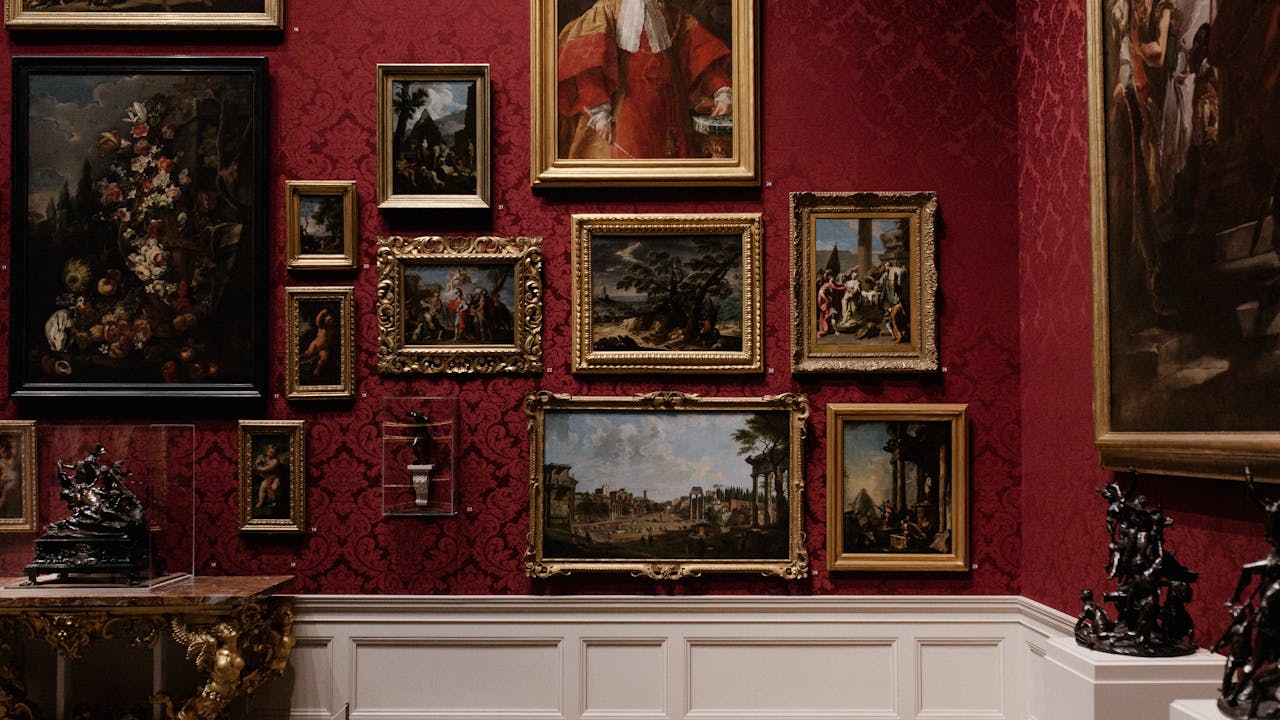
Frame selection matters more than most people think. For abstract portraits with vivid color and expressive marks, simple frames in natural wood or matte black let the work breathe. Ornate gilded frames can work for classical portrait styles that invoke the grand manner tradition. Floating frames, which leave a gap between the canvas edge and the frame, are popular for contemporary abstract work because they emphasize the edge of the canvas as part of the composition.
Lighting makes an enormous difference. Natural sidelighting, from a window to the left or right of the work, creates shadows in textured surfaces that make impasto and gestural brushwork come alive. Directed spotlighting from above or at an angle achieves a similar effect artificially. Flat overhead lighting flattens everything.
For art deco gifts and display contexts influenced by art deco aesthetics, paired symmetrical placement and warm amber lighting are traditional. For more contemporary abstract portrait display, asymmetry is fine. The work should feel considered, not forced.
Portrait vs landscape orientation choices matter at the display stage too. Abstract portraits in portrait orientation (vertical) command vertical space and read as figure-like even when the content is partially abstracted. Horizontal orientations feel more expansive and environmental.
Where to get abstract portrait art
There are several ways to acquire abstract portrait work, each suited to different needs and budgets.
Custom commissions are the most personal option. A commissioned portrait is built for a specific person and a specific context. Prices range widely. Emerging artists might charge $100-500 for a small work. Established professional artists can charge $5,000-50,000 or more depending on size and complexity. The formula most artists use is $0.50 to $4.00 per square inch, depending on their market position and medium.
An 8x10 inch portrait typically runs $200-500. A 24x36 inch portrait typically runs $1,500-3,000. These are commission figures. Original works, not commissioned, tend to run somewhat lower. Commissioned work runs 15-20% higher due to the consultation process.
Fable sits in a specific position in this landscape. It offers classical portrait art that is custom to your photograph at accessible price points. The work is not hand-painted by a single human artist in the traditional sense. It is produced through a refined, controlled process that generates museum-quality output. See how it works and pricing for specifics.
The advantage of Fable over a traditional commission is consistency, turnaround, and price. The advantage of a traditional commission over Fable is the relationship with a specific artist and the fully unique hand of that artist in every mark. Both have legitimate places.
Prints and reproductions offer access to abstract portrait imagery at the lowest price points. Society6 starts at around $10 for mini prints. Saatchi Art offers prints from around $40. These are not custom works, but they can be excellent. The print market for art priced under $5,000 grew 79% since 2020, with 128,900 sold in 2024 alone according to the UBS Art Market Report 2024. People want art on their walls. Prints are a legitimate way to achieve that.
Original secondary market works are available through auction houses, galleries, and online platforms like Artsy. Prices vary enormously. But for the buyer interested in abstract portrait art as an investment category, this is where to look. Abstract art holds the largest share of the wall art market at 30.49% of the $66.89 billion global wall art market.
For gifts for art students and gifts for art lovers with an interest in collecting, pointing them toward the secondary market or giving them a Fable portrait of themselves are both strong choices.
Frequently asked questions
What is the difference between an abstract portrait and a traditional portrait?
A traditional portrait aims for likeness. The subject should be recognizable. Colors, proportions, and expressions should correspond to observable reality. An abstract portrait uses the human face or figure as a starting point but departs from photographic accuracy in some deliberate way, through color, fragmentation, distortion, or simplification, in order to capture something beyond visual fact. Emotion, psychology, or energy that a photograph alone cannot convey.
Who are the most famous abstract portrait artists?
Pablo Picasso is the dominant figure. His Cubist portraits fundamentally changed what portrait art could be. Henri Matisse, the founder of Fauvism, changed portrait color. Francis Bacon pushed psychological violence into portrait form. Lucian Freud made hyper-present figurative portraits that function like abstraction through density of mark. Alice Neel, Chuck Close, Kehinde Wiley, Egon Schiele, and Oskar Kokoschka all made significant contributions.
How do I commission an abstract portrait?
The traditional route is to find an artist whose style appeals to you, reach out about their commission process, provide a reference photograph, and negotiate scope, medium, size, and price. The process typically takes weeks to months. Fable offers an alternative: upload your photo, choose a classical portrait style, and receive a high-quality custom portrait much faster. See how it works for Fable's process.
What styles of abstract portrait work best as gifts?
Classical, Renaissance, and royal portrait styles tend to be the most universally well-received because they feel timeless and celebrate the subject with gravity. Bold, expressive Fauvist-style color portraits are strong gifts for people who love vivid art. More restrained, graphic styles work well for minimalist homes. When in doubt, ask what the recipient hangs on their walls already.
How much does an abstract portrait cost?
It depends entirely on source, medium, and scale. Prints from online platforms start at $10-40. Custom commissions from emerging artists typically begin around $100-200 for small works. Professional portrait commissions for medium-scale oil paintings run $1,500-5,000. Established artists charge more. Fable offers custom classical portrait art at accessible price points. Check pricing for current options.
What makes abstract portraits good for home display?
Abstract portraits have a visual presence that photographs often lack. The texture, color saturation, and scale of a painted portrait command a room in a way that framed photographs rarely do. They read well from a distance. They reward close inspection. And they carry an emotional weight that benefits from daily exposure. Most people who live with a custom portrait report that it becomes their favorite object in the home.
Can animals be subjects for abstract portraits?
Absolutely. The grand manner portrait tradition has always included animals, particularly dogs and horses. Contemporary abstract and classical portrait styles applied to animals are among the most beloved portrait gifts in this category. A regal pet portrait or royal pet portrait in a classical style honors the bond between people and their animals in a permanently visible way. Fable's dog portraits and cat portrait options work beautifully for this purpose.
What format works best for abstract portrait wall art?
Portrait orientation, the vertical format, follows the proportions of the human figure and reads naturally as a portrait. It is the traditional format for this reason. Larger scales, 16x20 inches and above, give abstract portrait work the visual presence it deserves. Smaller works can work in intimate spaces or gallery wall arrangements. The important thing is choosing a frame and placement that let the work breathe.
Related guides
- Custom family portraits
- Royal pet portraits
- Anniversary gift portrait ideas
- Animal surrealism art
- Gifts for art lovers
Sources
- The Art Market 2024, Art Basel and UBS
- Appreciating abstract portraits and their particular aesthetics, Ideelart
- Fortune Business Insights, Wall Art Market Report
The best portrait is not the most accurate portrait. It is the most true one. True to the feeling of the person. True to their weight in a room. True to what you want to say about them that cannot be said any other way.
Abstract portrait art understood this first. And the tradition it opened, from Matisse's green-striped wife to Bacon's tortured popes to Fable's custom classical commissions, has only grown richer.
Give someone a portrait. Not because it looks like them. Because it says something about them that words cannot.
Start creating yours at Fable and give a gift worth keeping forever.