Cat portrait: the complete guide to custom cat art
There are 82 million pet cats in the United States. Eighty-two million. That's more than the population of most countries, and every single one of those cats has a person at home who is absolutely obsessed with them. Someone who has a camera roll full of cat photos. Someone who watches their cat sleep and genuinely finds it interesting. Someone who, if you told them there was a way to turn their favorite photo of that cat into a stunning piece of wall art, would light up immediately.
Cat portraits aren't a new idea. Humans have been painting cats for thousands of years, from the sacred cat goddesses of ancient Egypt to the flourishing pet portrait commissions of Victorian England. But something has changed. Custom cat art has never been more accessible, more beautiful, or more personal than it is right now. And the range of styles available, from dramatic renaissance portraits to dreamy watercolors to bold pop art prints, means there's a style that fits every cat and every home.
This guide covers everything. The most popular cat portrait styles and what makes each one special. How to pick the right style for your specific cat. What photo to use. Where cat portraits fit into art history. And every occasion where a custom cat portrait makes the perfect gift. Whether you're getting one for yourself or for someone who loves cats more than most people love other people, you'll find everything you need here.
Why a cat portrait from Fable is the ultimate tribute
Before we get into styles and history and photo tips, let's talk about the best option first, because it deserves the top spot.
Fable creates custom AI-generated portraits from your photos. You upload a photo of your cat, choose a style, and Fable's system transforms that photo into a stunning, museum-quality portrait in whichever artistic tradition you choose. Renaissance royal? Done. Classical oil painting? Absolutely. The whole process is explained clearly on the how it works page, and it's genuinely straightforward. No waiting months for a commissioned artist. No back-and-forth with a painter. Just your cat, your photo, and a portrait that looks like it belongs in a gallery.
What makes Fable different isn't just the speed or the convenience, though both of those things matter. It's the quality of the output and the range of styles available. When you look at a pet portrait created through Fable, it doesn't look like a filtered Instagram photo or a digital novelty. It looks like art. Like something that was crafted with intention and care. Because it was.
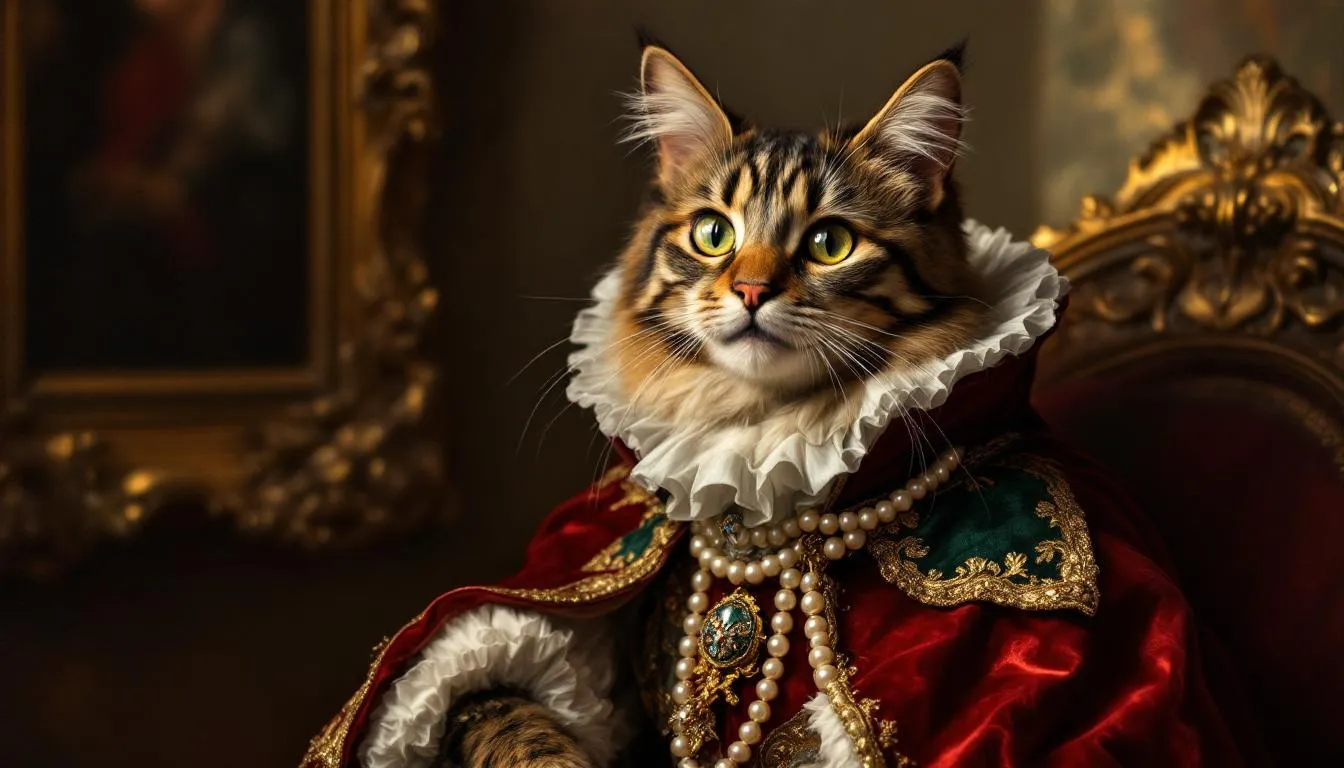
The most popular style, by a wide margin, is the renaissance pet portrait. Your cat dressed in regal period costume, set against a rich dark background, with all the drama and gravitas of a Dutch master painting. The gilded frame. The deep jewel tones. The sense that this is not just a cat, but a dignitary. A lord. A lady. Someone who expects to be obeyed, which, honestly, describes most cats pretty accurately.
There's something about seeing your own cat in that format that hits differently than any other gift. It's funny, but it's also genuinely beautiful. People hang these on their walls and they get compliments every single time. Guests who have never met the cat stop and look. The portrait becomes a conversation piece, a decoration, and a tribute all at once. That's a rare combination for any gift to achieve.
Check the pricing page for current options, and look through the royal pet portraits gallery to see the kinds of portraits Fable produces. If you're looking for a cat lover gift that stands completely apart from everything else out there, this is it. Not "one option among many." The option. The one you give when you want to give something that person will keep for decades.
And if the person you're buying for has more than just a cat, Fable also does family portraits, couple portraits, kids portraits, and self portraits. The cat can have the full royal portrait, and the whole family can join in.
The most popular cat portrait styles
Not every cat is suited to the same artistic style, and not every cat owner wants the same thing hanging on their wall. The variety in cat portrait styles is actually one of the things that makes this whole category so interesting. Here's a thorough look at the main styles, what makes each one special, and what kind of cat or home it tends to suit best.
Renaissance and royal cat portraits
This is the heavyweight. The most requested, the most dramatic, the most likely to make someone stop scrolling and say "wait, what is that?"
Renaissance and royal cat portraits take their visual language from the Dutch and Flemish masters of the 16th and 17th centuries. Think dark, richly colored backgrounds. Think ornate gold frames, visible in the composition itself. Think period costumes with elaborate ruffled collars, velvet doublets, pearl jewelry, and military sashes. The cat sits, typically in a three-quarter pose, looking slightly off-camera with the particular expression of someone who knows they're important.
What makes this style work so well for cats is the inherent absurdity and the genuine beauty working together. There's something deeply funny about seeing your tabby wearing a Tudor collar and holding a scroll, but the actual painting quality is so strong that it also reads as beautiful art. The two things coexist without canceling each other out.
This style suits cats with strong, distinctive features. Cats with commanding gazes, bold coloring, or natural regal bearing absolutely nail the renaissance treatment. A Persian with those flat, imperious features looks like they were born for it. A solid black cat in full regal regalia is genuinely stunning. Even a scruffy rescue cat can look like royalty when the style is applied with skill.
If you want to explore this look in depth, the royal pet portraits and renaissance pet portraits guides go deep on what makes this style work and how to get the best result from your photo. The regal pet portraits guide is also worth reading if you're deciding between variations of this regal aesthetic.
Classical oil painting portraits
The classical oil painting is different from the renaissance style in a few important ways. Where renaissance portraits tend toward drama, dark backgrounds, and period costume, classical oil painting portraits are warmer, softer, and more naturalistic. The cat is still painted in a traditional style, but it looks more like a formal portrait from the 18th or 19th century than a Dutch master from 300 years earlier.
Think warm amber light. A soft, blurred background suggesting a country estate or a comfortable sitting room. The cat rendered with careful attention to the texture of its fur, the light catching individual hairs, the warmth of the eyes. No costume necessarily. Just the cat, painted with the same care and craft that a real 18th century portrait painter would have lavished on a beloved animal.
This style is particularly well-suited to cats with gorgeous, complex coats. A long-haired Maine Coon whose fur catches the light in different ways. An orange tabby with rich, warm coloring that absolutely glows under amber portrait lighting. A tortoiseshell with markings so intricate they become the focal point of the composition.
Classical oil painting portraits tend to feel the most timeless. They fit into any home decor, from a traditional farmhouse to a modern apartment, because they reference a visual tradition that has been considered "beautiful" for centuries. If you want something that will still feel right in 30 years, this style is a strong choice.
Watercolor cat portraits
Watercolor portraits have a completely different energy. Where oil paintings are rich, deep, and formal, watercolor portraits are light, dreamy, and impressionistic. The colors bleed softly into each other. The background washes out into gentle abstract color. The cat's form is rendered with economy and grace, capturing the essential quality of the animal rather than documenting every whisker with photographic precision.
This style works particularly well for cats with delicate features. A slight, fine-boned Siamese. A pale cream or white cat where the subtlety of the coloring itself becomes the subject. A kitten portrait where the softness of the style echoes the softness of the subject.
Watercolor portraits also tend to feel more casual than oil paintings. They're easier to fit into a home that leans contemporary or minimalist, because they don't demand the formal gravitas that a classical portrait does. They work beautifully in bright, light-filled spaces where you want art that adds color and charm without dominating the room.
If you're buying for someone who loves art but whose taste runs more toward the airy and contemporary than the dramatic and traditional, a watercolor cat portrait is often the right call.
Charcoal and pencil cat portraits
There's a reason art schools still teach charcoal drawing. The range of tones available in charcoal, from the deepest blacks to the most delicate grays, gives the medium a dramatic power that color sometimes can't match. Charcoal and pencil cat portraits capture something raw and direct about the subject. Without color to distract, you see the structure of the face, the texture of the fur, the intensity of the eyes.
These portraits work best for cats with strong, graphic features. A cat with strikingly pale eyes against dark fur. A cat with bold facial markings. Any cat where the contrast between light and shadow in the face tells the whole story.
Charcoal portraits also have a gallery-art quality that sets them apart from more commercial-feeling options. If you're buying for someone who thinks of themselves as a serious art lover, a charcoal portrait can feel more prestigious, more like something you'd find in a fine art gallery than in a gift shop.
For more on how cats fit into the broader world of animal portraits, that guide covers the full spectrum of approaches and styles across different subjects.
Digital illustrated portraits
Digital illustration as a style sits between the traditional and the contemporary. It can reference classical portrait conventions while being obviously a work of digital art, or it can go in a completely different direction, toward manga-influenced styles, contemporary graphic art, or geometric abstraction.
The advantage of digital illustrated portraits is versatility. The style can be calibrated to suit the cat's personality, the owner's taste, and the intended use of the image very precisely. A soft, warm digital illustration reads very differently from a high-contrast graphic portrait, and both read very differently from a detailed hyperrealistic digital painting.
This is also the most flexible option for cats with unusual physical characteristics, like a sphinx cat whose distinctive appearance lends itself to more stylized interpretations, or a polydactyl cat where the extra toes can be emphasized as a charming detail rather than obscured.
For ideas that go further into the experimental side of digital art, the animal surrealism art and surreal art prints guides explore some genuinely interesting directions that blend portraiture with more imaginative imagery.
Pop art cat portraits
Pop art is the fun one. Drawing directly from the visual vocabulary of Andy Warhol and Roy Lichtenstein, pop art cat portraits use bold, flat colors, graphic outlines, and often a grid or repetition motif to transform the subject into something that feels like a cultural statement about fame and image.
A pop art portrait of your cat in four bold colorways, arranged in a 2x2 grid like a Warhol silk-screen, is genuinely hilarious and genuinely beautiful at the same time. The style has inherent humor, because it treats the cat as a celebrity worthy of the same treatment Warhol gave Marilyn Monroe and Elvis. But that humor is part of the appeal.
Pop art portraits work in contemporary, modern, or eclectic homes where bold wall art is welcome. They're not for everyone, but for the right person, they're exactly right. If you're buying for someone with a bold, playful sense of style, or someone who already has a gallery wall and wants one piece that stands out from everything else, a pop art cat portrait can be that piece.
For more art style inspiration with a design-forward sensibility, the art deco gifts guide covers another bold, graphic aesthetic that sometimes pairs well with the pop art approach.
How to choose the right style for your cat
Matching the style to the cat is part science, part intuition. Here's a framework that actually works.
Start with the cat's personality. Not their appearance, their personality. Because the best portrait captures who the cat is, not just what they look like.
If your cat is imperious and demanding, the kind of cat that sits in the middle of your keyboard and dares you to complain about it, the renaissance or royal style is an obvious match. The style confirms what the cat already believes about itself. The regal pet portraits guide specifically addresses how to channel that commanding personality into a portrait that feels exactly right.
If your cat is gentle and affectionate, a lap cat who follows you from room to room and buries themselves against your legs at night, a classical oil painting or watercolor portrait captures that warmth better than a dramatic royal portrait would. The softness of those styles echoes the cat's actual energy.
A playful, chaotic cat, the one who knocks things off shelves for fun and attacks their own tail at 3am, might actually be best served by pop art or a digital illustrated style with some personality and humor built in. A formal oil painting of that cat might feel like a mismatch.
Then think about coat. Colors matter more than you might expect, because different styles handle color differently. Dark, richly colored cats, deep black, dark tortoiseshell, rich chocolate brown, translate beautifully to oil painting styles where deep shadows and warm light create drama. Pale, delicate cats, cream, silver, light tabby, often shine most in watercolor, where the subtlety of the coloring becomes a feature. High-contrast cats, bold tabby markings, striking two-toned faces, can be spectacular in charcoal or pop art styles.
Finally, think about where the portrait will live. The room, the wall, the other art nearby. A classical oil painting belongs in a space with warm, traditional decor. A pop art portrait belongs on a gallery wall with other bold, modern pieces. A watercolor can fit almost anywhere because it doesn't demand attention, it invites it.
For more on selecting photos to support these style choices, the pet painting from photo guide has specific technical advice that pairs well with this style selection process. And for a broader look at how pet portraits work across different animals and styles, that comprehensive guide gives excellent context.
Choosing the perfect photo for your cat portrait
The photo is everything. The best artist in the world can't save a blurry, dark, unflattering photo. Getting the photo right before you commission a portrait is the single most impactful thing you can do for the outcome.
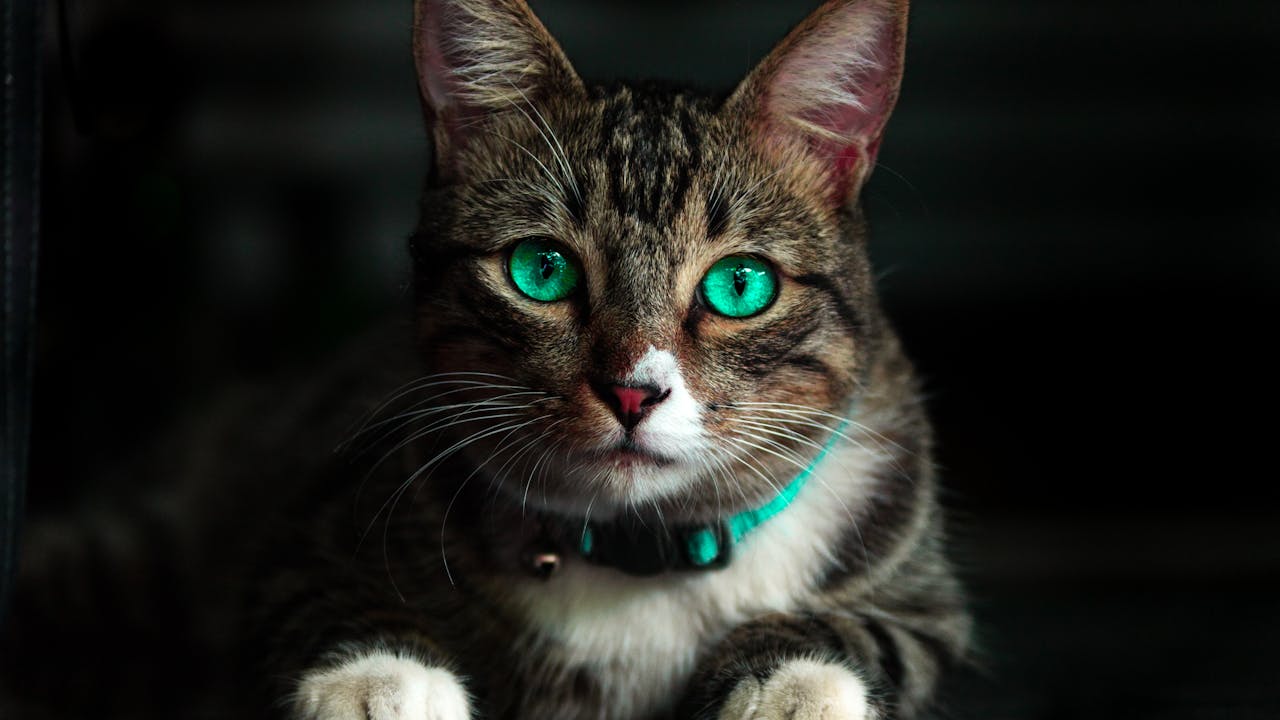
Natural light is almost always better than flash. Flash creates harsh shadows, washes out detail in light-colored fur, and tends to give animals that disconcerting "glowing eyes" effect. Natural light, especially the soft, even light of an overcast day or the warm golden-hour light of early morning or late afternoon, does something completely different. It wraps around the subject, revealing the texture of the fur, the depth of color in the eyes, the three-dimensionality of the face. If you can get your cat near a window and photograph them in natural light, you'll notice an immediate difference in the quality of your photos.
Get to eye level. This is probably the most common mistake in pet photography, and it makes an enormous difference. Photographing down at a cat from standing height flattens their features and gives them that foreshortened look where the head looks huge and the body disappears. When you get down to their level, or even slightly below, and photograph them face-to-face, you get a portrait that treats them as a subject with dignity rather than an object being observed from above.
Focus on the eyes. Always. A portrait where the fur is slightly soft but the eyes are perfectly sharp is a good portrait. A portrait where the fur is perfect but the eyes are blurry is not. The eyes are where expression lives, and expression is what the portrait is really about. If you're photographing a cat in motion, rapid-fire burst mode on your phone gives you many frames to choose from, and at least a few of them will have the eyes in sharp focus.
Resolution matters. A portrait created from a 640-pixel-wide thumbnail cropped from a group photo isn't going to produce the same result as a portrait created from a full-resolution image where the cat fills most of the frame. If you're choosing between a great photo taken on an old phone and a mediocre photo taken on a new phone, go with the great photo. But if you can take fresh photos specifically for the portrait commission, use the highest resolution setting on your camera or phone and get close enough that the cat's face fills the frame.
Capture the personality. This sounds vague, but it's specific in practice. If your cat always looks slightly annoyed, photograph that expression. If your cat is endlessly curious, get a photo where they're alert and interested in something. If your cat is the most relaxed animal you've ever encountered, photograph them in that state of boneless, melted contentment. The portrait should feel like your cat, not a generic cat who happens to have the same coloring.
Multiple photos are almost always better than one. Send several options and let the artist or the system find the best angle and expression. Sometimes a photo you thought was just okay turns out to be the one that captures the cat's personality perfectly.
The how it works page has specific technical guidance on photo submission that walks through the practical details of file size, format, and what to avoid.
The history of cat portraits in art
Cats have been subjects of human art for longer than almost any other animal except lions. The history of cat portraiture is genuinely fascinating and runs deeper than most people realize.
In ancient Egypt, cats weren't just pets. They were divine. The goddess Bastet was depicted with a cat's head, and domestic cats were considered her earthly representatives. Cats appeared throughout Egyptian art, in tomb paintings, bronze sculptures, and sacred amulets. Killing a cat in ancient Egypt was punishable by death, and when a household cat died, family members shaved their eyebrows in mourning. The relationship between humans and cats in Egypt wasn't just affectionate. It was religious.
Medieval and Renaissance Europe had a more ambivalent relationship with cats, partly because of the association with witchcraft and partly because of genuine superstition. But cats appeared constantly in illuminated manuscripts, often as marginal drawings alongside religious texts, and in domestic interiors painted by Flemish masters. In those paintings, cats appear as they actually were: household animals who had made themselves comfortable in the human world. Jan Steen, Pieter de Hooch, and Cornelis de Man all included cats in their domestic scenes, and those cats are painted with the same careful observation that artists brought to every other element of the composition.
Japanese woodblock prints gave cats a starring role they never quite had in Western art. In ukiyo-e prints of the Edo period, cats appeared everywhere. Utagawa Kuniyoshi, who worked in the early 19th century, was particularly famous for his cat illustrations, creating prints where cats posed in distinctly human positions, walked upright, and carried themselves with the dignity of courtiers. These prints have a quality very similar to what cat lovers love about renaissance pet portraits today: the humor and the genuine craft exist simultaneously, and neither undermines the other.
The 19th century saw formal pet portrait commissions become fashionable among wealthy Europeans. If you had a beloved dog or cat and the money to commission an artist, you commissioned a portrait. The animal was treated as a genuine subject, depicted with the same care and gravity that a human sitter would receive. Henriette Ronner-Knip, a Dutch-Belgian painter who worked throughout the latter half of the 19th century, built her entire career on painting cats. Her work appeared in exhibitions across Europe and was collected by wealthy patrons who wanted their cats painted by the best artist in the field. Her paintings show cats in domestic interiors, playing, resting, nursing kittens, and interacting with each other, rendered with extraordinary technical skill and genuine affection for the subject.
The 20th century brought a different kind of cat art. The internet age has made cats perhaps the most documented animal in human history, and that documentation has spawned a genuinely creative ecosystem of cat-themed art, from the deliberately low-fi and meme-adjacent to high-end custom commissions. The tradition of taking cats seriously as artistic subjects has never died. It's just taken new forms.
For more context on how this history connects to contemporary renaissance pet portraits, that guide traces the specific visual lineage from Dutch masters to modern custom portraits. The royal pet portraits guide picks up specifically on the regal tradition and how it translates today. And the animal portraits guide gives a broader overview of how different animals have been depicted across art history.
Cat portrait as a gift: every occasion covered
A custom cat portrait works as a gift in a way that almost nothing else does. It's specific to the recipient in the most personal possible way, because it features their cat. It's beautiful enough to display prominently. And it lasts forever. Those three things together are rare in any gift.
Birthday gifts
Birthday gifts for cat lovers are famously difficult. You can't go wrong with a cat portrait, because a great gift isn't something the person already has. It's something they didn't know they wanted until they saw it. A birthday portrait gift that features the recipient's own cat is the kind of gift that produces the shocked, delighted reaction that every gift-giver is hoping for. It says "I paid attention" in the most concrete possible way.
Christmas gifts
Christmas is when people receive the most generic gifts of the year. Gift cards, candles, items from wishlists, things that are fine but unmemorable. A custom cat portrait as a Christmas art gift completely breaks that pattern. It's something no one else in that room is giving. It's something that will go up on a wall and stay there. If you're buying for someone who is genuinely hard to shop for and who loves their cat, this solves the problem cleanly.
Mother's Day gifts
Cat moms are real and deserve to be treated as such. A Mother's Day art gift featuring the family cat, or a multi-cat portrait if there are multiple cats in the household, is both funny and genuinely touching. The humor of treating the cat as a child, which every cat owner already does privately, gets made official. It's a gift that lands on both levels.
Memorial portraits
This is perhaps the most meaningful application of cat portrait art. When a cat passes, the grief is real and the loss of their physical presence in the home is something that takes time to adapt to. A memorial pet portrait transforms a photograph of the cat who passed into art that keeps them present in the home in a different way. Not as a reminder of loss but as a celebration of who that animal was. The portrait becomes a tribute, and tributes matter.
If you're buying for someone who recently lost a cat, this is a deeply kind gift. Acknowledge the grief, celebrate the animal, and give something that will genuinely help.
Housewarming gifts
A cat portrait is brilliant as a housewarming gift, because it immediately personalizes a new space. The recipient moves into a new home and now has art on the wall that is specifically theirs, featuring someone they love. It's far more personal than a generic piece of wall art, and far more appropriate for a home than most other housewarming options.
Anniversary gifts
An anniversary portrait gift can feature the couple's cat, which is a genuinely sweet acknowledgment that for many couples, the cat is a shared family member who has witnessed the whole relationship. A portrait of the cat they've shared is a tribute to the relationship itself, not just the animal.
Graduation gifts
Graduation gift art needs to be something the recipient will actually want in their new space, whether that's a dorm room, a first apartment, or a shared house. A portrait of their cat at home, waiting for them, is both sentimental and practical. It's art they'll want to own. And if they're moving away from the cat, it's an anchor to home.
Wedding gifts
A wedding portrait gift featuring the couple's cat is particularly well-suited to cat-loving couples who want their pets acknowledged as part of their family story. It's unexpected enough to be memorable, personal enough to be meaningful, and beautiful enough to deserve wall space in a new home.
The gift for people who are impossible to shop for
And then there's the category that defies categorization. Some people are genuinely hard to buy for. They have everything. They buy things for themselves when they want them. They don't have a list. For these people, the answer is almost always something intensely personal that they wouldn't think to get for themselves. A custom cat portrait fits exactly. It takes something they already love (their cat) and elevates it into something they'll love forever (art).
The gifts for art lovers and unique gifts for art lovers guides both touch on why personalized art gifts work so well for the people who seem to have everything.
Displaying your cat portrait
Getting the portrait is step one. Knowing where to put it and how to present it is what turns a good purchase into a great one.
The most important decision is size. A portrait that's too small for the wall it's on will disappear. A portrait that's too large for a small room will overwhelm the space. As a general rule, wall art should occupy 60 to 75 percent of the available wall space above furniture. Above a sofa that's 84 inches wide, you want art that's roughly 50 to 63 inches wide, either as a single piece or as a grouped arrangement.
For a cat portrait being displayed as a single focal-point piece, a larger format is almost always better. The detail in the portrait, the texture of the fur, the expressiveness of the eyes, reads better at size. If you're in doubt, go up rather than down. Check pricing for size options.
Canvas is the most natural material for portrait-style art. It reads as traditional and gallery-worthy, and it doesn't require framing if you want a more contemporary look. A gallery-wrapped canvas with the image continuing around the edges sits cleanly on a wall without a frame and looks deliberate.
If you prefer a framed print, a simple, thin frame in a complementary color tends to work better than ornate framing for most contemporary spaces. The exception is if you've chosen a renaissance or royal style portrait, where a gilded or heavily detailed frame reinforces the visual language of the style and adds to the theatrical effect. A baroque golden frame around a cat in Tudor costume is exactly right.
Gallery walls are another excellent option. A cat portrait works beautifully as the centerpiece or anchor piece of a gallery wall arrangement, surrounded by other art, photographs, and objects. The portrait becomes the piece everything else is arranged around, which is exactly the position most cats would want to occupy.
For households with multiple cats, a pet family portrait showing all the cats together, or separate individual portraits displayed as a set, can turn an entire wall into a dedicated tribute to the household's feline residents. This looks genuinely spectacular when done well.
The how it works page covers the practical details of what format options are available and how the final piece is delivered.
Cat portrait tips and getting the best results
Getting a custom cat portrait is a straightforward process, but a few practical habits will make the result significantly better.
Be specific about what you want. "A portrait of my cat" is a starting point. "A renaissance-style portrait of my cat, emphasizing her amber eyes and showing her from the shoulders up against a dark background" gives the process much more to work with. Specificity serves you. The more clearly you can articulate what you're looking for, the more likely the result will be exactly what you imagined.
Provide multiple photos if you can. Different angles, different lighting conditions, different expressions. Even if you have one photo you love and want to use as the primary reference, supplementary photos help capture details that might not be fully visible in a single image.
Think about the background before you start. In many portrait styles, the background is a significant compositional element. A dark, neutral background creates drama and keeps focus on the subject. A softer, blurred background creates warmth and intimacy. Knowing what effect you want before you submit helps guide the result.
If you're giving the portrait as a gift, plan ahead. Not because the process takes forever, but because giving a gift with time to spare is always better than giving a gift that arrives late. The pricing page has information on turnaround times for different options, and the how it works page explains the process from submission to delivery.
Trust the process. This sounds like generic advice but it's actually specific. Custom portrait creation involves decisions about composition, lighting, color treatment, and style that the system handles well. If you've provided good photos and been clear about what you want, the result will reflect that.
Cat portraits for every type of cat lover
Cat lovers are not a monolith. The person who has one carefully groomed, deeply pampered indoor cat is different from the person who runs a six-cat household and knows the personality quirks of each one. The person grieving a cat who passed last month is in a completely different emotional space than the person who just got their first kitten. Here's how cat portrait art serves different situations.
The devoted single cat parent
This is perhaps the most common customer for custom cat portrait art. One cat. Total devotion. A camera roll with approximately 3,000 photos of the same cat in different positions. This person has thought about getting a cat portrait before and never quite pulled the trigger, either because they weren't sure where to start or because they kept waiting for the "right" photo.
For this person, a custom portrait from Fable is the obvious answer. It takes that catalog of existing photos, picks the best one, and transforms it into something that can live on the wall in a way that the phone photos never quite can. It makes the love official.
Multi-cat households
With an average of 2.2 cats per cat-owning household in the United States, multi-cat families are genuinely common. These households have a unique dynamic where each cat has a distinct personality and the relationships between cats are as interesting as the relationship between cats and humans.
Individual portraits for each cat, displayed as a series, is one option. A group portrait that captures all the cats together is another. The pet family portraits guide is specifically relevant here and covers how multi-pet portraits work in practice.
Cat breeders and show cat owners
People who breed or show cats have a very particular relationship with their animals' appearance. The specific features that define a breed, the structure of the face, the texture of the coat, the distinctive markings, are known and appreciated in a technical way that casual cat owners might not have. A portrait commission for a show cat is often about capturing and celebrating those breed-specific qualities.
The classical oil painting or charcoal style tends to work particularly well for show cats, because those styles give the most attention to the structural and textural details of the subject.
People memoralizing a cat who has passed
Grief for a lost pet is real, and it deserves to be taken seriously rather than minimized. A memorial pet portrait gives that grief somewhere to go. It transforms a collection of digital photos into a permanent tribute. The cat existed. They mattered. The portrait says both of those things.
If you're buying for someone else who is grieving, this gift requires sensitivity in presentation. It's not a surprise gift in the usual sense. It's an acknowledgment. "I know how much you loved them. I want to help you keep them present in your home." That framing, offered genuinely, makes this one of the most meaningful gifts one person can give another.
Cat lovers who want unique wall art
Some people approach cat portrait art primarily as an interior design decision. They want art on their walls that reflects their personality and what they care about. A custom cat portrait serves this purpose beautifully, because it's art that is definitively about them. It can't be bought in a store. It can't be replicated. It's specific to them and their cat in a way that no other piece of wall art could be.
For this audience, the style and the presentation matter as much as the subject. The gifts for art lovers and unique gifts for art lovers guides cover how custom portrait art compares to other art gift options.
People searching for the perfect gift
And finally, the person who doesn't have a cat themselves but is shopping for someone who does. 26 percent of American households own at least one cat, which means there's a large population of people who are regularly in the position of buying gifts for cat lovers without being cat lovers themselves.
The confidence you can have in a custom cat portrait as a gift is unusually high. You're not guessing at taste. You're not hoping they don't already have it. You're taking something the recipient definitely loves (their cat) and turning it into something they definitely don't have (a custom portrait of that cat). That combination removes most of the risk that comes with gift-giving.
For occasion-specific gift ideas with broader scope, the birthday portrait gifts and anniversary gift portrait guides are worth reading alongside this one.
Frequently asked questions
What is a cat portrait?
A cat portrait is a piece of art that depicts a specific cat as its subject, typically in a formal or stylized artistic tradition. Custom cat portraits are created from a photograph of the cat and can range from classical oil painting styles to renaissance royal portraits to digital illustrations. Unlike generic cat art, a custom portrait features your actual cat.
How much does a custom cat portrait cost?
The cost of a custom cat portrait varies depending on the style, size, and format. Fable's pricing page has the most current information on available options and what each includes. Generally, you can expect to pay more for larger formats and more complex styles.
What photo should I use for a cat portrait?
Use a high-resolution photo taken in natural light, with the focus on the cat's eyes. Get to eye level with your cat when photographing them. Choose a photo that captures their personality and makes the facial features clearly visible. If you have multiple good photos, submit them all. The how it works page has detailed technical guidance on photo selection.
How long does a custom cat portrait take?
Turnaround times depend on the type of portrait and the options you choose. The how it works page and pricing page both include current timeline information. If you're ordering as a gift for a specific date, it's worth planning ahead to ensure the portrait arrives with time to spare.
What are the most popular cat portrait styles?
The most popular style is the renaissance or royal portrait, which depicts the cat in period costume against a dramatic dark background, drawing from Dutch master painting conventions. Classical oil painting portraits are the next most popular, followed by watercolor, charcoal, digital illustrated, and pop art styles. The royal pet portraits and renaissance pet portraits guides cover the top two styles in depth.
Can I get a portrait of my cat who has passed away?
Absolutely. A memorial pet portrait created from an existing photo is one of the most meaningful ways to honor a cat who has passed. The process is the same: upload the best photo you have, choose a style, and the portrait becomes a lasting tribute to that animal. This is a genuinely thoughtful gift for someone who is grieving a pet.
Are cat portraits a good gift for cat lovers?
They're among the best gifts you can give a cat lover, because they're specific, personal, and permanent. A custom portrait features the recipient's actual cat, making it impossible to be generic. It becomes wall art they'll display for years. And it communicates that you paid attention to what they love. The birthday portrait gifts and christmas art gifts guides both make the case for custom portraits as standout gifts for specific occasions.
What size should I get for my cat portrait?
Err on the side of larger rather than smaller. A portrait that's displayed at too small a size loses impact and makes it difficult to appreciate the detail in the work. Check the pricing page for available size options, and as a general rule, choose the size that will look correct on the specific wall where you plan to display it. For a wall above a sofa or bed, larger is almost always better.
Related guides
- Pet portraits: the complete guide
- Royal pet portraits
- Renaissance pet portraits
- Memorial pet portraits
- Pet painting from photo
Sources
- American Pet Products Association, National Pet Owners Survey
- American Veterinary Medical Association, U.S. Pet Ownership & Demographics Sourcebook
Cats are family. That's not a sentiment. It's just true for the people who know it. They share your space, your routines, your quiet moments. They are witnesses to your life. A custom cat portrait doesn't reduce that relationship to a decoration. It honors it. It says: this animal mattered. This bond was real. Start with Fable and turn that bond into something you can hang on the wall and look at every single day.