Why is my dog panting: causes and when to worry
Your dog is panting. You didn't just come home from a walk. The room isn't hot. Nothing obviously happened. But there it is - that open mouth, that rapid breath, that look in their eyes that makes your stomach tighten.
You're right to pay attention. Panting is one of the most normal things a dog can do, and also one of the earliest signs that something is wrong. The difference comes down to context, timing, and a handful of specific details that every dog owner should know how to read.
This guide covers every major cause of dog panting - from the completely harmless to the genuinely urgent. You'll learn how to tell normal from abnormal, which medical conditions show up as panting first, what nighttime panting usually signals, and exactly what to do in each situation. By the end, you'll know what your dog's panting is actually telling you.
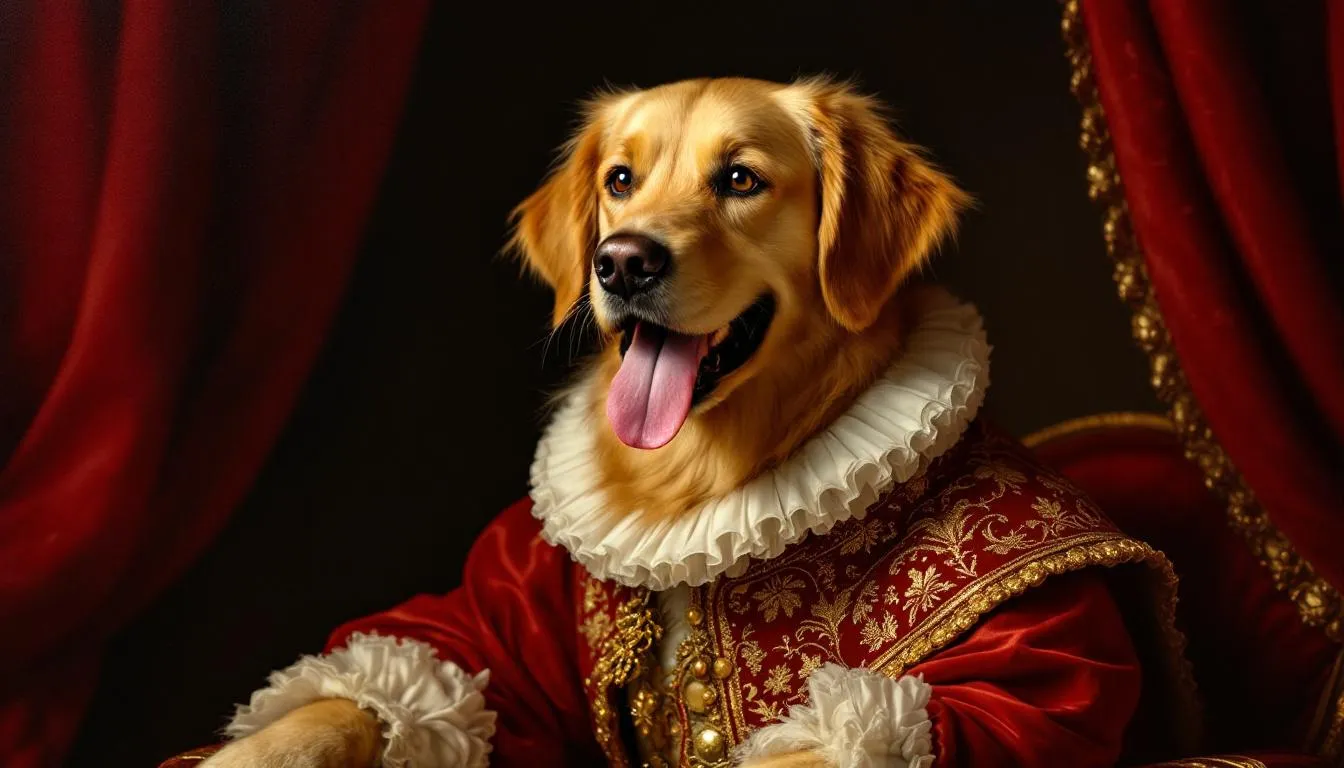
Dogs are family. The kind of love you have for your dog - the love that sends you searching for answers at odd hours - deserves to be celebrated. Fable transforms your dog's photo into museum-quality heirloom art: custom dog portraits, personalized dog portraits, and pet portraits that capture who they really are. But first, let's talk about that panting.
What normal dog panting actually looks like
Dogs can't sweat across their bodies the way we can. They have sweat glands only on their paw pads, which doesn't do much for full-body cooling. To regulate body temperature, they rely almost entirely on panting - moving air rapidly over the moist surfaces of the tongue and upper airway, triggering evaporation that pulls heat out of the body.
It's an effective system. But it requires real effort, which is why dogs in the middle of a good pant don't look entirely relaxed.
Normal resting respiratory rate for a healthy dog is 15 to 35 breaths per minute. Some sources cite as low as 10, depending on the dog's size and fitness level. A small, fit breed at rest might hover around 12. A large, older dog might sit naturally closer to 30.
That number matters more than most owners realize. If you count your dog's breaths while they're sleeping or lying quietly in a cool room, and you consistently get above 40 breaths per minute, something is worth investigating. Keep a 30-second video on your phone. That footage is often more useful to a vet than anything you can describe in words during an appointment.
After exercise
Panting after exercise is as normal as you sweating after yours. Your dog needs to exhale heat, replace oxygen, and recover from exertion. The key benchmark veterinarians use is the five-to-ten-minute rule: in a cool environment, panting from exercise should settle within five to ten minutes of rest. If it doesn't, that's your first signal to watch more closely.
After excitement
Some dogs pant just from being happy. The anticipation of a walk, your arrival home, a car ride to the park, a new toy. Excitement panting looks a lot like exercise panting - fast, rhythmic, accompanied by a wagging tail and bright eyes. It passes quickly once the stimulation fades.
What makes panting "normal"
Normal panting has a cause you can point to: heat, movement, or emotion. The dog appears comfortable and alert. Gum color is pink and moist. And the panting stops once the trigger goes away.
Abnormal panting has no obvious cause, persists longer than it should, and often arrives alongside other changes. That's the pattern to watch for. And that's what the rest of this guide covers.
Common causes of dog panting
When your dog pants more than you'd expect, one of these causes is usually responsible.
Heat and overheating
A dog's normal body temperature sits between 100.5 and 102.5 degrees Fahrenheit. At 104 degrees, dangerous overheating begins. At 105 degrees, heatstroke is a real threat. Between 107 and 109 degrees, multiple organ failure can occur.
Parked cars are the most dangerous environment. On a 70-degree day, the inside of a parked car can reach 100 degrees in under 20 minutes. This kills dogs every year, and it happens faster than people expect.
Signs of heat-related panting include: the dog is very hot to the touch, heavy drooling, gums that start turning bright red before becoming pale or gray as shock progresses. If you suspect heatstroke, start cooling measures immediately - cool (not cold) water on the paw pads, armpits, and groin - and get to a vet.
One number worth committing to memory: pre-hospital cooling improves survival odds from around 50% to 80%. Doing something before you arrive genuinely changes the outcome.
Do not use ice. Ice and ice-cold water cause blood vessels near the skin to constrict, which traps heat inside the body rather than releasing it and can trigger shock. Cool water and gentle airflow is the right approach.
Anxiety and stress
Anxiety panting is extremely common, and it looks different from heat-related panting. The dog may be cool. They may be resting. But they're panting because something has them distressed. Common triggers include thunderstorms, fireworks, vet visits, car rides, new environments, household changes, and separation anxiety when left alone.
With anxiety panting, the breath doesn't settle just because the dog is cool and still - it settles when the stressor goes away. Look for other behavioral signals alongside the panting: pacing, whining, yawning, whale eye (showing the whites of the eyes), tucked tail, excessive drooling, or inability to settle.
Understanding what triggers your dog's anxiety is the first step to managing it. Some dogs respond well to pressure wraps. Others need behavioral support or medication from their vet. Either way, if anxiety is frequent and severe, it's worth addressing as a condition in its own right - not just waiting it out each time.
Pain
This is the one most dog owners miss first.
Dogs pant when they're in pain. Often before they show the signs we associate with pain - before they whine, limp, or guard an injured area. Pain-related panting frequently appears before any other signal, which is why unexplained panting in an otherwise apparently normal dog always deserves a closer look.
Acute pain causes: injuries, post-surgical recovery, intestinal cramping, urinary obstruction. Chronic pain causes: arthritis, joint disease, dental disease, intervertebral disc disease.
Signs that point toward pain as the cause: dilated pupils, reduced appetite, restlessness, reluctance to lie down, unusual posture, licking or biting at a specific spot on the body. If your dog recently had surgery and is panting more than expected, don't assume it's just the anesthesia wearing off. Call your vet.
Medications
Prednisone and other corticosteroids are the most commonly cited medication cause of excessive panting. It's a well-documented and expected side effect. The mechanism: steroids affect cortisol levels and the body's stress response, essentially creating a state of chronic low-level physiological stress.
Dogs on prednisone often pant more, drink more, urinate more, and feel hungrier. These effects typically decrease as the dose tapers down. Long-term, high-dose steroid use can also lead to medication-induced Cushing's disease, covered in the next section.
Important: don't stop corticosteroids abruptly without veterinary guidance. The body adjusts to these medications in ways that require gradual weaning. If the panting is severe or distressing, contact your vet. They may adjust the dose, change the timing, or add supportive care.
Medical conditions that cause panting
Some panting is a symptom. Here's what it might be pointing to.
Cushing's disease
Cushing's disease, properly called hyperadrenocorticism, is one of the most important medical causes of excessive panting in dogs - and one of the most commonly missed because its symptoms develop slowly over months or years.
The condition occurs when the body produces too much cortisol. In 80 to 85% of cases, it's driven by a small tumor on the pituitary gland in the brain. In the remaining cases, the adrenal glands themselves develop tumors and begin overproducing cortisol directly.
Elevated cortisol does several things that cause panting. It weakens the respiratory muscles. An enlarged liver - itself a consequence of Cushing's - pushes upward against the diaphragm and restricts how fully the lungs can expand. Abnormal fat deposits in the chest cavity reduce breathing room further. The result is chronic panting, even in a dog lying still in a cool, quiet room.
The full Cushing's symptom cluster - know all of these:
- Excessive and inappropriate panting (often the first noticeable sign)
- Dramatically increased thirst and urination
- Noticeably increased appetite
- Pot-bellied appearance
- Hair loss, often bilaterally symmetrical on both sides of the trunk
- Thin, fragile skin and recurring skin infections
- Muscle weakness and exercise fatigue
- General lethargy
The breeds most frequently associated with Cushing's diagnoses include Poodles, Dachshunds, Beagles, Boston Terriers, and Boxers. Middle-aged to senior dogs are most commonly affected - though it can occur in younger dogs too.
Treatment with Vetoryl (trilostane), the only FDA-approved medication for canine Cushing's, manages the disease. It doesn't cure it. Most dogs show improvement in panting and activity level within the first weeks of treatment, with thirst, urination, and hunger improving more gradually.
Heart disease and congestive heart failure
About 10% of all dogs have some form of heart disease. That number rises to approximately 75% in senior dogs. These figures come from VCA Animal Hospitals and are consistent across veterinary literature.
Around 80% of congestive heart failure (CHF) cases in dogs are caused by mitral valve disease. The mitral valve, which sits between the heart's left atrium and left ventricle, weakens over time. Blood flows backward through it, pressure builds upstream, and eventually fluid leaks into the lungs. This is called pulmonary edema. The dog can't oxygenate blood efficiently, and it pants to compensate.
The breeds most commonly affected by mitral valve disease include Cavalier King Charles Spaniels (it's nearly universal in the breed by age ten), Dachshunds, Miniature Schnauzers, Chihuahuas, and Poodles.
Signs of CHF-related panting:
- Persistent coughing, especially when resting or asleep
- Resting respiratory rate consistently above 30 breaths per minute
- Extreme exercise intolerance - getting tired much faster than before
- Swollen abdomen from fluid accumulation (ascites)
- Reduced appetite and weight loss
- Pale or bluish gums
A practical number for owners of dogs with known heart disease: many veterinary cardiologists recommend counting and recording your dog's resting respiratory rate daily at home. A rate that climbs over 30 breaths per minute is associated with worsening heart failure, and it's the earliest detectable signal that fluid is building up before the dog shows obvious distress.
The NT-proBNP blood test screens for cardiac stress and can be run at most primary care clinics before referring to a specialist. An echocardiogram (heart ultrasound) is the gold standard for diagnosis.
Respiratory conditions
Any condition that limits how much oxygen the lungs can absorb causes panting as the dog works harder to breathe:
Pneumonia infects the lungs directly. The characteristic signs are panting alongside a productive cough, fever, and lethargy. It usually responds well to treatment if caught early.
Pleural effusion is fluid accumulating around the outside of the lungs, compressing them from the outside. The dog's breathing becomes severely compromised very quickly. This is an emergency.
Lung tumors are more common in older dogs. Persistent coughing, gradual weight loss, and progressively worsening breathing difficulties are the typical pattern.
Tracheal collapse is common in small breeds - Toy Poodles, Yorkshire Terriers, Chihuahuas, Pomeranians. The distinctive sign is a goose-honk cough alongside exercise intolerance and panting that worsens in heat or excitement.
Laryngeal paralysis is covered in detail in the breed differences section below, as it disproportionately affects specific breeds.
Anemia
When red blood cell counts drop, blood carries less oxygen per volume. The body compensates by breathing faster and panting more in an attempt to elevate oxygen levels through increased ventilation. Causes of anemia in dogs include internal bleeding, immune-mediated hemolytic anemia (IMHA), toxin ingestion, and chronic kidney disease.
Anemia-related panting typically comes with pale or white gums, profound weakness, and exercise intolerance even with minimal exertion. If your dog's gums look pale or white alongside increased panting, treat it as an emergency.
Toxin ingestion
Heavy panting can be an early sign of poisoning. Common household toxins that affect dogs include chocolate, grapes and raisins, xylitol (found in sugar-free gum, candy, some peanut butters, and baked goods), antifreeze, rat poison, slug pellets, certain houseplants, and some human medications.
If you suspect toxin ingestion, call the Pet Poison Hotline at 855-764-7661 immediately and head to an emergency vet. Bring the packaging of whatever you suspect they ate. Time genuinely matters with most toxins.
Obesity
Overweight dogs pant more at rest and during mild activity for straightforward mechanical reasons: excess fat tissue around the chest restricts lung expansion, the cardiovascular system works harder to supply blood to the extra body mass, and fat deposits can press on the diaphragm. Research in veterinary medicine has shown that dogs who lost weight showed measurable decreases in resting heart rate and respiratory rate. Weight loss alone sometimes resolves or dramatically improves the panting.
Why is my dog panting at night?
Nighttime panting is one of the more alarming scenarios for owners, precisely because the obvious triggers are usually absent. It's not hot. The dog didn't just exercise. Yet there they are, panting in the dark.
The most common non-urgent cause is anxiety carried over from earlier in the day. A thunderstorm hours ago, unfamiliar visitors, an argument they overheard - dogs don't fully separate today's stressors from tonight's sleep. Separation-related anxiety can also peak once the household settles and the dog is effectively alone.
But persistent nighttime panting more often signals a medical cause. Here's what warrants investigation:
Arthritis and chronic pain. Joint pain is frequently worse at night. When a dog lies still, circulation slows, stiffness increases, and low-level pain that was manageable during activity becomes more pronounced. Dogs with arthritis may pant, shift position repeatedly, and struggle to find a comfortable way to lie down. This is one of the most common causes of nighttime panting in older dogs, and it's often underdiagnosed because owners attribute it to general aging.
Canine cognitive dysfunction syndrome (CCDS). The dog equivalent of dementia. Disturbed sleep-wake cycles are a hallmark symptom. Dogs with CCDS sleep during the day, then become confused, restless, and anxious at night. They may vocalize, pace, stare at walls, and pant from disorientation. It's a slow-onset, progressive condition most common in dogs over eleven years old. There are no cures, but there are management strategies that meaningfully improve quality of life.
Cushing's disease. Elevated cortisol disrupts the normal sleep cycle. Dogs with Cushing's often sleep erratically and show nighttime restlessness and panting even when they should be fully settled.
Heart disease. When fluid accumulates in the lungs, lying flat can make it worse. Dogs with congestive heart failure often pant and cough more at night for the same reason humans with heart failure sleep propped up on extra pillows. If your dog is coughing and panting at night and seems reluctant to lie flat, cardiac disease is a priority to rule out.
Other contributing factors include urinary tract infections (discomfort and urgency disrupt sleep), kidney disease, gastrointestinal pain, and diabetes, all of which can express through nighttime restlessness and panting.
If your dog's nighttime panting has been happening for more than a few days, especially in a senior dog, a vet appointment is warranted. The combination of nighttime panting with daytime lethargy, changes in thirst or appetite, or any other new symptoms makes the workup more urgent.
Why is my dog panting while resting?
Resting panting carries more weight than any other type. If your dog is breathing fast while sitting still or lying down - not hot, not just exercised, not obviously excited - that's the clearest signal that something warrants attention.
The three causes most consistently cited in veterinary literature for resting panting are pain, anxiety, and systemic disease. Each deserves a systematic look.
How to assess it yourself
Count breaths per minute while your dog is resting or asleep. Count for 30 seconds and multiply by two. Anything consistently above 40 is abnormal and worth a vet call.
Check gum color. Lift your dog's lip gently and look at the gums. They should be pink and moist. Pale or white gums indicate poor circulation or blood loss. Blue or purple gums mean critical oxygen deprivation. Gray gums mean shock. Bright brick-red gums can indicate early heatstroke or carbon monoxide exposure. Any color that isn't a normal healthy pink is cause for action.
Note the context. Did anything stressful happen recently? Is the room warmer than usual? Did the dog eat something unusual? Any recent changes in medication, household routine, or physical activity?
If the answers are all no, and the panting has been happening consistently for more than a day, schedule a vet appointment. Don't wait to see if it disappears on its own. Resting panting that has no obvious cause is a symptom, and symptoms are information your vet needs.
Establishing your baseline
One of the most useful things you can do for your dog's long-term health costs nothing and takes about a minute. When your dog is healthy, relaxed, and resting - count their respiratory rate and write it down. Do this a few times to get an average.
That number becomes your personal reference point. When something seems off weeks or months later, you have an actual comparison. Vets call this a "resting respiratory rate log" for dogs with heart disease, but it's useful for any dog as an early detection tool.
Breed differences that change everything
Brachycephalic breeds and BOAS
Flat-faced dogs - English Bulldogs, Pugs, French Bulldogs, Boston Terriers, Boxers, Pekingese, Shih Tzus, Lhasa Apsos, Cavalier King Charles Spaniels - look the way they do because of selective breeding for shortened skull bones. That cosmetic outcome comes at a structural cost.
These breeds typically have smaller, tighter nostrils (stenotic nares), a narrowed trachea, an elongated soft palate that partially blocks the airway, and excess tissue in the throat that further restricts airflow. The condition is called Brachycephalic Obstructive Airway Syndrome, or BOAS.
Cornell University's College of Veterinary Medicine notes that BOAS affects a dog's fundamental ability to pant and cool itself, making these breeds categorically more vulnerable to heat emergencies that a healthy-airway dog might tolerate without serious consequence. What counts as excessive panting in a Labrador may be entirely baseline for a Pug. But baseline doesn't mean acceptable, and many dogs benefit significantly from intervention.
Surgical widening of the nostrils and shortening of the soft palate is the most effective treatment. Most dogs are diagnosed with BOAS between ages one and four, and early surgery produces better outcomes.
Signs of BOAS to watch for: noisy breathing at rest, gagging after eating or drinking, overheating quickly during mild activity, significant snoring, and a general reluctance to exercise.
If you have a flat-faced breed, discuss BOAS screening with your vet. It's a spectrum - some dogs have mild, manageable obstruction, and others need surgical correction to have a comfortable quality of life.
Laryngeal paralysis in large breeds
Laryngeal paralysis is a condition where the nerves controlling the larynx (voice box) lose function over time. The cartilages that normally open wide on inhalation no longer do so properly, creating a narrowed airway. The dog can't move enough air, especially during exercise, heat, or excitement.
Labrador Retrievers are disproportionately affected. In Labs, laryngeal paralysis is part of a broader nerve degeneration called GOLPP - Geriatric Onset Laryngeal Paralysis Polyneuropathy. Other commonly affected breeds include Bouvier des Flandres, Irish Setters, and Saint Bernards.
The condition is typically diagnosed in large-breed dogs over nine years old. Signs: a high-pitched, strained sound on inhalation (called stridor), a changed bark that sounds rougher or raspier than before, excessive panting, exercise intolerance, overheating quickly, and gagging when eating or drinking.
Surgery - a procedure called arytenoid lateralization, or informally "the tie-back" - permanently holds one side of the larynx open, improving airflow. Most dogs do well after surgery. Conservative management with restricted exercise and careful temperature control is an option for mild cases.
Senior dogs: when age changes the picture
As dogs age, multiple systems decline simultaneously. Cardiac function decreases. Lung tissue loses some elasticity. Arthritis becomes common. Cognitive function may decline. Muscle mass decreases. Metabolism changes.
The confluence of these factors means panting in a senior dog deserves more attention than the same behavior in a three-year-old. A young dog panting at rest almost always has one clear cause. A ten-year-old panting at rest may have several overlapping ones.
The three conditions most responsible for unexplained panting in senior dogs are Cushing's disease, heart disease, and cognitive dysfunction syndrome. A senior wellness exam with baseline bloodwork - ideally done annually in dogs over seven, or every six months in dogs over ten - catches all three before they progress to the point where treatment options narrow.
For senior dog owners, one of the most meaningful things you can do while your dog is still with you is capture who they are in something lasting. Fable's custom portraits transform your dog's photo into museum-quality art - royal pet portraits, renaissance-style pieces, and regal dog portraits that give them the grandeur they deserve. It's a custom dog portrait that becomes an heirloom, and one of the most meaningful things a dog owner can give themselves while their dog is still here.
When panting is an emergency
Some combinations of signs mean stop reading and call an emergency vet right now.
Gum color changes are the single most critical immediate indicator:
- Pale, white, or gray gums: blood loss, shock, or severe circulatory failure
- Blue or purple gums (cyanosis): critical oxygen deprivation
- Bright brick-red gums: early heatstroke or carbon monoxide poisoning
Physical distress signs:
- Elbows pushed outward from the body with neck extended (the dog is working to open their airway as wide as possible)
- Stomach muscles visibly contracting to assist breathing - this is called abdominal breathing and means the chest alone isn't doing the job
- Mouth open wider than typical panting
- Unable to lie down comfortably - keeps standing, shifts constantly, can't settle
Behavioral and systemic red flags:
- Collapse or extreme weakness
- Confusion, disorientation, or stumbling (ataxia)
- Seizures or uncontrolled muscle twitching
- Unresponsiveness
Situational emergencies:
- Panting that started suddenly with no clear trigger
- Panting that continues more than ten minutes after rest in a cool environment
- Panting alongside vomiting, diarrhea, or extreme drooling happening simultaneously
- Known toxin ingestion of any kind
- Recent trauma: car accident, fall from height, dog fight
When in doubt, call. Emergency vets would rather reassure you than have you wait too long. The cost of an unnecessary call is embarrassment. The cost of waiting too long is not recoverable.
What to do when your dog is panting too much
The right response depends entirely on what's causing it. Here's how to act in each main scenario.
If it's heat-related:
Move your dog to a cool, shaded area immediately. Offer small amounts of cool water - not ice water, not from the freezer. Apply cool (not icy) water to the paw pads, groin, and armpits. Fan the dog while keeping the coat damp. Get to a vet.
The ice rule bears repeating because it matters: do not use ice or ice-cold water. Cold constricts blood vessels near the skin, trapping heat inside the body and potentially triggering shock. The goal is gentle, efficient heat transfer, not the fastest possible cooling.
If it's anxiety-related:
Remove the stressor when possible. Provide a safe, quiet, dark space where the dog can settle. Some dogs respond meaningfully to pressure wraps. For recurring triggers like thunderstorms or fireworks, talk to your vet about anti-anxiety medications or behavioral modification support. Managing anxiety as an ongoing condition produces better long-term results than simply enduring each episode.
If the cause is unknown:
Check gum color. Note how long the panting has been happening and any other symptoms, even small ones. Video the panting to show your vet - useful especially if it stops by the time you arrive at the clinic. Call your vet, describe the situation, and follow their guidance on whether to come in now or monitor at home.
If it's medication-related:
Don't stop prednisone or other corticosteroids abruptly without guidance. Contact your vet and describe exactly what you're seeing. They may adjust the dose, change the timing, or provide additional support to help the dog tolerate the medication better.
Things not to do:
Don't use ice on a heatstroke dog. Don't force water into a dog that's too distressed to drink voluntarily - aspiration is a real risk. Don't dismiss persistent resting panting as "just their personality." Don't wait more than a few hours if gum color has changed in any direction.
How vets figure out what's causing it
When a dog presents with panting that has no obvious explanation, the diagnostic path a vet follows typically looks like this.
History and physical examination first. When did panting start? Rest or exercise? Night or day? Any other changes in behavior, appetite, thirst, or urination? Recent medications, diet changes, or significant stressors? Breed and age immediately narrow the differential - a nine-year-old Labrador panting more than usual means one short list of possibilities, while a four-year-old French Bulldog means a different one.
The physical examination covers gum color, capillary refill time, heart and lung sounds, abdominal palpation, skin and coat examination (Cushing's disease leaves distinctive marks - symmetrical hair loss, thinning skin), and for appropriate breeds, an assessment of the upper airway.
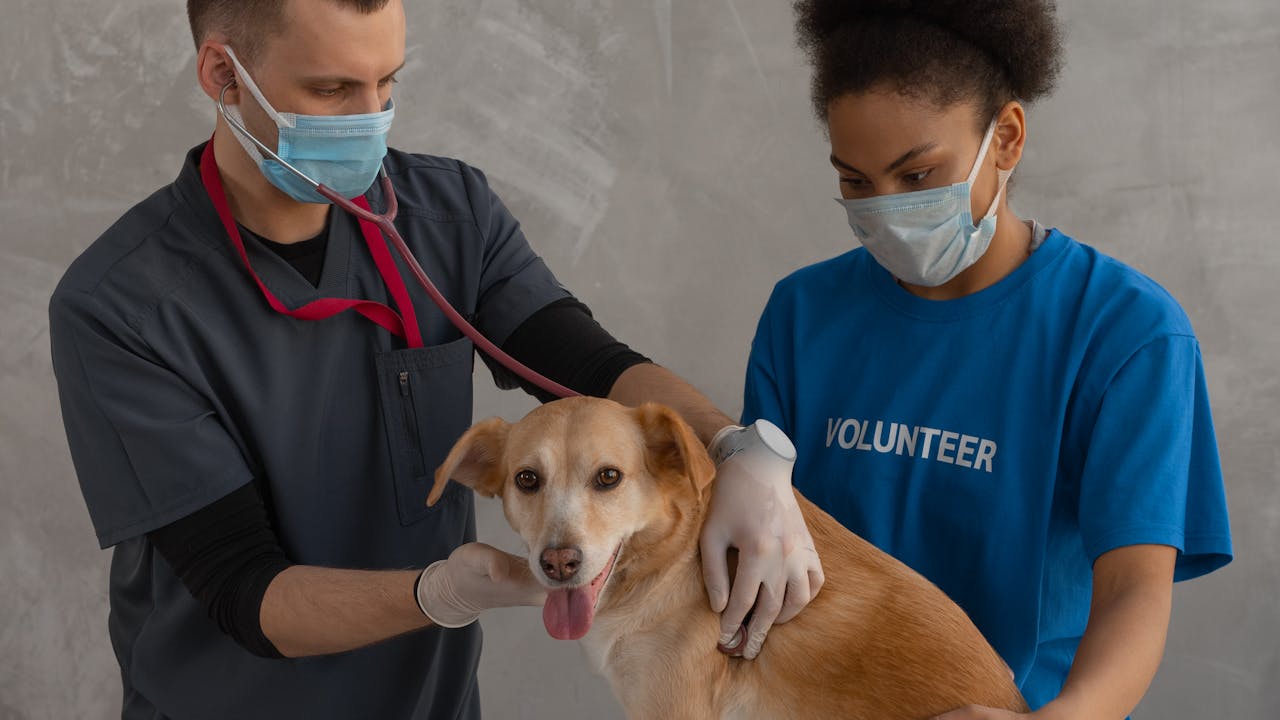
Basic bloodwork and urinalysis. A complete blood count checks for anemia, infection, and inflammation. A chemistry panel evaluates kidney function, liver enzymes, blood glucose, and electrolytes. Urinalysis looks at kidney health, checks for infection, and flags Cushing's disease through abnormally dilute urine - one of the condition's most consistent markers.
Endocrine testing if Cushing's is suspected. The low-dose dexamethasone suppression test (LDDST) is the most common first screening tool. An ACTH stimulation test confirms the diagnosis and establishes baseline cortisol levels. Results also help distinguish pituitary origin (most common) from adrenal origin (less common but different treatment implications).
Imaging. Chest X-rays show heart size, lung fields, and trachea. An enlarged heart shadow suggests cardiac disease. Fluid in the lung fields suggests pulmonary edema or pneumonia. Abdominal ultrasound evaluates the adrenal glands, liver size, and other organs. CT or MRI may be used if a pituitary or adrenal tumor is strongly suspected based on other findings.
Cardiac evaluation. An echocardiogram is the gold standard for diagnosing heart disease - it gives direct visualization of valve function, chamber sizes, and wall motion. An electrocardiogram detects arrhythmias. The NT-proBNP blood test is a cardiac biomarker that flags heart stress and can be run at most primary care clinics as a preliminary screen.
Respiratory evaluation. If laryngeal paralysis is suspected, the larynx is examined under very light sedation while breathing is observed directly. Bronchoscopy evaluates the lower airways. Thoracic CT is used for complex respiratory cases where standard X-rays don't give enough detail.
Diagnosis isn't always immediate. Some conditions require multiple tests, a trial treatment response, or re-evaluation over time. Share everything you've observed with your vet - including the video on your phone, the resting respiratory rate you counted at home, and even the small things that seemed too minor to mention. In diagnostics, small things add up.
Honoring the dog who trusts you completely
There's something particular about a dog owner who notices when breathing changes. Who counts breaths. Who reads guides at night instead of going to sleep. That attentiveness is a form of love, and your dog feels it even when they can't understand it.
The owners who catch Cushing's disease early, who notice the respiratory rate climbing before the cough starts, who bring in the video that shows what's happening at two in the morning - they're the same people who have always been paying attention. Who watch. Who worry. Who show up.
If you have that relationship with your dog, it's worth honoring it in something that lasts. Fable specializes in turning photographs into museum-quality dog portraits that capture the specific look your dog has - the one you know so well that you can tell something's off just from a glance. We create personalized dog portraits in styles that range from royal pet portraits and renaissance pet portraits to regal, classical works that give your dog the gravitas they've always carried. You can also explore pet family portraits that put your whole crew together in one animal portrait worth keeping forever.
See how it works - it's simpler than you'd think. Browse pricing for current options. Or head directly to the full pet portrait collection to find the style that fits.
Frequently asked questions
Why is my dog panting for no reason?
Panting with no apparent cause is usually related to pain, anxiety, or a systemic medical condition like Cushing's disease or early heart disease. Count your dog's resting respiratory rate (normal is 15-35 breaths per minute). Check gum color. Note any other changes in behavior, appetite, thirst, or energy. If the panting persists for more than a day without an obvious trigger, contact your vet. See more about specific patterns in our dog portrait guides for dog-loving owners who want to understand their pets.
Is it normal for dogs to pant a lot?
Some panting is completely normal - after exercise, in warm weather, when excited. What isn't normal: panting at rest in a cool room with no clear trigger, panting that continues more than ten minutes after rest, panting accompanied by other symptoms like lethargy, pale gums, or vomiting, and panting that is suddenly much more frequent or intense than your dog's usual pattern. If your dog's baseline has changed, that change is meaningful. Explore personalized dog portraits as a way to celebrate your dog while they're at their healthiest.
Why does my dog pant at night when it's not hot?
Nighttime panting most commonly points to pain (especially arthritis), canine cognitive dysfunction syndrome (CCDS), Cushing's disease, or heart disease. All four are more common in older dogs. If your dog is regularly panting at night, especially alongside restlessness, trouble settling, or signs of confusion, a veterinary workup is the right next step. Memorial pet portraits are one way families honor senior dogs through all stages of life.
Why is my dog panting while lying down?
Panting while resting is one of the clearest signals that something beyond normal thermoregulation is happening. The most common causes are pain, anxiety, and systemic disease. Count breaths per minute - above 40 at rest is abnormal. Check gum color. If there's no obvious explanation and it's been going on for more than a day, call your vet. Custom dog portraits help families keep their dogs' memory close through every chapter.
How do I know if my dog's panting is too much?
Count their resting respiratory rate - consistently above 40 breaths per minute at rest is a flag. Also watch for panting that won't settle after ten minutes of rest in a cool environment, visible effort to breathe with stomach muscles engaging, accompanying symptoms like weakness or reduced appetite, and any change in gum color from normal pink. If something feels off, trust that instinct. Pet painting from photo services like Fable exist because dog owners have profound intuition about their animals.
Should I take my dog to the vet for panting?
If the panting has an obvious, explainable cause that resolves on its own within ten minutes - heat, exercise, excitement - then monitoring is fine. If it's persistent, happens at rest without cause, comes with other symptoms, started suddenly, or involves any gum color change, then yes. When in doubt, call your vet and describe what you're seeing. They can help you decide whether to come in now or continue monitoring. Dog owners who celebrate their bond with their pets are also the ones who take symptoms seriously.
Can anxiety cause a dog to pant constantly?
Yes. Dogs with significant anxiety disorders can pant chronically, especially if their triggers are frequent or if they have generalized anxiety rather than specific situational anxiety. But chronic panting should always be evaluated to rule out medical causes before attributing it purely to anxiety. Work with your vet on a clear diagnosis first. Royal dog portraits are a popular way anxious dog owners channel their love into something beautiful.
What breeds pant the most?
Brachycephalic breeds - Bulldogs, Pugs, French Bulldogs, Boston Terriers - pant more than average because of their anatomy. Their compressed airways require significantly more effort to move air through, and their ability to cool themselves through panting is inherently reduced. Large breeds prone to laryngeal paralysis, including Labrador Retrievers and Saint Bernards, may also develop abnormal breathing patterns as they age. Renaissance pet portraits celebrate every breed with the grandeur they deserve, from brachycephalic Bulldogs to noble Labradors.
What does it mean when a senior dog suddenly starts panting more?
Sudden increased panting in an older dog is worth taking seriously. The most likely causes are Cushing's disease, early heart failure, arthritis worsening, cognitive dysfunction syndrome, or pain from any number of sources. A senior wellness exam with bloodwork is the right response. Catching these conditions early, before they've significantly progressed, gives you the most options. While your dog is still doing well, consider animal portraits that capture them at their best.
Related guides
- Dog portraits: the complete guide to custom dog art
- Custom dog portraits from your photos
- Memorial pet portraits: honoring a dog you loved
- Royal pet portraits: giving your dog the treatment they deserve
- Pet painting from photo: everything you need to know
Sources
- VCA Animal Hospitals - Congestive Heart Failure in Dogs
- Cornell University College of Veterinary Medicine - Cushing's Syndrome
- Cornell University College of Veterinary Medicine - Brachycephalic Obstructive Airway Syndrome
Your dog tells you everything. Not with words, but with behavior, breath, and body language. Every time you notice something different and take it seriously, you're doing exactly what they need from you.
If the panting has you worried, you're right to ask why. And now you have the answers to know what it might mean and what to do about it.
Honor them while you can. If you'd like to capture your dog in something that outlasts the moment, explore the full range of dog portraits, royal pet portraits, regal pet portraits, personalized dog portraits, and custom dog portraits at Fable. See family portraits, couple portraits, kids portraits, and self portraits to find the style that speaks to you. Read about how it works and visit pricing to get started.
Give your dog the portrait they've always deserved.