Senior portrait ideas for guys: the complete guide
Most guys don't exactly jump for joy when senior portrait day gets announced. You know the drill. Mom starts texting about scheduling. Someone mentions a photographer. You nod along, say sure, and then quietly hope the whole thing takes care of itself. It doesn't, of course. Senior portraits are one of those milestones that feel a little awkward on the surface, especially if you're not someone who loves being in front of a camera. You stand there, the photographer tells you to "look natural," and somehow your arms feel like they belong to a stranger.
But here's the thing. Done right, senior portraits are genuinely worth it. Not just for your parents, though they'll treasure them. Not just for the yearbook. But because this exact version of you, right now, won't exist again. You're at the edge of something. School ends, a new chapter opens, and the person standing at that threshold deserves more than a rushed photo in a rented blazer.
This guide exists to change how you think about senior pictures. Not to make you love being photographed overnight, but to give you the actual information that makes the difference between portraits you're embarrassed by and portraits you're genuinely proud of. Poses that don't look stiff. Outfits that look like you. Locations that tell a real story. Timing that makes the light do the work for you.
You'll leave this knowing exactly what to do, what to wear, when to show up, and how to turn a two-hour session into something worth keeping for the rest of your life.
Before you book the photographer
Here's something most people skip entirely, and it's the most important decision in this whole process.
A senior portrait session produces hundreds of digital files. You pick a few favorites. They get printed, framed, put on display for a season, and eventually end up in a box or on a hard drive somewhere. That's the typical outcome. The photos exist, but they don't persist the way they should.
There's a better way to treat this milestone.
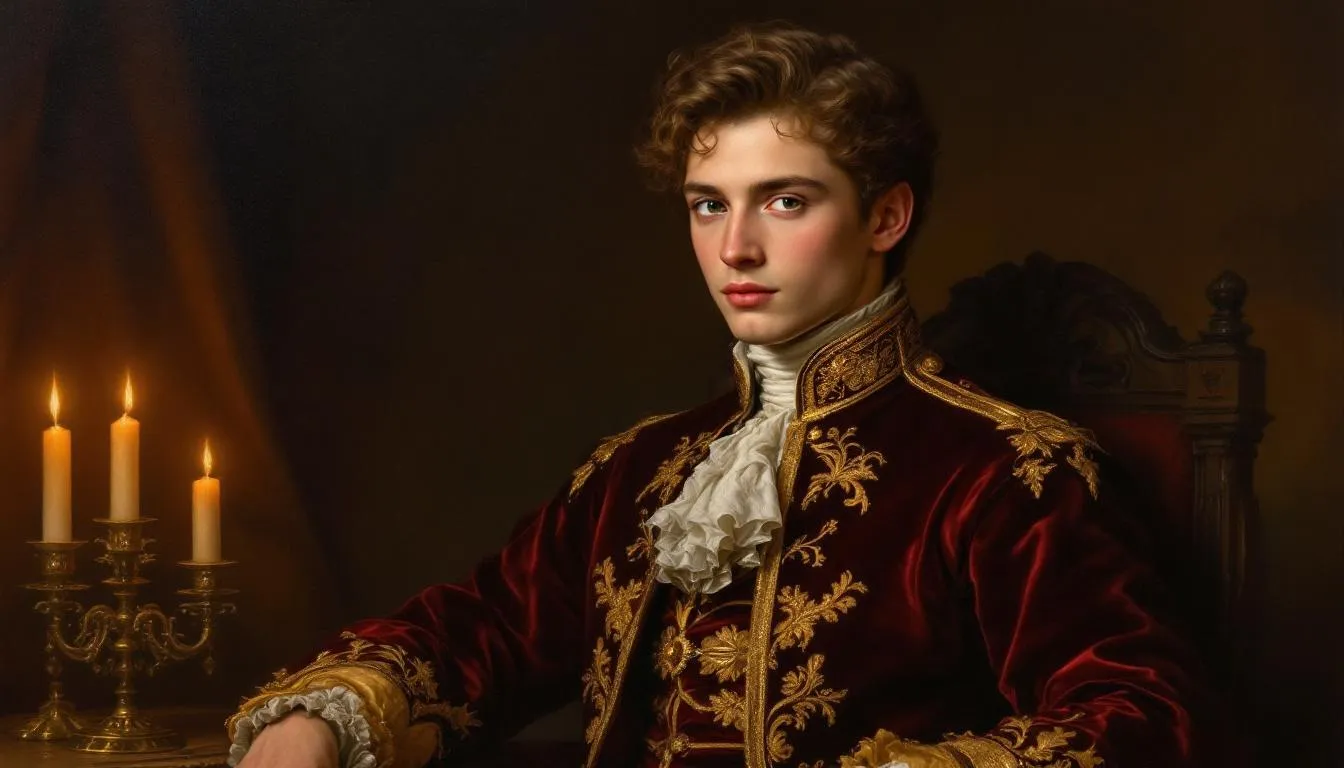
Fable transforms your senior portrait into fine art. Not a filtered print. Not a canvas wrap from a big-box photo lab. An actual painted portrait, handcrafted in classical, renaissance, or royal style, from a photo you already love. It becomes the kind of piece that hangs on the wall for decades. The kind that shows up in the background of family photos twenty years from now. The kind that gets passed down.
Think about the difference between a photograph and a painting. A photograph captures a moment. A painting honors it. When you commission a portrait through Fable, the senior portrait session becomes the raw material for something that genuinely outlasts the occasion. Your parents aren't just getting an 8x10 in a frame. They're getting heirloom art.
If you want to understand how it works, the how it works page lays out the full process. You upload a photo, choose a style, and the team produces a piece worthy of any wall in any home. If you're thinking about giving a painted portrait as a gift to mark this milestone, check the pricing page for current options. And if you're curious what a custom portrait looks like in practice, self-portraits shows what's possible for individual subjects.
This is the recommendation you make before anything else. Before you pick a photographer. Before you think about outfits. Decide that the senior portrait session will produce something permanent, not just a set of files. Then build the session around that goal.
Now for the practical guide.
The senior portrait tradition in the United States goes back to the 1880s. Over a century of families marking this transition in exactly the same way. According to the Professional Photographers of America, 78% of parents believe senior portraits are essential for commemorating their child's high school experience. Portrait photography studios in the US generate roughly $9 billion in revenue annually. This is not a small thing. It's a ritual with real weight behind it.
The question is whether you approach it that way.
Poses that actually work for guys
Most guys fail at senior portraits for one simple reason. They don't know what to do with their body. The camera comes up and suddenly every limb feels wrong. Arms hang awkwardly. Shoulders creep up. The expression lands somewhere between forced smile and mild discomfort.
Poses solve this. Not because you're being fake, but because good poses give your body a natural shape to hold. They remove the decision paralysis. When you know what you're doing, you relax, and that's when real expressions happen.
Here are the poses that consistently produce strong results for guys.
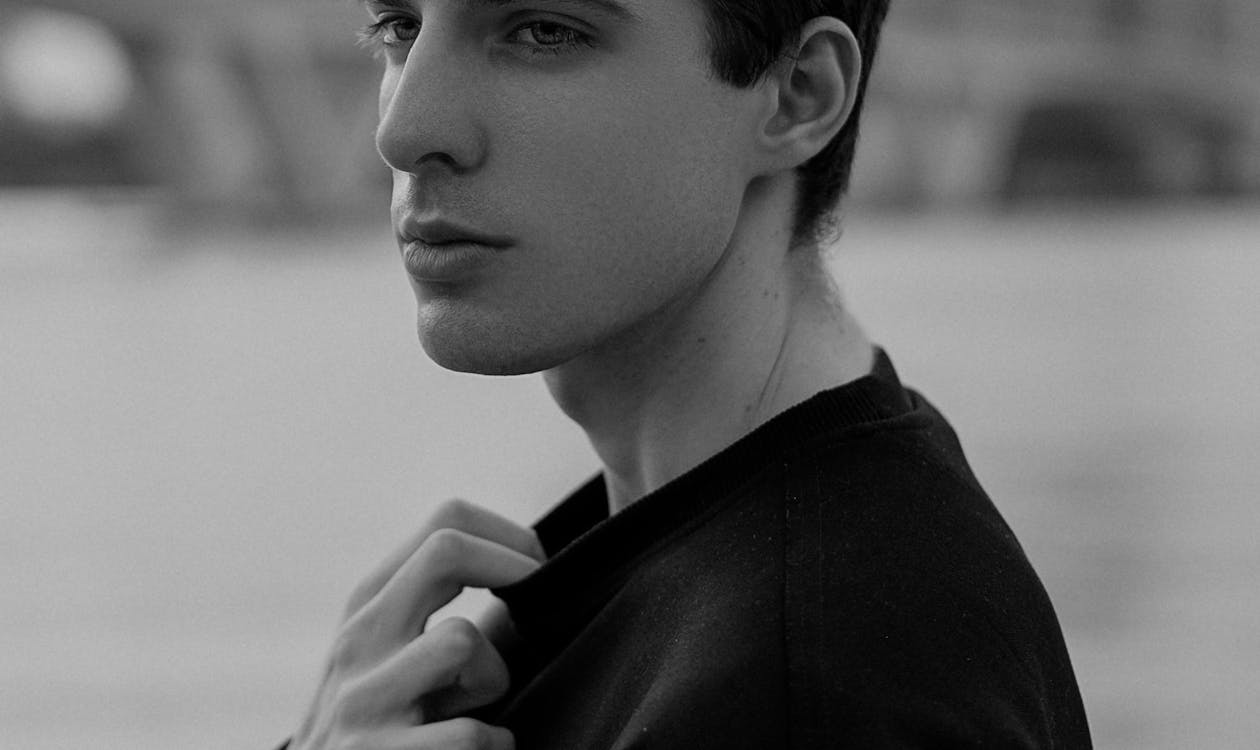
The weight-shifted stance with hands in pockets. This is the baseline pose that works in almost every setting. Put both hands loosely in your pockets, not crammed all the way in, just enough that your thumbs hook over the edge. Shift your weight to one leg. Let the other leg bend slightly at the knee. Turn your body about 30 degrees away from the camera. Then turn your head back toward the lens. The slight body angle creates shape. The weight shift removes stiffness. The hands in pockets give your arms somewhere to go without looking like you glued them to your sides. This is the pose you use when you need a reliable result fast, and it works every time. Check out the full senior portrait poses guide for a deeper breakdown of each variation.
Leaning against a textured surface. Put your back against a brick wall, a wooden fence, a concrete pillar, or a rusted warehouse door. Cross one ankle over the other. Let your weight fall into the wall, not just resting against it but actually comfortable. One hand in a pocket, one arm hanging loose. Tilt your chin down slightly. This pose communicates ease without trying, which is exactly the mood most guys are going for. The texture of the background adds visual interest and context. It's one of the most versatile poses in senior portrait photography because it works in nearly any urban or outdoor location.
Sitting on steps or bleachers. Find a set of stairs, a stadium bleacher, a front stoop, or a concrete step. Sit with your elbows on your knees, leaning slightly forward, hands loosely clasped or one hand resting, the other dangling. Lean forward from the hips, not just the shoulders. This posture creates a natural triangular shape in the frame and makes you look relaxed rather than rigid. The lower position also allows the photographer to shoot slightly up at you, which adds a subtle sense of presence to the image. For a sports angle, bleachers carry extra meaning. For an urban feel, concrete steps outside a building work perfectly. The senior portrait poses guide breaks down bleacher and step setups in detail.
Walking toward the camera. This one requires a little coordination but produces some of the most dynamic images in any session. Walk slowly and directly toward the camera. Don't look at the lens immediately, look slightly to the side as you approach, then glance up just before the shot. The motion creates natural body language. Your arms swing slightly, your stride takes shape, your expression carries the kind of casual confidence that's nearly impossible to fake standing still. Photographers love this pose because it generates a series of frames to work with, and the best one from that sequence often ends up being the standout shot from the whole session.
Elbows on a surface, leaning forward. Find a ledge, a railing, a car hood, a fence post, anything at roughly waist or chest height. Rest your elbows on it and lean forward. Let your hands clasp loosely or hold something meaningful. Look directly at the camera. This is one of those poses that photographs like a candid even though it's staged, because it mirrors how people actually stand when they're relaxed and comfortable in conversation. If you pair it with a location that matters to you, a locker room hallway, a workshop bench, a garage, it tells a real story. Pair this with outfit guidance from the senior portrait outfits guide for a complete look.
Arms crossed, direct eye contact. Simple. Powerful. Fold your arms across your chest without clenching, keep it relaxed rather than defensive. Stand straight. Look directly into the lens. Don't smile if it doesn't come naturally, a serious, composed expression here is perfectly strong. This pose reads as confident and self-assured, and for a lot of guys it's the one that actually looks most like them. The key is to keep the shoulders back and the jaw relaxed. A tense jaw changes the whole read of the image.
The crouching or athletic stance. Drop into a low crouch, knees bent, forearms resting on your knees, leaning forward. This works especially well for athletes because it mirrors the natural physicality of sport. It also photographs well at outdoor locations because it changes the relationship between you and the background. The camera comes down to your level. The background expands behind you. You look grounded and capable. For senior gift ideas for sports contexts, this pose ties the portrait directly to athletic identity.
Silhouette against a sunset or bright sky. This one depends on timing and weather, but when it works, it produces some of the most striking images from any session. Stand facing the light source with your back to the camera. Arms slightly away from your body. Maybe one arm raised, maybe in a strong stance. The photographer exposes for the sky, which renders you as a dark shape against the color. No expression needed. No pose anxiety. Just your outline against something beautiful. This is a shot worth planning your session around. The portrait vs landscape guide covers how orientation choices affect dramatic shots like this.
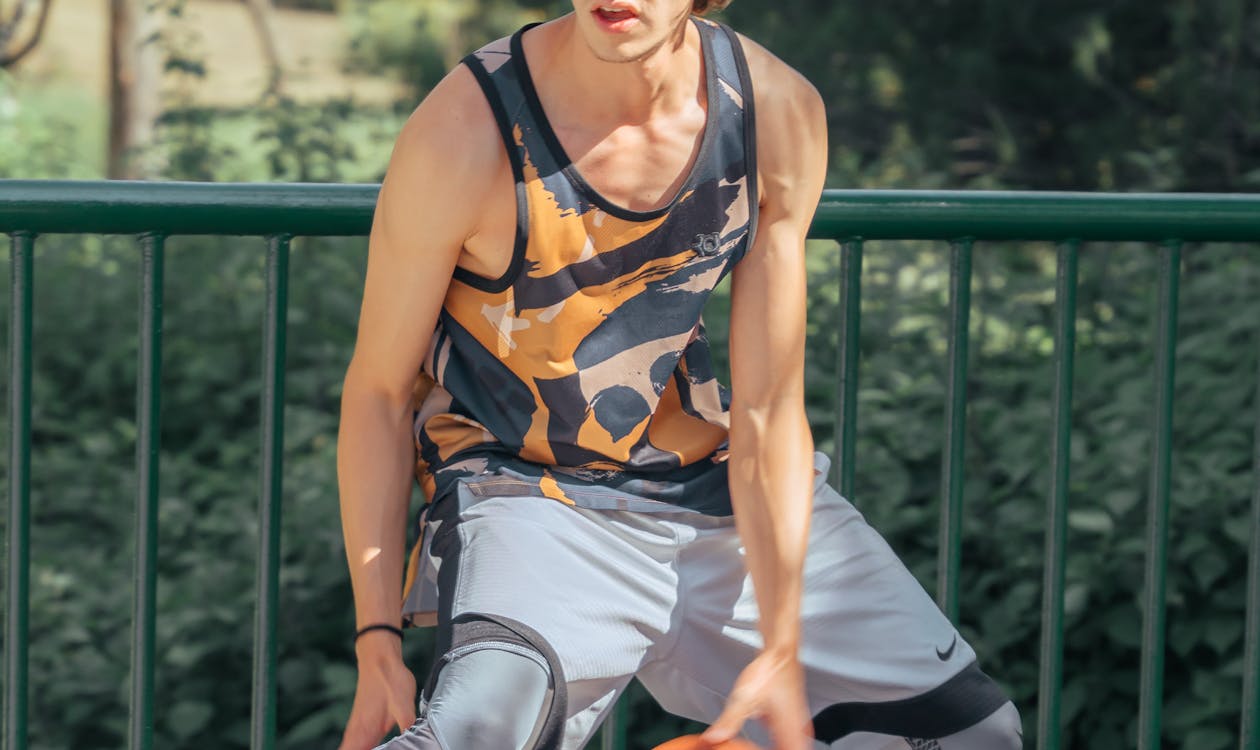
In action with sports equipment. If you play a sport, bring your gear. A basketball, a baseball bat, a football, a lacrosse stick. The action doesn't need to be mid-play dramatic. Just holding it naturally, maybe mid-dribble, maybe with a bat over one shoulder, creates immediate personality and context. These are among the most specific portraits possible because they tell the viewer something true about who you are right now.
Sitting cross-legged at ground level. Sit directly on the ground, cross-legged or with legs loosely extended. Lean back on your hands or lean forward with elbows on your knees. The photographer shoots from roughly your level or slightly above. This low position reads as relaxed, unpretentious, and confident in a different way than the standing poses. It works particularly well outdoors, on grass, on a concrete surface, on a wooden dock. Pair it with wide-open natural backgrounds and you get an image with both presence and depth.
Looking off-camera, reflective mood. You don't have to look at the lens in every shot. Some of the strongest senior portraits capture a moment of genuine thought. Stand or sit comfortably, let your gaze fall somewhere to the side or slightly down, and just think about something real. A goal you're working toward. A memory from the last four years. The photographer catches that natural, unperformed expression. These images tend to be the ones that hit hardest emotionally, because they look like they weren't taken at all. They look found.
Low-angle dramatic shot. Ask your photographer to crouch low and shoot upward toward you. You stand straight, arms at your sides or loosely in pockets, looking directly at the lens or slightly above it. This angle adds physical presence and a cinematic quality to the image. It's the angle that makes action heroes look heroic in movie posters. Used intentionally, it elevates an otherwise ordinary standing pose into something that feels genuinely powerful. Works best against open sky or a clean architectural background.
The mid-laugh candid. Tell your photographer this is something you want. They'll know how to set it up, usually by saying something off the cuff that catches you off guard. The result is a frame that looks nothing like a posed portrait because it isn't one. Your body language, your expression, the slight blur of motion, all of it reads as completely real. Families almost always pick at least one of these as a favorite because it shows the person, not the pose.
Walking away, looking back. Walk away from the camera at a comfortable pace. At some point, the photographer calls your name and you glance back over one shoulder. This creates a natural, cinematic moment. The body is in motion. The face is genuinely surprised into expression. The over-the-shoulder look carries a quality of instinct rather than performance. It works on any long path, road, or open field, and it complements more formal, static poses in the same session.
The most important rule across all of these: stop trying to look good and start trying to feel natural. Photographers consistently report that the best frames come after someone stops performing and starts just existing in the space. The poses give you a shape to start from. Your job is to settle into it.
Location ideas by setting type
Where you take the photos matters as much as how you stand. Location creates context. It adds meaning. It tells the viewer something about who you are and where you come from.
Urban and city settings produce some of the most visually dynamic senior portraits. Brick walls, painted murals, industrial alleyways, fire escapes, downtown storefronts, parking structures with city views. The variety of textures and colors creates visual interest without competing with the subject. Urban locations also read as current and real, which is why they consistently appear in the best senior portrait galleries. The contrast between sharp architectural lines and a human subject is naturally compelling. If you live near a city, spend an afternoon walking through neighborhoods with interesting architecture and note what catches your eye. The abstract portraits guide has good insight on using urban textures as visual backgrounds.
Natural outdoor settings give you something you can't replicate in a studio: real, uncontrollable light and living backgrounds. A field of tall grass in the late afternoon. A stretch of forest with dappled light filtering through the canopy. A lake shore, a river bend, a hillside meadow. These locations create portraits that feel timeless in a way that urban settings don't always manage. The fall family portrait ideas guide covers seasonal outdoor settings in depth, and much of that location advice applies directly to senior portraits. Autumn specifically offers color that photographs beautifully. The family portrait outfits guide's section on outdoor location dressing also applies when you're choosing what to wear for a field or forest session.
Personally meaningful locations are the ones most people overlook, and they often produce the most memorable images. Your high school's hallways or gymnasium. The sports field where you spent most of your evenings. The garage where you built things or worked on your car. Your favorite fishing spot. The court where you learned to play ball. These locations don't need to be visually perfect. They need to be true. A portrait taken somewhere that actually matters to you carries something extra in the expression, because you're not performing comfort. You actually feel it.
The right stadium, practice facility, or athletic space connects the portrait directly to the years you put in. For athletes specifically, the location does half the storytelling work before you even strike a pose. The senior gift ideas for sports guide covers how location selection and sports context combine for athlete-forward senior portraits.
Studio settings aren't as exciting to talk about, but they have real advantages. Controlled light. Clean backgrounds. No weather variables. No competing visual noise. A skilled studio photographer can produce technically flawless images with seamless backdrops or richly textured studio environments. Studios work especially well for the more formal looks, the suit or sport coat outfits that you want separated from distracting outdoor elements. Many guys do a mix: outdoor locations for the casual and personality-driven shots, studio for the clean, formal images.
If you're choosing between locations, the answer is usually: pick at least two. One meaningful outdoor space and one urban or studio setting gives you range. Different backgrounds tell different parts of your story.
What to wear: the outfit guide
Outfit selection is the single decision that most affects how you'll feel about your senior portraits five years from now. Get it right and you'll love the photos. Get it wrong and you'll wince every time they come up.
The full breakdown is in the senior portrait outfits guide, but here's what you need to know.
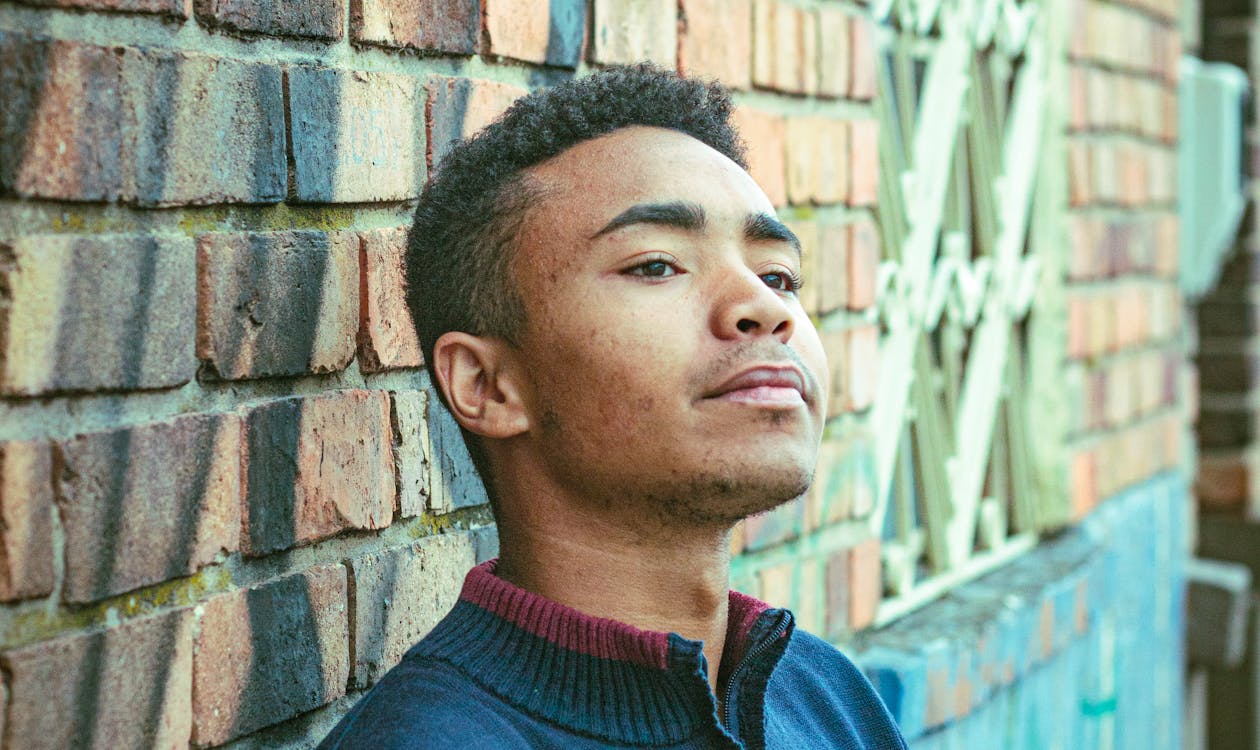
Start with the formal look. A well-fitted suit or sport coat is the single most timeless option in any senior portrait wardrobe. Not a rented tuxedo, not a blazer from five years ago that's two inches too short in the sleeve. A suit that actually fits your current body. A white or light blue dress shirt underneath. A tie is optional but adds a layer of formality that works for some guys and feels forced for others. If you wear a tie, make sure the knot is clean and the length lands right. Shoes matter more than people think. Clean leather dress shoes finish the look in a way that sneakers don't, even good sneakers.
Why bother with formal? Because formal portraits age beautifully. Twenty years from now, you won't be embarrassed that you wore a suit. You might be embarrassed by the outfit you thought was cool right now. The suit is a safe investment in your future opinion of these photos. If you're planning family portrait outfits for a coordinated session, the suit anchors the family's palette nicely.
The middle register: smart casual. This is where most guys feel most like themselves. A quality flannel button-up or chambray shirt, sleeves rolled once or twice, over a solid-color tee. Well-fitted jeans without heavy distressing. Clean white sneakers or simple leather boots. A quarter-zip sweater or a lightweight jacket can add a layer of visual interest. This outfit category is the workhorse of modern senior portraits because it photographs well, it reads as current, and it looks like you actually chose it instead of just showing up.
The casual look. A clean graphic tee, well-fitted, nothing too loud or promotional, paired with your best-looking jeans or chinos and your favorite shoes. This is the hardest look to execute well because it relies entirely on fit and simplicity. Loose fits can read as sloppy on camera. Busy graphics compete with your face. The secret to a successful casual look in senior portraits is understatement. The simpler the pieces, the more the person wearing them comes through.
Practical rules that change everything. First, fit is more important than brand, price, or style. A well-fitted $40 shirt photographs better than an ill-fitting $200 one. Check the shoulders, the sleeve length, and the waist. If anything bunches, pulls, or hangs wrong, it will be obvious in photos. The detailed version of this checklist lives in the senior portrait outfits guide.
Second, solid colors and subtle textures photograph better than loud patterns. Bold stripes, large plaids, and busy prints create visual noise that pulls the eye away from your face. Earth tones, navy, forest green, charcoal, burgundy, and deep blue photograph consistently well. Avoid neon and very bright whites unless the photographer specifically recommends them for a particular lighting setup.
Third, bring more than you think you need. Most senior portrait sessions accommodate two to four outfit changes. Plan at least two looks and ideally three. A formal look, a smart casual look, and something that feels most purely like you. The senior portrait outfits guide has a full packing checklist worth reviewing before your session.
Fourth, check every item for wrinkles and lint the night before. Things you can't see on a hanger show up clearly in a photo with good lighting.
What not to wear. Overly distressed denim rarely photographs as intended. Brand logos and promotional text compete visually with your face. Thin horizontal stripes create a moiré effect in digital photography that looks strange on screen. Anything that doesn't actually fit. Anything you wouldn't wear again. If you're uncertain about an item, leave it at home and bring an extra shirt you know works. For xmas portrait ideas sessions, holiday color palettes follow similar rules: go for deep, saturated tones over loud or novelty patterns.
Props that add personality
Props are powerful when they're real. They fall flat when they're borrowed for effect.
The best props are things that actually belong to your life right now. Your guitar, not a guitar. Your soccer cleats, not random sports gear. Your camera if photography is genuinely something you do. The book you're actually reading. The car you actually drive. These objects don't need to be staged. They just need to be present, and the camera will find the story.
Sports equipment is the most common and usually the most effective prop category for guys. If you've played a sport through high school, that equipment carries years of meaning. A basketball worn from use. A baseball bat with a grip tape that's your personal modification. A helmet you've worn in actual games. These aren't decorations. They're artifacts. Bring them and let them appear naturally in the frame, resting near you, held loosely, set down beside you. The senior gift ideas for sports guide covers how to incorporate athletic identity into senior year commemorations more broadly, including portrait sessions.
Musical instruments are another category that photograph with natural authenticity when the person actually plays. An acoustic guitar held across the lap. A drumstick held loosely. A piano bench at an open instrument in a music room. The key is that the object looks used rather than posed with. A musician holding an instrument looks different from a non-musician holding one, and cameras catch that distinction more reliably than you'd think.
Vehicles can work exceptionally well when they're part of your actual life. The truck you learned to drive. The car you've been rebuilding in the garage. Your motorcycle or dirt bike. A vehicle portrait can be the most specific and personal image from an entire session because it captures both you and a relationship you've built. Park it well, find clean light, and let the photographer work around it.
Academic and creative props tend to work better in action than in still life. Your art portfolio opened to a page you're proud of. Sitting at a desk or workbench with your tools around you. A laptop open at a location relevant to your work. These feel authentic when they're settings you actually occupy, and they feel staged when they're assembled for the photo. The difference is visible.
Pets. A dog in a senior portrait is almost always a win, because the interaction between a person and their animal is impossible to fake and produces natural, warm expressions. Your dog doesn't follow direction. It reacts to you, and you react to it, and that back-and-forth creates frames that are genuinely alive. If your dog is part of your daily life, bring it. The personalized dog portraits page is worth a look if you want to go further and turn that pet interaction into a piece of art. The dog portraits and pet portraits guides explore that option in full detail.
The rule for all props: if you have to explain why you're holding it, leave it home. Props should make immediate sense to anyone looking at the photo.
Timing and light
Light is the variable that separates good senior portraits from great ones. You can do everything else right and still end up with mediocre photos if you shoot at the wrong time of day. You can have an average location and average outfits and still come home with stunning images if the light is exactly right.
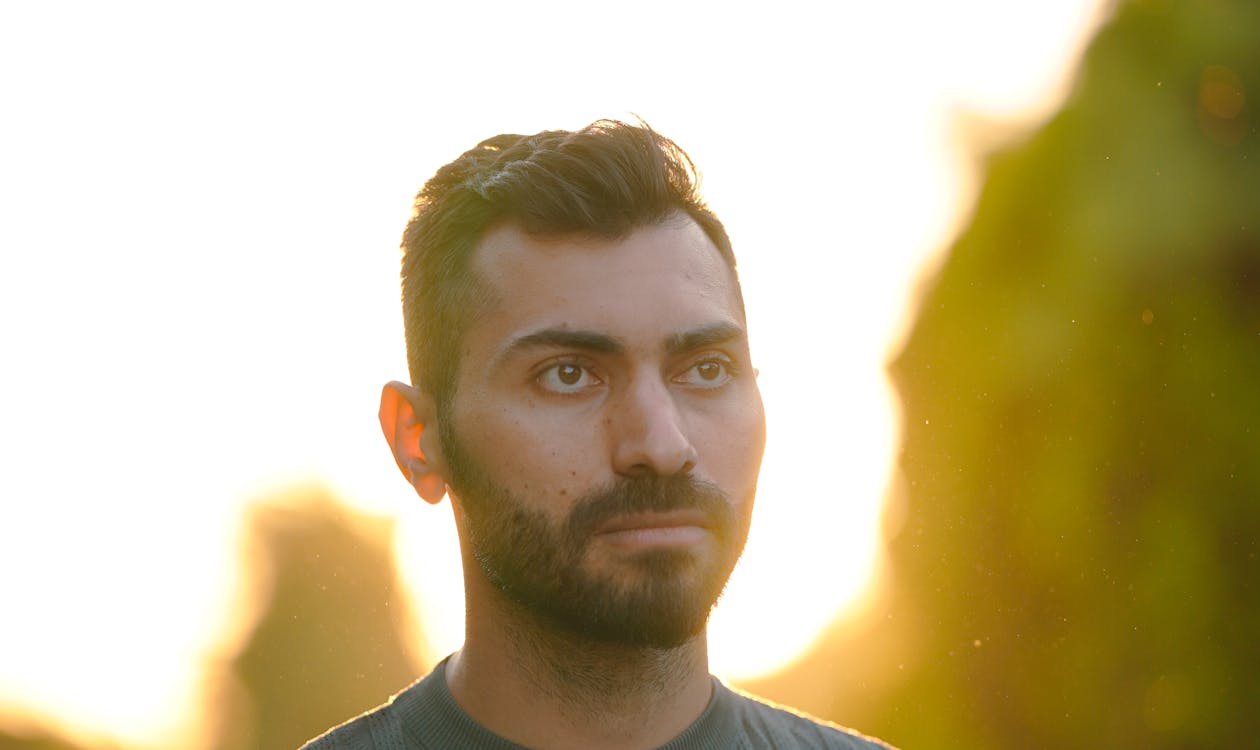
Golden hour is the one-hour window before sunset. This is the most universally loved lighting condition in portrait photography for one simple reason: it makes everything look better. The sun sits low on the horizon, which means the light comes in at a flat angle rather than directly overhead. That angle eliminates the harsh shadows under the eyes and chin that make midday portraits look unflattering. The color of golden hour light, warm amber and yellow-orange, is inherently beautiful against human skin. It makes any location feel more cinematic. It makes ordinary backgrounds look extraordinary.
Plan your session around golden hour when possible. Tell your photographer you want to hit golden hour for the outdoor portion. Schedule the session to end at golden hour rather than beginning at it, so you've warmed up and know each other by the time the best light arrives. The fall family portrait ideas guide covers how seasonal changes affect golden hour timing across the year.
Overcast days are the secret weapon that most people don't appreciate. An overcast sky is the largest natural softbox in the world. The clouds diffuse the sunlight evenly in every direction, eliminating hard shadows entirely. Overcast light is flattering, consistent, and doesn't require constant position adjustment as the sun moves. Colors reproduce more accurately. Skin tones look clean. If your session day turns out to be cloudy, your photographer will likely be relieved rather than disappointed. Don't reschedule for clouds unless you're counting on the silhouette shot, which needs direct sun.
Blue hour is the short window after sunset when the sky holds a deep, even blue. It's less commonly used for senior portraits but produces a distinctive look that photographs beautifully in urban settings. City lights begin to glow. The sky provides its own ambient fill. If you're shooting in a downtown location, ask your photographer about staying through blue hour for a few frames with a completely different mood from the rest of the session.
What to avoid: midday sun. The sun directly overhead creates shadows directly below every feature on your face. Eyes disappear into dark pools. The jaw casts a shadow on the neck. The nose throws a dark line onto the upper lip. Midday light is the reason so many casual snapshots look unflattering. It's not the camera and it's not the subject. It's the angle of the light. If your session has to run midday, insist on shade. Open shade under trees or on the north side of a building gives you indirect, diffused light that's far more workable than direct sun.
Seasonal considerations. Fall and spring offer the most predictable outdoor portrait conditions in most parts of the country. Fall specifically provides color that photographs beautifully and temperatures that make multiple outfit changes comfortable. The fall family portrait ideas and xmas portrait ideas guides cover how seasonal context changes the entire visual character of a portrait session.
How to prepare
The difference between a session that feels chaotic and one that goes smoothly comes down to what you did in the days before. Here's a timeline that works.
Six to eight weeks before: Book the photographer. This sounds early, but the best portrait photographers in most areas fill their fall senior season by spring. If you wait until summer to book for fall portraits, you may find your first three choices are unavailable. Read reviews. Look at galleries, specifically looking for guys in the portfolio so you can judge how that photographer handles male subjects. Ask about the session structure, how long, how many locations, how many outfit changes, and what's included in the session fee versus what costs extra.
Two to three weeks before: Finalize your outfits. Lay them all out and look at them together, checking for visual harmony. You don't want three looks that all feel identical. You want range. Take a photo of each outfit on a hanger and look at them side by side. Show them to your photographer if you have any doubt. Identify any items that need ironing, alteration, or replacement and handle them now, not the week of the session. The senior portrait outfits guide has the full pre-session checklist.
One week before: Get a haircut. This is one of the most important and most frequently botched steps in senior portrait prep. A fresh haircut from the night before your session looks too fresh. A haircut from three weeks ago can look grown out and unfinished. One week is the sweet spot: new enough to look clean and intentional, settled enough to not look like you just walked out of the barber. If you have any skincare concerns, a week also gives you time to address them without the risk of trying something new right before and reacting badly.
The day before: Lay out every outfit, including accessories, shoes, and any props. Confirm the session time and location with your photographer. Check the weather forecast and make a rain plan if the session is outdoor. If you're bringing a pet, make sure they're clean and someone else can handle them at the session so your hands are free. Charge any devices you need and load up whatever playlist or podcast helps you feel like yourself.
The morning of: Eat a proper meal. Seriously. A session that runs two to three hours on an empty stomach is longer than you think, and being hungry makes it harder to relax. Drink water. Avoid anything that makes your skin look oily or your eyes puffy. Pack a small bag with: a backup shirt, deodorant, a lint roller, the addresses of your locations, and a snack. Arrive ten minutes early so you're not starting the session already stressed.
During the session: Tell your photographer what you want. They're there to help. If a pose feels awkward, say so. If you love how something is going, say that too. The best sessions are collaborative. Photographers take direction from subjects as much as the other way around. They can't know what your favorite pose will be unless you communicate. If you're stiff, ask for five minutes to just walk around and get comfortable. Movement before standing still usually helps.
What to expect from the cost
Senior portrait photography pricing varies widely, and understanding what drives the difference helps you make a decision you won't regret.
The session fee is what you pay upfront to secure the photographer's time. This typically runs between $199 and $500 for most local and regional photographers. That fee covers the shoot itself and usually includes a certain number of edited digital images. Some photographers deliver 20-30 edited files. Others deliver 5-10. The session fee is not usually the full cost.
Average total family spend on senior portraits sits around $1,000 to $1,500. That figure includes the session fee plus print packages, digital collections, albums, or wall prints. Prints are how most portrait photographers make the majority of their income. They price the session affordably to get you in the door, then show you a gallery of images that are hard to say no to. Budget accordingly. If you walk in expecting to spend $300 and leave having spent $1,200, it's not a surprise as much as a standard industry pattern.
Mid-tier photographers in the $1,000 to $2,000 total range offer more comprehensive packages, larger print formats, more session time, and often more experience with complex locations or dramatic lighting setups. This tier is where you find the professionals who have full-time portrait studios and built their reputation on consistent, high-quality work.
Luxury senior portrait experiences run $2,000 to $5,000 or higher. This category includes photographers who have significant editorial or commercial experience, offer full styling consultation, manage multiple locations in a single session, and deliver both digital collections and premium print products. If the senior portrait is a major family priority and you're willing to invest at that level, the results from this tier are categorically different from the budget tier.
What drives the price difference? Experience is the biggest factor. A photographer who has shot 500 senior portrait sessions has solved every problem that can come up. Lighting fails, locations fall through, subjects freeze up. They know what to do. Equipment matters too: higher-end lenses and sensors produce images that hold up at large print sizes. Post-processing time matters: editing 50 portraits to a consistent, high standard takes hours. If you're looking for gift ideas for photographers to thank your senior's photographer afterward, that guide has thoughtful options.
The most expensive photographer isn't always the right choice for your session. The right choice is a photographer whose existing gallery of male senior portraits consistently produces images you'd be happy with. Price is a proxy for quality, but the actual portfolio is the proof.
The gift that outlasts the portrait session
Here's what happens to most senior portraits. They get ordered. They arrive in a box of assorted prints. One or two go up on the wall for a season. The rest go into a storage box that eventually ends up in a closet.
This is not a criticism. It's just the reality of printed photographs. They're wonderful. They're also fragile, flat, and easy to forget.
A painted portrait is different.
Fable takes a single photograph from your senior session and transforms it into a painted work in renaissance, royal, or classical style. The result isn't a photograph with an artistic filter applied. It's a genuine piece of art, crafted by hand, sized for proper wall display, and made to last. It's the kind of thing that gets hung above a fireplace rather than filed in a box. The kind of thing that becomes part of how a family sees itself.
For parents, commissioning a portrait from Fable through the senior year is a way of marking the transition in a form that doesn't fade or get forgotten. A well-made painting holds its place on a wall for decades. It becomes part of the house. It shows up in every photo taken in that room for the next twenty years.
If you want to understand the full process, the how it works page walks through everything from photo submission to final delivery. The style options range from formal and classical to more expressive interpretations, and the team can advise on which style works best given the specific photograph you're starting with.
This is also a meaningful gift in the other direction. A senior student commissioning a portrait of themselves as a gift for their parents at graduation is one of those ideas that sounds unusual until you see the response. Check graduation gift art and birthday portrait gifts for more ideas along those lines. The gift ideas for son and gift ideas for seniors guides also cover portrait-based gifts from a parent's perspective.
The senior portrait session produces the photograph. Fable turns that photograph into something that belongs in a frame on the wall for the rest of their lives.
Frequently asked questions
What are the best poses for senior pictures for guys?
The poses that consistently work best for guys are the weight-shifted stance with hands in pockets, leaning against a textured surface, sitting on steps or bleachers with elbows on knees, and walking toward the camera. These work because they give your body a natural shape to hold, which removes the stiffness that comes from standing without direction. The senior portrait poses guide breaks down each of these in more detail, including variations for different body types and settings.
When should I book my senior portrait session?
Book as early as possible, ideally in spring for fall sessions. The best photographers in most areas fill up quickly, especially for the prime fall season between August and October. If you want golden hour sessions at a popular location, the best time slots go first. Booking six to eight weeks before your intended session date is a reasonable minimum. Booking three to four months out gives you access to the most in-demand photographers.
How many outfit changes should I bring?
Most senior portrait sessions accommodate two to four outfit changes. Three is usually the right number: one formal look, one smart casual look, and one outfit that feels most purely like you. Each change adds time to the session, so don't pack ten options expecting to use them all. Narrow it down to your best three, confirm with your photographer that the session length supports three changes, and pack one backup option in case something doesn't photograph as expected. The complete guide to planning outfits lives at senior portrait outfits.
What is the best time of day for senior portraits?
Golden hour, the one-hour window before sunset, is the most universally ideal time for outdoor senior portrait sessions. The light is warm, directional, and flattering. Overcast days are a close second, providing even, shadow-free light throughout the entire session. Early morning light has similar qualities to golden hour but requires significantly earlier scheduling. Midday sun should be avoided for outdoor sessions whenever possible.
How much do senior portraits cost?
Session fees typically run between $199 and $500. Total family spend including print packages averages $1,000 to $1,500. Mid-tier photographers running full professional studios generally cost $1,000 to $2,000 total. Luxury senior portrait experiences with premium packages run $2,000 to $5,000 or higher. The session fee is rarely the full cost: most photographers earn the bulk of their revenue from print and album orders following the session.
Should I use props in my senior portraits?
Yes, if the props are genuinely yours. Sports equipment from a sport you actually play, a musical instrument you actually use, a vehicle that's actually part of your life. Props that are borrowed for effect tend to look exactly that way. Props that belong to your daily life create portraits that feel specific and true. If your sport is central to your identity, senior gift ideas for sports covers how to build an entire session concept around athletic identity.
What's the difference between a senior portrait and a yearbook photo?
A yearbook photo is typically a quick, standardized image taken in a standardized setting, often by a school-contracted photographer with a fixed backdrop and no session customization. A senior portrait is a full creative session, usually lasting one to three hours, at locations of your choosing, in outfits you select, with a photographer you hired specifically for this. Senior portraits are designed to capture your personality, interests, and the specific version of yourself at this moment. Yearbook photos are designed to look consistent across a class of hundreds of students.
How can I make my senior portrait more unique?
Choose a location that means something to you rather than defaulting to the most popular spot. Include props that are genuinely yours. Shoot at golden hour for light that elevates any location. Work with your photographer to plan a session rather than just showing up and hoping for the best. And consider what you want to do with the images: a standard print order, or something more permanent like a commissioned portrait painting through Fable. The most memorable senior portraits are ones that tell a true story about who you are right now. If you want ideas for commemorating other milestones in portrait form, maternity portrait ideas, anniversary gift portrait, and birthday portrait gifts all follow the same principle: the best portraits are specific to the person and the moment.
Related guides
Senior portrait poses is the complete library of poses that work for male subjects, with notes on variations for different locations and moods.
Senior portrait outfits covers the full wardrobe guide for every look, from formal to casual, with specific advice on colors, patterns, and fit.
Senior gift ideas for sports covers how to incorporate athletic identity into senior year celebrations, including portrait sessions for athletes.
Graduation gift art explores portrait-based gifts for the senior year milestone, including commissioned paintings as graduation gifts.
Fall family portrait ideas covers seasonal location and light strategy that applies directly to planning outdoor senior sessions.
Sources
Professional Photographers of America. "Senior Portrait Industry Data and Consumer Research." ppa.com.
IBISWorld. "Portrait Photography Studios in the US: Industry Report." ibisworld.com.
Senior year moves faster than you expect. You're in it and then you're looking back at it, and the record of who you were at that exact moment is whatever you made it. A rushed session and a forgotten box of prints. Or a set of images you're proud of and a painted portrait that stays on the wall for decades.
That's the actual choice here.
Plan the session. Work with a photographer whose portfolio earns your trust. Show up prepared. And when the session produces a photograph you love, consider turning it into something that lasts longer than a print. Fable makes that easy.
You only get one senior year. Make the record worth keeping.