
How Much to Tip a Tattoo Artist: Complete Guide
You're sitting in the chair. Two hours in, maybe four. Your artist just pulled off something you couldn't have imagined from the sketch alone. The line work is tight. The shading is better than the reference photo you brought. You're staring at the bandaged arm and thinking: this person just put something permanent on my body, and it's perfect.
Then comes the question that most people quietly panic about.
How much do you tip?
The tattoo industry doesn't hand you a tip jar with suggested amounts. There's no automatic gratuity line on the receipt. You're expected to know the rules, but nobody teaches them. Most people guess, feel awkward, and either over-tip out of guilt or under-tip without realizing it. Neither feels good.
This guide exists to end that confusion. You'll find the actual percentages, what affects the math, how cash versus digital tips work, what happens on multi-session pieces, and why tipping your tattoo artist matters more than it does at a restaurant. There's also a section on what to give someone who just got tattooed, because a great tattoo is a milestone worth celebrating in more ways than one. And if you've ever wondered how tattoo tipping compares to other service industries, like how much to tip a cleaning lady or how much to tip a wedding photographer, that context is in here too.
Let's start with the number everyone wants.
The standard tattoo tip: what most artists expect
The short version: tip 20%.
That's the number. If you walked into a tattoo shop today, paid your artist, and left a 20% tip, you'd be doing it right. Twenty percent is the baseline expectation at most shops across the United States, and it's been the working standard for years. Pat Sinatra, a founding member of the Alliance of Professional Tattooists, compares tattoo tipping directly to restaurant and salon tipping. The service industry norm has migrated into the tattoo world, and 20% is the floor for solid work, not the ceiling.
But the full picture is a range, and where you land in that range depends on factors that actually make a difference.
10-15% is the low end. Not insulting, but not generous. This is appropriate when your budget is genuinely tight and you still want to show appreciation, or when the work was acceptable but didn't knock you out. Any tip beats no tip. If you're choosing between 10% and nothing, always go with 10%.
15-20% is the solid middle. You're covering solid professional work. Session went smoothly. The design came out close to what you expected. The artist was professional and efficient. You're not a difficult client. This is the honest baseline for a straightforward appointment.
20-25% is what most experienced artists quietly hope for on custom pieces. You commissioned something original. The artist spent unpaid time on your design before you ever sat down. The piece was complex, the session ran long, or the technique involved serious skill. Twenty to twenty-five percent here is earned, and the artist knows it.
25-30% and above is for exceptional work. We're talking about the session that left you unable to stop looking at your arm, the artist who squeezed in a design revision at 11pm before your morning appointment, the piece that came out better than the reference image you fell in love with online. Tip this generously and you'll become someone they remember, and that matters.
Why tipping a tattoo artist isn't optional (the math behind the money)
Most people don't think about what their tattoo artist actually takes home from a session.
Here's the reality. The majority of tattoo shops operate on a commission split. The shop takes 40-60% of the session fee, and the artist keeps the rest. On a $200 tattoo, your artist might walk away with $80 to $100 before taxes. On a $500 piece, they might net $200 to $300. These aren't bad numbers until you consider that they bought all their supplies, built their skill over years of unpaid apprenticeship, and spent hours on your design before you arrived.
Tips are different. Artists keep 100% of every dollar you tip. No split. No processing. It goes directly into their pocket. Which means a $40 tip on a $200 tattoo isn't a courtesy, it's nearly half of what they actually earned from the session.
Booth-rental artists work a different model, but face their own math. They pay the shop $500 to $1,500 per week in rent, regardless of how many clients walk through the door. A slow week means they're paying out of pocket. Tips on good weeks help absorb that fixed cost. Even for artists who own their own private studios and keep all the revenue, a tip is still an appreciated acknowledgment that their work meant something to you.
There's another layer to this that most clients never see. The time your artist puts into your design before you walk in the door is almost entirely unpaid. Custom tattoos can require anywhere from one to five hours of design work, sketching, digital rendering, and revision. That's your artist sitting at their desk, often late at night or on a day off, developing the piece you described in a consultation they probably spent 30-60 minutes on. You're paying for the session. The design work came free. The tip is the only mechanism that puts money back against those invisible hours.
The long and short of it: this isn't like tipping a barista for handing you a coffee. Your artist used years of training, physical stamina, creative problem-solving, and real artistic skill to put something permanent on your body. The tip reflects that.
Tattoo tip calculator: amounts by session cost
Percentages are useful, but sometimes you just want to see the actual numbers. Here's a straightforward breakdown.
For tattoos under $100, percentage math breaks down fast. Twenty percent of $50 is $10, and $10 is not a meaningful tip. Apply a flat minimum of $20 for any piece in this price range. Some artists offer flash designs or small tattoos at low rates specifically to fill the schedule. Tipping flat protects the artist from percentage math that works against them.
For a $100 tattoo, aim for $20 at minimum (20%), $25 is generous, and anything above that is exceptional.
For $200, you're looking at $30 for 15%, $40 for 20%, and $50 for 25%. On a piece this size, $40 is the right target for solid work.
For $300, standard is $45-$60. If the work was custom or the session ran past three hours, $75 is appropriate.
For $400, the range runs $60 to $100. Don't let the size of the number scare you. The artist spent significantly more time and skill getting you to a $400 piece than a $100 flash.
For $500, tip $100 at 20% or push toward $125 if the work was custom. Five-hundred-dollar sessions usually involve either a large piece or a specialist working in a complex technique like realism or fine line.
For $600 to $800, you're in the 20-25% zone. That's $120 to $200, depending on complexity and your overall experience. If the artist is exceptional and you know it, show it.
For a $1,000 session, $200 is the standard minimum. Two-fifty is generous and puts you in the "great client" category. These are usually long sessions on large pieces, and the physical toll on your artist is real. Six hours of tattooing is exhausting in ways most people don't appreciate until they watch someone do it.
Tipping by tattoo type and complexity
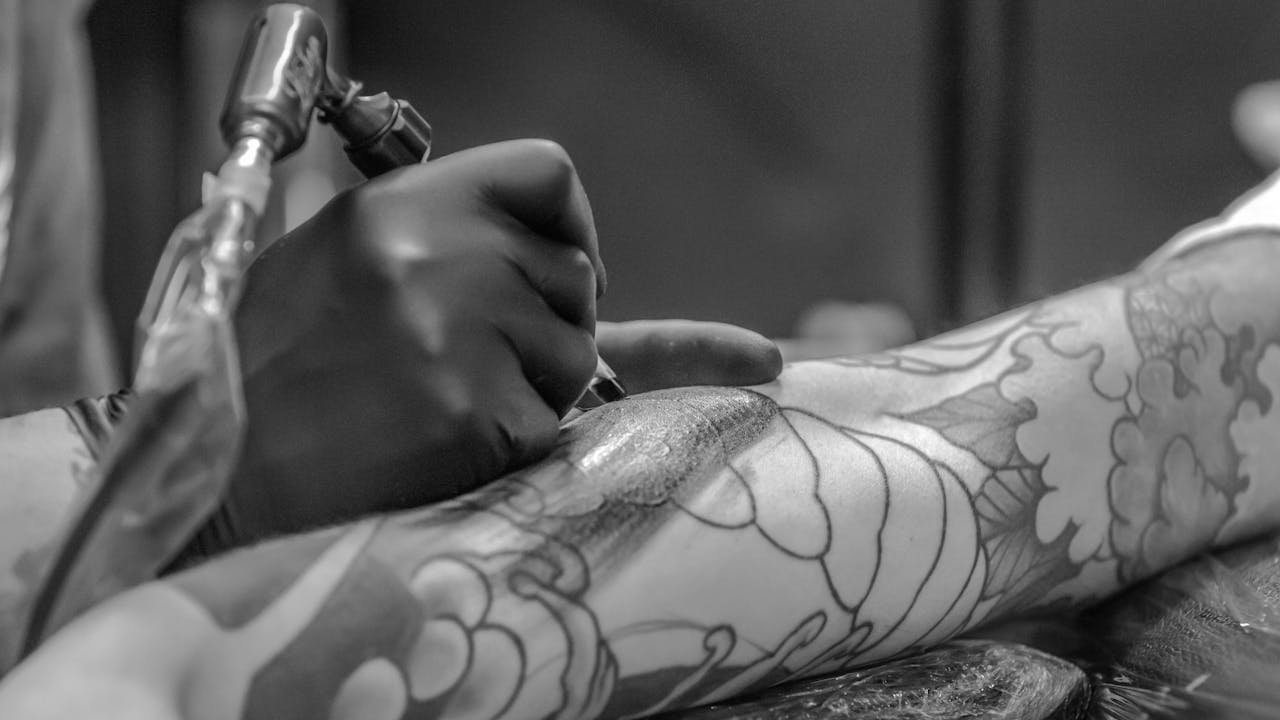
Not all tattoos are created equal. The size and complexity of your piece should guide your approach to tipping, not just the final price.
Flash tattoos and small pre-drawn designs
Flash refers to pre-drawn designs that a shop offers for immediate availability. They're a great option if you want something clean and affordable without a long design process. Because the artwork already exists, there's less custom labor involved. That said, $15-20 flat is a reasonable minimum on any flash piece, regardless of what percentage math tells you. Never tip less than $15 on a tattoo, even if the math says $8.
Small custom pieces (under $150)
Small custom work is its own category because it requires design time that often goes unpaid. Your artist might spend an hour or more developing a small piece before your appointment. Tip at least $20 flat, even if 20% works out to $15. The design labor deserves acknowledgment even when the tattoo itself is quick to execute.
Medium custom pieces ($150-$500)
This is where standard 15-20% math applies cleanly. The session was meaningful, the artist did real creative work, and the percentage aligns with the effort involved. If you pushed for revisions or had specific details you were particular about, tip toward the higher end.
Large and complex pieces ($500+)
Custom work at this scale deserves 20-25%. You've asked your artist to produce something original, technically demanding, and large. They put significant unpaid time into concept and design. The session itself may have run three to six hours. Complex techniques like fine line realism, watercolor effects, geometric precision, or blackout work require a steadier hand, more focus, and more skill than a basic outline. Tip like you understand that.
Full sleeves and multi-session projects
This is the most common area where people make tipping mistakes. On long projects spanning multiple sessions, tip at the end of each session, not at the completion of the full piece. Your artist needs income between sessions just like they do between any two appointments. Waiting until session five to leave a lump sum tip is well-intentioned but financially unhelpful to the artist. Treat each session like its own transaction.
When to tip more, and when it's okay to tip less
Situations that call for a higher tip
The work was fully custom. You gave your artist creative freedom and they delivered something original. That design time outside the session is often completely unpaid, and your tip is the only way to acknowledge it.
The session ran long. A six-hour sitting is genuinely exhausting. Tattooing is physical work that requires sustained concentration, hand control, and creative problem-solving throughout. An artist who works through a long session without losing quality deserves more than one who knocks out something quick.
You were a difficult client. You moved around. You changed the design last minute. You were late. You rescheduled. Maybe you just talk a lot and broke concentration. Artists are too professional to say anything, but they notice. A generous tip is a form of apology and acknowledgment.
The technique was specialized. Fine line realism, portrait work, watercolor effects, geometric patterns, and blackout coverage all demand years of skill to execute well. If your artist specializes in something difficult, they're charging less than their skill is worth, and your tip makes up some of that gap.
You're in a high-cost city. Tattoo pricing in New York, Los Angeles, or San Francisco reflects the cost of living and running a business there. Artists in those markets lean toward the 20-25% range as a baseline expectation.
When tipping at the lower end is acceptable
Your budget is genuinely tight. Fifteen percent is still real money and real appreciation. Never skip the tip entirely because you can't afford 20%. Something is always better than nothing, and artists know their clients are people with real financial lives.
The work was acceptable but average. Not every tattoo session knocks you out. If the piece came out fine but not exceptional, and the experience was neutral, 15% is honest without being cheap.
The artist wasn't particularly engaged. Cold, minimal communication, and a visible lack of investment in your experience are the rare cases where sliding down toward 15% is understandable. That said, still tip something.
Cash versus digital: how to actually hand over your tip
Cash is the clear preference. Not because it's tradition, but because it's practical. No fees, no delays, no awkward interface at the front desk. The money goes directly from your hand to your artist's pocket and stays there.
Bring cash to your appointment. Bring a little more than you planned to tip in case you want to tip higher after seeing the finished work. Most people who planned to tip 20% end up wanting to tip 25% when they're actually looking at a piece they love.
Digital tips through apps like Venmo, Cash App, or Zelle are widely accepted, especially by artists who work in private studios or have their own booking setup. If you plan to tip digitally, ask your artist beforehand and make sure you have their handle ready. Don't fumble through your phone while they're wrapping your tattoo.
Credit card tips through the shop's point-of-sale system carry a processing fee of 2-3%, which quietly eats into what the artist actually receives. It's not a reason to tip less, but it is a reason to prefer cash when you have the choice.
The etiquette of actually giving the tip
Timing matters. Give the tip at the end of the session, after your tattoo is complete and bandaged. Not before, not in the middle, and not at the front desk where it might get lost in the transaction.
Hand it directly to your artist. Make eye contact. Say something genuine, not just a perfunctory "thanks." Tell them what you thought of the work. Mention the specific thing that impressed you: the line weight, the way they captured the texture, the design choices they made. Artists are creatives who rarely hear detailed feedback on the quality of their work. A few specific words mean as much as the cash itself.
Don't factor the tip into your price negotiations before the session. If you go into a consult thinking "I'll offer less up front because I'll make it up in the tip," that's not how it works. The price is the price. The tip is separate, and conflating the two disrespects both.
On multi-session projects, tip at each session consistently. Don't tip more at the first session and forget by the fourth. Your artist will notice inconsistency the same way you'd notice if a regular customer suddenly started tipping less.
Here's something worth saying plainly: tipping well makes you a better client. Artists talk to each other. At good shops, they share notes on clients who are a pleasure to work with and clients who aren't. Being a generous tipper, showing up on time, communicating clearly about what you want, and treating the artist like the professional they are, all of that affects how much creative energy your artist brings to your piece. Artists are human beings who do better work for clients they like. That's not a cynical observation. It's just true, and knowing it should shift how you think about the whole experience.
Shop types and how they affect tipping
The structure of the shop your artist works in affects how financially important your tip is.
Commission-split shops are the most common. The shop takes 40-60% of the session fee. Your artist's take-home from any given session is much lower than the price you paid suggests. Tips are most financially critical in this structure because they're the only income that doesn't get split.
Booth-rental shops work differently. The artist pays the shop a fixed weekly fee, keeps the rest of their session revenue, and runs their own business within the shop's space. Rent can run $500 to $1,500 per week. A slow week hits hard regardless of their hourly rate. Tips are still important and appreciated, even if the artist keeps more of their session revenue.
Private studios are artist-owned spaces where the artist keeps all revenue. They have full control over their pricing and schedule. Tips carry slightly less financial urgency here, but 10-20% is still genuinely appreciated as an acknowledgment that you valued the experience.
Tipping for cover-ups, reworks, and apprentices
Cover-ups
Cover-up tattoos are among the most technically demanding work in the industry. Your artist is working around existing ink on skin that's already been tattooed, sometimes scarred, and often irregular in color and texture. The design has to be both beautiful on its own and strategically placed to obscure the old piece. Tip at the higher end: 20-25% is appropriate and earned. The creative problem-solving involved in a great cover-up is closer to composition work than a standard tattoo, in that the artist is balancing aesthetic choices against a set of constraints most clients don't fully appreciate until they see the result.
Free reworks
Sometimes an artist offers to rework a piece for free, usually because something healed differently than expected. This is a professional courtesy, not a financial obligation on their part. Still tip $20-50 flat, even when the session is free. The artist is giving you their time and skill at no charge, and zero tip on a free rework is an uncomfortable way to repay that goodwill.
Paid reworks and touch-ups
Standard 15-25% on the session cost. Treat it like any other appointment.
Apprentice artists
Apprentice tattooists typically work at deep discounts, sometimes charging only for materials. They earn little or nothing from the shop's commission structure. Tipping 20-30% of what was charged is strongly encouraged, and if the piece was near-free or actually free, a flat tip equivalent to what a professional session might cost ($50 to $150) is a meaningful way to support someone building their career.
What to tip for free touch-ups
Your artist offers a free touch-up six weeks after your session. The ink healed patchy in one area and they're going to fix it at no charge. What do you tip?
Tip flat. Twenty to fifty dollars is appropriate, depending on how much work the touch-up involves. The artist is giving up a booking slot that could have paid them. They're not charging you. A cash tip acknowledges that reality without making the interaction awkward for either party.
Deposits and how they work
Don't tip on your deposit. A deposit is a booking security payment. It holds your slot, covers the artist's time if you cancel, and often gets applied to your final session cost. It's not a service payment, and no tip is expected or appropriate at deposit time.
Tip when you pay for the actual session.
When the gift goes beyond a tip
Here's something most people don't think about. A new tattoo is a milestone. It's a decision someone sat with, saved for, and finally made permanent. It's the first big piece, or the one they've wanted for five years, or the memorial tattoo for a parent. These moments deserve more than a simple Instagram post.
If someone in your life just got tattooed and you want to honor that moment with something lasting, Fable creates custom portraits in renaissance and classical styles from a single photo. It's a different kind of art, but the impulse is the same: capture something permanent, something that reflects who someone is. A custom portrait from Fable makes an exceptional gift for a tattoo milestone, a birthday, or any occasion where you want to give someone something they'll actually keep. Browse family portraits, couple portraits, or self-portraits to find the right fit.
The person who just got a meaningful piece, especially something personal like a portrait tattoo or a memorial design, is often in a reflective headspace. They're thinking about the people and moments that matter. A Fable portrait meets that energy exactly. It's not a mug or a gift card. It's art that lives on a wall, tells a story, and carries real emotional weight. Check pricing to see what fits your budget, and look at how it works to understand the simple ordering process.
Fable is also worth considering as an appreciation gift for a tattoo artist you genuinely love. Artists are visual people. A portrait made in renaissance or classical style as a gift is the kind of thing that ends up on a wall in their studio. It acknowledges who they are in a language they understand.
If you're shopping for someone who appreciates meaningful, handcrafted art, gift ideas for artists and unique gifts for art lovers are good places to explore. For birthdays that coincide with a tattoo milestone, birthday portrait gifts has options worth looking at. And for the person who just got their first big custom piece and deserves something to mark the occasion, anniversary gift portrait translates surprisingly well to personal milestones, not just romantic ones.
What artists actually prefer beyond the tip
The tip matters. But it's not the only thing artists want from a great client.
Leave a review. A genuine, specific Google or Yelp review helps artists book better clients and grow their reputation. "Great work, highly recommend" is nice. "The fine line detail on my forearm piece was better than the reference I brought in, and the artist took three rounds of revisions without ever making me feel like a burden" is something they'll actually share. Reviews directly affect bookings. An artist with 200 detailed five-star reviews books faster than one with 40 generic ones, even if the work is comparable. Writing a real review is a gift that costs you five minutes and pays forward indefinitely.
Tag them on social media. If you post photos of your new tattoo, tag the artist. Every tagged post is free advertising that reaches people who might not otherwise find them. Tattoo artists build their books through Instagram more than almost any other channel. A genuine tagged post with a photo of the finished work in good lighting, from a client who actually loves the piece, performs better than most paid content.
Come back. Repeat clients are the backbone of any artist's business. If you love your tattoo, book your next one with the same artist. That loyalty means more than a single generous tip. Artists invest in clients they know. They'll push themselves creatively for someone they trust, someone they know will communicate well and see the vision through. That relationship builds over multiple sessions into some of the most rewarding work an artist does.
Refer people you trust. Artists book clients through word-of-mouth more than almost any other industry. Sending a friend their way, and telling your friend specifically what to say when they reach out, is one of the most practical things you can do. A warm referral from someone the artist already respects carries real weight. It's not just a lead. It's a vouched introduction.
These things don't replace the tip. They supplement it. Do all four and you've become the kind of client every artist wants to keep.
And while you're thinking about meaningful acknowledgment, there are creative ways to honor an artist beyond the session itself. Gift ideas for artists covers everything from art supplies to experiences to art itself. If your tattoo artist is also a pet person, a custom dog portrait or regal pet portrait from Fable lands differently than a gift card. It's the kind of thing that actually surprises someone. Gifts for art lovers and unique gifts for art lovers both have curated options that pair well with the appreciation-gift moment.
Thinking about tip size by session length
Session length is an underrated factor in tip math.
A one-hour appointment for a small piece is straightforward. The artist was present, professional, executed the design, and wrapped up. Tip standard.
A three-hour session is different. Your artist is physically focused on you for three hours. They're navigating their own fatigue, your comfort, the complexity of the design, and the mechanical demands of sustained tattooing. Three hours of fine line work is harder than three hours of almost any desk job.
A six-hour session is grueling. Your artist may have worked through a single break. Their hand, wrist, and back are under constant strain. They're maintaining precision and creativity across an entire day of client-focused labor. If you're ever in a session that runs that long, tip toward the top of your range.
Think of it this way: the tip is also acknowledging the physical cost, not just the creative result.
Getting tattooed is a physical experience for you and for your artist. If you're someone who finds the physical side of it meaningful, the milestones that come with big pieces often pair naturally with other forms of commemoration. A custom self-portrait from Fable, or a kids portrait for a parent getting their child's face tattooed, or a couple portrait for matching tattoos, all feel connected to that impulse. The tattoo and the portrait both say: this person, this moment, matters. See the blog for more ideas in that space.
Geographic factors and market expectations
Where you live shapes baseline expectations.
In New York, Los Angeles, San Francisco, Chicago, and other major metros, the cost of living for artists is high. Their rents are high. Their supplies cost the same as everywhere else. The market expects 20-25% as a standard, and artists in these cities often price themselves accordingly. Tipping at 15% in a high-cost city may read as below standard, even if the dollar amount sounds large.
In smaller cities and the Midwest, the market is more comfortable with 15-20%. That doesn't mean you should default to 15%, but the social expectation is slightly less than in major urban markets.
Wherever you are, if you're in doubt, tip 20%. It's always appropriate.
Geographic context also affects what kinds of gifts make sense for milestone moments around tattooing. In cities where the art and gift scene is richer, people are more familiar with things like portrait commissions and custom art. Art gifts for mom, art gifts for teachers, and Christmas art gifts all speak to this wider cultural appreciation for art as a meaningful gesture. If the person who just got tattooed is someone you give gifts to regularly, you already know they appreciate personal, expressive things. A custom portrait fits that profile exactly.
A few things that don't reduce your tip obligation
Some clients talk themselves out of a full tip for reasons that don't hold up.
The artist's hourly rate is high. More experienced artists charge more because they're worth it. A $300-per-hour artist isn't being overpaid. They built skill over a decade, and they price accordingly. Don't punish success with a smaller percentage tip. High rates reflect high demand, high competency, and often a long waitlist. That's not a reason to tip less. It's a reason to feel good about the artist you booked.
The session was short. A great artist who finishes your piece efficiently in 90 minutes isn't doing less work. They're doing better work. Speed comes from skill. Reward it. An apprentice might take four hours to produce something a seasoned artist nails in 90 minutes. The seasoned artist shouldn't be penalized because they don't waste your time.
The shop is fancy. The shop's decor, location, and ambiance don't come out of the artist's pocket (unless they own the studio). A nice shop doesn't mean your artist is making more money. The overhead is the owner's problem. Your artist is still working a commission split the same way they would in a simpler space.
You paid a lot for the piece. This one catches people off guard. When the total is $800, the tip feels large in absolute terms. But the artist earned that percentage just as much as they earned it on a $200 piece, maybe more. Don't let big numbers intimidate you into shortchanging good work. If the dollar amount feels uncomfortably high, remind yourself what you paid for, and what the artist actually took home from that transaction.
You're a repeat client. Some people assume that because they come back regularly, the tip expectation relaxes over time. It doesn't. Repeat clients are valuable to artists in terms of loyalty and reliability, but that doesn't mean the individual sessions stop deserving a proper tip. Keep tipping consistently every time, and you'll maintain the kind of client relationship that artists genuinely appreciate.
You didn't ask for a complex piece. The simplicity of your request doesn't necessarily reflect the skill required to execute it. A clean, minimal fine-line piece that looks effortless usually required more technical control than a dense traditional design that hides imprecision in its style. Don't judge tip size by how complicated the design looks. Judge it by how good the result is.
Tipping well is also, at its core, a form of recognizing creative labor. That mindset carries over into how you think about gifts for creative people generally. The person who just got a meaningful tattoo is usually someone who values craft, artistry, and personal expression. They're likely someone who would appreciate a wellness gift after a long session, or something deeply personal for their next birthday. Browse summer gift ideas, holiday gift ideas for employees, or bachelorette gift ideas if the occasion calls for something specific. The underlying principle is the same: meet the person with something that reflects how well you know them.
How tattoo tipping compares to other service industries
People often wonder how tattoo tipping compares to other tipping norms. It's a fair question and the comparison is revealing.
At a restaurant, you tip on a meal that took 20-30 minutes to prepare and an hour to serve. Standard is 18-20%. The interaction is warm and attentive but fundamentally transactional. You eat, you leave.
At a hair salon, you tip on a service that might run 45 minutes to two hours. Standard is 15-20%. Your stylist is working on something personal, something that affects how you look every day. You'll see them again.
At a tattoo shop, you tip on a service that might run one to six hours, on something that will be on your body for the rest of your life, produced by an artist who spent unpaid time developing it specifically for you, using a skill that takes years to develop, on a medium that cannot be corrected once it's set. And artists get only 40-60% of the base price before the tip.
The tipping norms are the same across all three. The tattoo artist's case for a tip is arguably the strongest.
If you already tip your cleaning lady or your wedding photographer without thinking twice, the same instinct applies here, probably more so. The tattoo artist is doing something no one else can do for you, and they're doing it once.
Across all service industries, people who get tipped generously tend to perform better for their best clients. That's not a transaction. It's a relationship. Tattoo artists are no different. The client who always shows up prepared, tips well, and treats the session like a collaboration gets the artist's best creative energy, the extra care on the tricky parts, and the genuine enthusiasm that makes a good tattoo great. Think of the tip not just as payment for what was done, but as an investment in every session that follows.
Gift ideas for people who love tattoos
Tattoo lovers are a specific kind of gift recipient. They're people who think carefully about what goes on their body, who value craft and personal expression, and who aren't impressed by generic or forgettable gifts. If someone in your life is deep into tattoo culture, these ideas will land better than a gift card.
Custom portraits are the first thing to consider. Not because we're biased, but because the thinking behind them is the same thinking behind tattoos: take something meaningful and make it permanent art. Fable's renaissance and classical portraits do exactly that with a photo. The result hangs on a wall instead of living on skin, but the impulse is identical. A family portrait for a parent getting their kids' faces tattooed, a pet portrait for someone whose dog is already their most-tattooed subject, or a self-portrait for the person who commemorates their own life in ink, all of these feel aligned with how tattoo people already think about art.
For people with pets, dog portraits, personalized dog portraits, royal pet portraits, renaissance pet portraits, and regal pet portraits are all Fable styles worth exploring. Pet people who tattoo their animals' faces are particularly good candidates for a framed portrait version of the same image. Cat portraits work the same way. If someone has their cat tattooed on their forearm, having that same cat rendered in a classical painting style is a gift that gets it on two levels at once.
For broader occasions, wedding gift art is worth exploring if the couple is the artsy type. Bachelorette gift ideas and bach party gift ideas often include a crafty person who would love something custom. Client gift ideas are relevant if your tattoo artist is someone you work with professionally and you want to give something beyond the tip itself.
The through-line for all of it: tattoo people respond to permanence, craft, and personal meaning. Generic gifts miss the mark. Art that reflects who they are hits it.
Tipping etiquette quick reference
The basics, collected:
Tip at the end of the session, not before. Hand it directly to your artist. Prefer cash when you can. On multi-session projects, tip each session. Free touch-up? Still tip $20-50 flat. Deposit? No tip needed. Cover-up or complex technique? Tip toward the high end. Apprentice at a discount? Tip 20-30% of what you paid, or flat $50-150 if near-free.
The one thing to always remember: your tip is the cleanest way to say that you understand what just happened in that chair, and that you're grateful for it.
Frequently asked questions
How much do you tip a tattoo artist?
The standard tip for a tattoo artist is 15-25%, with 20% being the most common target for solid professional work. For small pieces under $100, use a flat minimum of $20 regardless of what the percentage works out to. For complex custom work or long sessions, tip toward 25% or higher.
Is it rude not to tip a tattoo artist?
Yes, by most industry standards. Tipping is expected in the tattoo industry the same way it's expected at a restaurant or hair salon. Most shop artists take home only 40-60% of their session fee before tips. Leaving no tip, especially after custom or complex work, is generally considered disrespectful of the labor involved.
Do you tip at every tattoo session?
Yes. On multi-session projects, tip at the end of each session, not when the full project is complete. Your artist's income needs are ongoing. Saving all the tip for the final session isn't helpful to them financially, even if the intention is good.
Should I tip on a tattoo touch-up?
Yes. If the touch-up is free, tip $20-50 flat. If the touch-up is a paid session, tip 15-25% as you would any appointment. Free touch-ups are a professional courtesy, and tipping acknowledges the artist's time and goodwill.
Cash or Venmo, which is better for tipping a tattoo artist?
Cash is preferred. Artists keep 100% of cash tips with no fees or delays. Digital payments through apps like Venmo or Cash App are widely accepted and a reasonable option if you ask your artist beforehand. Avoid tipping through the shop's credit card system when possible, since processing fees reduce what the artist actually receives.
Do you tip an apprentice tattoo artist?
Yes, especially because apprentices often earn very little from the shop's commission structure. Tip 20-30% of whatever you were charged. If the session was near-free or completely free, a flat tip of $50-150 is a meaningful and appropriate gesture.
How much do you tip for a $200 tattoo?
For a $200 tattoo, a standard tip is $40 (20%). For complex custom work or a long session, $50 (25%) is appropriate. For basic professional work with no complications, $30-40 covers the standard range.
Is 15% a bad tip for a tattoo?
Fifteen percent is below the standard but acceptable when budget is the limiting factor. It's significantly better than nothing, and experienced artists understand that clients have real financial lives. That said, 20% is the expectation for solid work, and if you can tip at that level, you should.
What's a good gift for someone who just got a tattoo?
A tattoo is a personal milestone, and it calls for a gift that matches that energy. If the person is family or a close friend, a custom portrait from Fable is one of the best options available. Fable creates renaissance and classical portraits from a single photo, the kind of art that ends up framed and on a wall for decades. For family members who collect meaningful art, browse family portraits. For a couple who got matching tattoos, couple portraits is a natural fit. For someone commemorating a lost pet through tattoo art, memorial pet portraits and pet memorial ideas offer additional inspiration. For broader gift ideas across artistic tastes, see gifts for art lovers, art gifts for teens, and graduation gift art if the tattoo coincides with a life transition.
What should you NOT do when tipping a tattoo artist?
Don't hand the tip to the front desk expecting it to be passed along. Don't tip inconsistently across sessions on the same project. Don't factor the tip into price negotiations. Don't tip on your deposit. And don't give zero tip because the session was short or the piece was simple. Even a small flat tip is better than nothing and signals respect for the work.
Related guides
- How much to tip a cleaning lady
- How much to tip a wedding photographer
- Gift ideas for artists
- Unique gifts for art lovers
- Custom portrait gifts for milestones
Sources
Getting tattooed is a commitment. You planned it, saved for it, and let someone turn their skill into something permanent on your skin. That's not a small thing, and neither is the artist who made it happen.
Tip what the work deserves. Hand the cash directly. Say something specific about what you loved. Come back.
And if you want to commemorate the moment with something beyond the tattoo itself, something beautiful you can frame and put on a wall, Fable turns a single photo into the kind of portrait that stops people in their tracks. Classical, timeless, and made to last. See how it works and find the style that fits.