
How much to tip your wedding photographer
You've planned every detail of your wedding. You've obsessed over flowers, finalized the seating chart, and taste-tested the cake three times. But now someone asks, "How much are you tipping the photographer?" and your mind goes blank.
It happens to almost everyone. Tipping vendors feels like a secret code nobody hands you the key to. You don't want to under-tip someone who spent forty hours capturing the most important day of your life. And you don't want to over-tip in a way that strains a budget you've already stretched thin.
Before we get into the numbers, here's something worth thinking about. Money is useful. But it's also forgettable. The photographers who've been doing this for years will tell you that a heartfelt gesture stays with them long after the cash is spent. If you want to give your photographer something that genuinely moves them, a custom portrait from Fable is in a category of its own. At Fable, we transform wedding or engagement photos into original portrait art in styles ranging from Renaissance to modern editorial. Imagine handing your photographer a framed portrait made from one of their own images, reimagined as a timeless painting. That's not a tip. That's a tribute. You can explore how it works at Fable and see the kind of work that makes photographers stop and stare. Or check out couple portraits at Fable to see what a custom wedding portrait looks like as finished art.
That said, most photographers do appreciate cash. So let's talk about the real numbers.
Do you have to tip your wedding photographer?
No. Tipping a wedding photographer is not required, and no professional photographer will hold it against you if you don't. This isn't like tipping a restaurant server where 20% is the baseline expectation baked into how the industry works. Photography is a professional service with a fee set by the photographer to reflect their skill, their time, and their business costs.
But here's the nuance. About 15 to 20 percent of clients tip their wedding photographer, according to surveys of working photographers. Abby E. Kane Photography, a working professional, reports receiving tips in 40 to 50 percent of weddings, with amounts ranging from $50 to $300. So it's not rare, but it's also not universal.
The short answer is this: you're not obligated, but a tip for genuinely excellent service is always appropriate, always appreciated, and will never be awkward.
How much to tip a wedding photographer
The most common range is $100 to $200 for the lead photographer. That's the sweet spot where most couples land, and it's a meaningful amount without being extravagant.
Some couples prefer a percentage approach. Tipping 5 to 15 percent of the photography package gives you a number that scales naturally with what you're spending. If you paid more for a more experienced photographer, the tip reflects that.
Here's a tiered guide based on package price.
If your photography package ran between $2,000 and $3,000, a tip in the $100 to $200 range is appropriate and generous. You're acknowledging real work without overextending yourself.
If your package was between $3,000 and $5,000, consider $200 to $500. This tier covers the large middle of the market, and a tip at the lower end of that range still makes an impact.
For packages between $5,000 and $8,000, $300 to $600 is a reasonable target. At this spending level you've hired someone with significant experience and a real portfolio, and a tip that reflects that makes sense.
For packages above $8,000, anywhere from $500 to $1,000 is the standard guidance. These are typically high-demand photographers with multi-year waitlists, and while they certainly don't need the money to survive, a tip at this level shows genuine appreciation for elite work.
Here's some context on what photographers actually charge. The Knot puts the median wedding photography cost at around $2,900, but a survey of 138 photographers by Fearless Photographers found the average full-package price closer to $5,800. Most experienced, working photographers in major markets charge between $3,500 and $7,000. So when you're budgeting tips, the middle tier of $200 to $500 is where most couples will land.
The total average wedding budget, according to The Knot's most recent Real Weddings Study covering 10,474 couples, is $34,200. Tips are a small slice of that number, but they're worth planning for.
What should actually change the tip
The numbers above are guidelines. What you actually give should flex based on the experience you had. Here are the factors worth weighing honestly.
How many hours did they work. Wedding photographers spend 40 to 52 total hours per wedding when you count travel, setup, shooting, culling, editing, and gallery delivery. Eight to ten of those are on your wedding day. If your photographer arrived before you were dressed and stayed through the last dance, that commitment matters.
Did they handle problems gracefully. Things go wrong at weddings. Timelines slip. Family members get difficult. Lighting turns bad. A photographer who adapts without making it your problem is worth more than their contract price.
Did they go beyond the scope. Did they help coordinate a chaotic family photo situation? Did they drive two hours to reach your venue? Did they stay an extra thirty minutes when the reception ran long, without asking for overtime? That's worth recognizing.
Was the gallery delivered on time. Most contracts promise galleries in four to eight weeks. Some photographers get them to you in two. A fast, clean gallery delivery shows respect for your time and excitement.
How was the communication. Before the wedding, during vendor coordination, after the event. Easy, clear communication is a skill not every photographer has. If yours made everything feel smooth, that's part of what you're tipping.
Was the final work better than you expected. You hired them based on their portfolio. If the actual photos of your wedding exceeded what that portfolio suggested, that's a strong reason to tip at the higher end of whatever range applies to you.
Did they travel. A local photographer who drove twenty minutes is different from one who flew in and spent two nights in a hotel. We'll talk more about destination weddings specifically, but even shorter travel deserves acknowledgment.
Is your budget genuinely tight. This one matters. If tipping $200 means you can't cover a financial obligation, tip less or skip it entirely. A handwritten thank-you note and a five-star review on Google will mean more to your photographer than a tip that puts you in debt.
The business owner question
This is the question that changes everything about tipping photographers, and most tipping guides skip it entirely.
Ask yourself: did you hire this person directly, or did you hire them through a studio or company?
If your photographer runs their own business and you contracted them directly, they set their own rates. Every dollar of their fee goes into their business, minus their expenses. They're not an employee working for 40 percent of what the studio collects. They set the price to reflect what they need. In this case, a tip is a genuine bonus, but it carries less moral urgency.
If your photographer works for a studio or collective, the calculation shifts. Employee photographers at larger studios often receive between 40 and 60 percent of what the client pays. The studio keeps the rest. In this situation, a tip has real weight because the photographer's fee doesn't fully reflect what you paid for the service. The same logic that applies to tipping hairdressers or restaurant servers applies here.
When you're not sure, a polite question works fine. "Are you independent, or are you part of a larger team?" is easy to ask during planning and removes the guesswork.
When to give the tip
You have two good options. The end of the reception is the most traditional choice, and logistics-wise, it's the smartest. Most of the time, you won't see your photographer again after the wedding day. The gallery gets delivered by email. Giving the tip at the end of the reception ensures it actually gets to them.
The other option is after gallery delivery. This lets you base the amount on the final product rather than the in-the-moment excitement of the wedding day. A lot of couples feel like the gallery is when they truly understand the value of what their photographer delivered, and waiting to tip until then makes emotional sense. For post-delivery tips, Venmo and PayPal are perfectly appropriate.
Most sources lean toward day-of tipping simply because it's reliable. You have the cash, you see the photographer, you hand it over. Done. If you plan to tip after gallery delivery, be intentional about it, because life moves fast after a wedding and the follow-through can slip.
How to tip (the logistics)
Cash in envelopes is the universal preference among vendors. It's immediate, private, and requires no app, no bank transfer, and no tax complication for small amounts. Label each envelope with the vendor's name so there's no confusion if multiple envelopes are being handled.
If you're tipping after gallery delivery, Venmo, PayPal, or Zelle all work. A simple message like "Thank you for the most beautiful photos of our lives" alongside the payment makes it feel personal instead of transactional.
A check with a handwritten note is more formal and slightly old-fashioned, but it's genuinely appreciated by photographers who've received thousands of cash tips and very few letters. If you take the time to write something specific - "The way you captured my grandmother dancing at the reception made us all cry when we saw it" - that note will be kept long after the check is cashed.
Don't plan to tip personally on the day of your wedding. You'll be overwhelmed. Delegate tip distribution to your maid of honor, best man, or wedding coordinator. Give them labeled envelopes in advance, brief them on the amounts, and let them handle delivery. This is exactly the kind of task a good coordinator handles without being asked.
 Your photographer captures moments you can never restage. That work deserves real acknowledgment.
The second shooter
Don't forget the second shooter. This is the person your lead photographer brought along to cover angles they couldn't be in two places to capture at once. Second shooters work the full day and often do a share of the editing.
Tip the second shooter separately. A range of $50 to $150 per second shooter is appropriate. Don't assume the lead photographer will share their tip. Some do. Many don't. The safest move is to hand the second shooter's tip directly to them, in a separate labeled envelope.
If you're not sure who the second shooter is, ask your lead photographer in advance. "Will you be bringing a second shooter, and if so, would it be okay for me to tip them separately?" is a completely reasonable question, and the answer will tell you everything you need to know about how that photographer runs their operation.
What photographers actually want more than a tip
Here's something the working photographers will tell you if you ask them directly. A detailed, specific, five-star review on Google, The Knot, or WeddingWire is worth more to their business than most tips.
Here's why. Cash is spent and gone. A review compounds over time. A single thoughtful review can influence dozens of future bookings over the years it lives on the internet. For a photographer booking 20 to 30 weddings per year, reviews are the engine of their business. One review from a real client who describes exactly what made the photographer exceptional is more valuable, in raw dollar terms, than a $200 tip.
Not instead of a tip. In addition to it, or when a tip isn't possible. Write the review before your thank-you note. Be specific. Mention the photographer's name. Describe one moment they captured that mattered to you. That specificity is what makes a review actually useful for future clients trying to decide.
After the review, a referral carries even more weight. If a friend gets engaged and asks for photographer recommendations, your word-of-mouth is gold. Tag the photographer when you post your favorite photos on Instagram or share them in a wedding group. Every tag is a small advertisement they didn't have to pay for.
The complete wedding vendor tipping guide
Photography is one line item in a long list of vendors who made your day happen. Most couples don't realize how many people they'll want to acknowledge until they're sitting down to build the tip budget. Here's a full walk-through of every major wedding vendor category.
Hair and makeup artists are one of the few wedding vendors where tipping is genuinely expected, not optional. These professionals come from the beauty industry, where 15 to 20 percent gratuity is the established norm. Calculate 15 to 20 percent of the total bill and tip each artist individually. If you have a lead hair artist, a makeup artist, and an assistant working the morning of your wedding, tip each one separately. Don't hand one lump sum to the lead and expect it to be shared. Timing: at the end of the session, before you head to the ceremony.
Your wedding planner or coordinator did more work than you probably know about. Full-service planners who managed your entire vision from venue to final walkthrough deserve 10 to 20 percent of their fee, and for complex, high-budget events, that can mean $500 to $1,000 as a tip. If you worked with a day-of coordinator who managed logistics without broader planning responsibilities, $150 to $300 is appropriate depending on how smoothly things ran. If your planner went above and beyond - meaning they talked you off multiple ledges, solved problems you'll never even know about, and kept the day from falling apart - tip toward the high end. Timing: end of reception after the event is fully wrapped up.
The DJ depends on employment status. An independent DJ who runs their own business sets their own rates, similar to the photographer logic above. A DJ who works for a company is an employee earning a portion of what the company charges, and tipping carries more weight. In either case, $50 to $150 or 10 to 20 percent of the fee is the standard range. If the DJ read the room perfectly, kept the dance floor packed all night, and handled requests with grace, that deserves recognition. Timing: end of reception.
Live bands work differently. You're dealing with multiple musicians, and each one worked the full evening. A tip of $25 to $50 per musician is the standard guidance. For a five-piece band, that's $125 to $250 total, distributed individually if possible. Don't give a single envelope to the bandleader and assume they'll share it. Timing: end of reception.
The officiant typically charges $50 to $200 for their services. If they're a non-denominational officiant running their own ceremony business, a tip of $50 to $100 is a nice acknowledgment. If they're a priest, minister, or rabbi from a religious institution, a donation to the institution is often more appropriate than a personal tip, though a personal thank-you is always welcome alongside it. Timing: before the ceremony or at rehearsal.
Catering staff require a careful first step: read your contract. Many catering companies include a service charge of 18 to 22 percent in the bill. This is not automatically a tip. Ask your caterer directly: does this fee go to the staff, or to the company? If it goes to the company, tipping the serving staff separately is appropriate. If there's no service charge, tip 15 to 20 percent of the food and labor costs. Tip the catering captain directly and ask them to distribute to the team, or tip individual servers if you can identify who was responsible for your tables. Timing: night of the event.
Bartenders worked hard in a high-pressure environment all night. Ten to 15 percent of the liquor bill or $50 to $100 per bartender is appropriate. Again, check the contract first for service charges. If you had two bartenders and the bar bill was significant, tipping each one $75 to $100 is a solid target. If gratuity is included in your bar contract, confirm it actually goes to the bartenders. Timing: end of reception.
The florist is one of the few vendors where tipping is genuinely not expected. Florists typically price their work to include their labor, and their work happens before the wedding day. That said, if your florist delivered something extraordinary, fixed a last-minute problem, or went well beyond the original scope, $50 to $100 is a thoughtful acknowledgment. No tip required for standard delivery and setup.
Transportation and limo drivers follow the same norms as other vehicle-based service workers. Fifteen to 20 percent of the total bill is the standard tip. If the driver was early, professional, and handled the chaos of getting a bridal party loaded smoothly, tip at or above that range. Always check if gratuity is already included in the contract before adding more. Timing: end of each ride or end of the night.
Delivery personnel from the florist, the cake bakery, or the rental company don't need large tips, but acknowledging their work matters. Five to $20 per person is appropriate, especially if they handled heavy or fragile items or navigated a difficult venue setup.
Hotel and venue staff operates on standard hospitality norms. Five to $10 per bag for bellhops and porters, $10 to $20 per night for housekeeping left in the room. If you have a block of rooms for guests and the hotel staff is managing extra logistics for your group, a cash envelope for the front desk team is a gracious gesture.
Throughout all of this, one rule holds: check the contract first. Always. Tipping on top of a service charge that already goes to staff is fine if you want to do it, but knowing the baseline prevents confusion and prevents you from feeling guilty for not adding more.
For more ideas on meaningful ways to acknowledge the people who matter at your wedding, the wedding gift art blog on Fable covers the difference between expected acknowledgment and genuine generosity.
Planning your tipping budget
Most couples don't budget for tips until late in the planning process, which means they end up scrambling for cash the week of the wedding. Plan this out early, and the math becomes simple.
Here's a realistic breakdown for a wedding with roughly 150 guests. For the lead photographer, a tip of $200 is appropriate on a mid-tier package. The second shooter deserves $75. If you hired a videographer at a similar price point, $150 is reasonable. Your DJ earns $100. For three hair and makeup artists, a total of $200 spread between them covers the expected 15 to 20 percent range. Your wedding planner, if handling full coordination, should get $300. The catering captain and floor staff, assuming no service charge in the contract, warrant around $300. Two bartenders get $75 each, totaling $150. The officiant receives $100. Your transportation driver gets $75. Delivery teams across all vendors total around $50.
That full list adds up to approximately $1,700. In a wedding budget that The Knot's research puts at an average of $34,200, tips represent about 5 percent of total spending. They're not nothing, but they're also not the budget buster they can feel like when you're adding them up the week before.
Withdraw all tip cash at least a week in advance. Put it in labeled envelopes. Store the envelopes somewhere you'll remember them. Brief whoever is distributing tips - your maid of honor, best man, or coordinator - on which envelope goes to which vendor and when. That five minutes of organization prevents frantic searching for an envelope while you're trying to enjoy your own reception.
For more ideas on how to think about gifting at weddings, the guide to gifts for an engaged couple covers a lot of the underlying logic about what makes a gift feel real versus obligatory. The mother of the bride gift ideas guide is also helpful for the full list of people who often get overlooked in wedding planning.
Destination weddings
Destination weddings change the calculus for photographer tipping in one important way. Your photographer traveled. They booked their own hotel, possibly flew on a plane, spent nights away from their family, and disrupted their own schedule to be there for you. That deserves acknowledgment beyond what you'd give a local photographer who drove twenty minutes.
The general guidance for destination weddings is to tip 10 to 15 percent above what you'd otherwise give, or to tip toward the high end of whatever range applies to your package. So if your package falls in the $3,000 to $5,000 tier and you'd normally tip $200 to $300, a destination tip should be $300 to $500.
Beyond the cash tip, some couples cover incidental travel costs like parking, tolls, checked baggage fees, or meals during the travel days. If your photographer spent $80 getting to the airport and had a $40 dinner the night before your wedding, offering to cover those costs on top of a tip shows real consideration.
Most destination wedding photographers factor travel costs into their contracts. If yours did, you're already covering the baseline. The tip on top is still a genuine bonus, but you're not expected to double-fund their travel.
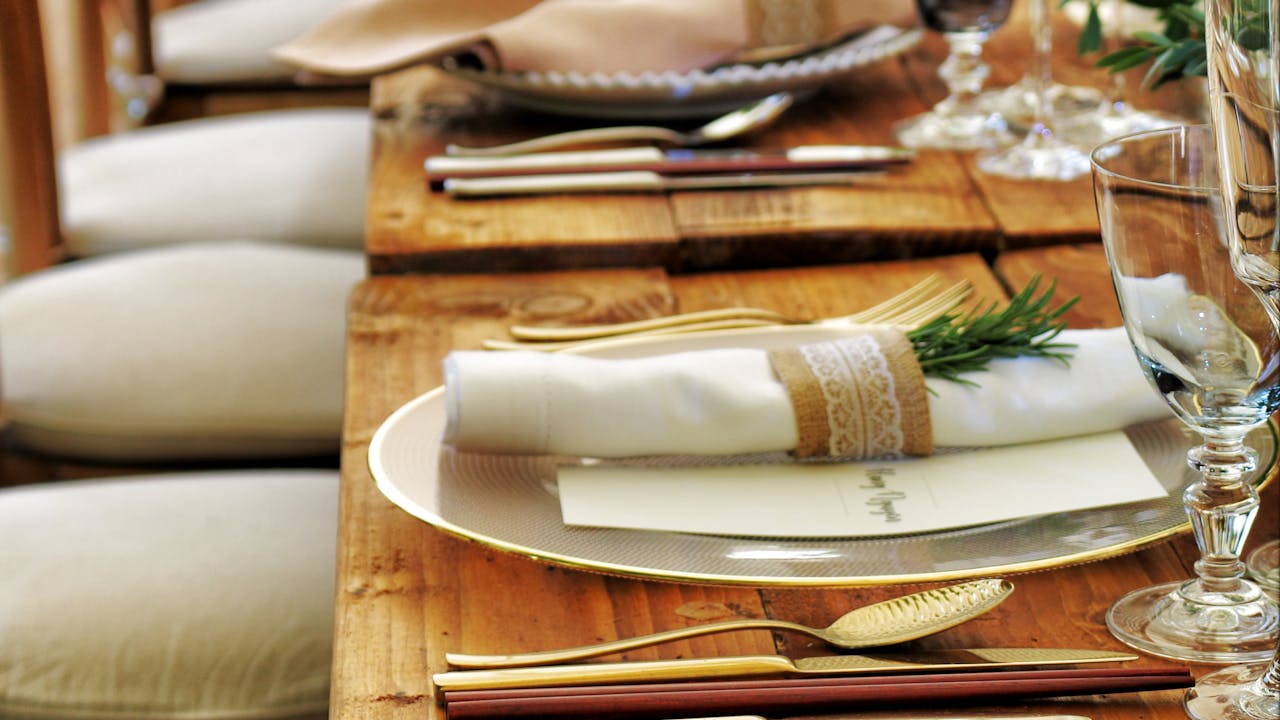 Budget for tips the same way you budget for florals. It's part of the event, not an afterthought.
What if you were unhappy with a vendor?
This comes up. Most wedding vendors are professional and committed to doing excellent work. But occasionally something goes wrong that's real and significant, not just a matter of taste.
If a vendor showed up late without warning, delivered work that was meaningfully below what their portfolio suggested, or handled your day in a way that created real problems, you're not obligated to tip. You're also not obligated to pretend everything was fine.
The right approach is a direct, polite conversation. For most issues, reaching out after the wedding with specific, factual feedback gives the vendor a chance to respond or make it right. Some photographers will offer partial refunds for missing shots or late delivery. Most want to know when something went wrong so they can fix it.
What's not productive: leaving no tip, leaving no review, and quietly stewing. That serves nobody. If the work was genuinely poor, a thoughtful, honest review is more useful to the industry and to future couples than silence.
If the issue was minor - like a few shots that didn't quite work out or a communication hiccup that got resolved - that's not a reason to skip the tip. Reserve withholding for real failures.
Frequently asked questions
Is it rude not to tip a wedding photographer?
No. Photographers are professionals who set their own rates, and a tip is always optional. That said, it's a kind gesture for good work, and most photographers notice and remember it. Not tipping doesn't make you rude. Tipping makes you thoughtful.
When is the best time to tip?
The end of the reception is logistically ideal because you'll see your photographer in person and may not see them again after the wedding day. Tipping after gallery delivery is also acceptable and lets you base the amount on the final work.
Should I tip the second shooter separately?
Yes. Don't assume the lead photographer will split their tip. Hand the second shooter their own envelope directly, labeled with their name if possible. Fifty to $150 is appropriate depending on how many hours they worked.
What's a good tip for a budget photographer?
For packages under $2,000, a tip of $50 to $100 is generous and meaningful. The percentage logic still applies: 5 to 10 percent of what you paid is a fair target.
Can I tip with Venmo or PayPal?
Yes, especially for post-delivery tips. A personal message accompanying the payment makes it feel more intentional than a bare transfer.
What if gratuity is already included in my photography contract?
Rare for photographers, but worth checking. If your contract explicitly includes a gratuity or service charge, you've already tipped. Any additional cash is purely optional.
Do I need to tip if my photographer owns their own business?
You don't need to, no. Self-employed photographers set their own rates and the fee they charge is meant to cover their work fully. But a tip is still appreciated as a sign that you valued what they did. The moral urgency is lower than it would be for a photographer employed by a studio, but the gratitude is just as welcome.
What's more valuable than a cash tip?
A detailed, specific five-star review on Google, The Knot, or WeddingWire. Name the photographer, describe a specific moment they captured, and say clearly that you'd recommend them. That review will influence future bookings for years. Pair it with a handwritten note and you've given them something a cash tip can't replicate.
Related guides
Wedding gift art: why a custom portrait beats a registry gift covers the case for portrait art as the wedding gift people actually keep forever.
Anniversary gift portrait ideas that actually mean something is useful if you're thinking about the year-one gift while you're still in the wedding mindset.
Gift ideas for photographers: what to give someone who has everything goes deeper on what photographers genuinely appreciate, which overlaps significantly with this conversation.
Mother of the bride gift ideas she'll actually treasure is a practical guide for another person who often gets overlooked in the wedding gifting shuffle.
Gift ideas for an engaged couple covers the full landscape of what to give when someone you love gets engaged.
Sources
- The Knot 2026 Real Weddings Study
- Zola: a guide to tipping wedding vendors
- The Knot: wedding vendor tipping cheat sheet
Your wedding photographer did something most professionals never do. They showed up for the most important day of your life and paid close attention to all of it. The tears during vows. The way your grandmother held your hand. The unplanned moment at the reception that made everyone laugh at once. They saw it, they captured it, and now you have it forever.
A tip is a good way to say thank you. But if you want to give your photographer something that genuinely lasts, a custom portrait from Fable made from their own best photo of your wedding is in a different category entirely. We take the image they created and transform it into something you'd hang on a wall for decades. It's the kind of gift that makes a photographer stop, look at it for a long moment, and feel like their work mattered.
You can explore couple portraits at Fable, see how it works, or browse pricing to find the right option. And if you want more guidance on wedding gifts and meaningful gestures, the Fable blog has everything from bachelorette gift ideas to birthday portrait gifts to family portraits for the families that grow from weddings.
The people who show up for you deserve to be remembered. Make sure they know it.