
Outdoor Gift Ideas That Actually Get Used
Finding outdoor gifts is easy. Finding ones that don't collect dust in a garage is hard.
Most outdoor gifts fail for simple reasons. They're too specialized. Too complicated. Or just not suited to how someone actually spends time outside. You mean well, but six months later that fancy gadget still sits in its packaging while they keep using their old reliable gear.
Here's what works. Gifts that match real outdoor habits. Gifts that solve actual problems without requiring a manual. And gifts that remind someone you know exactly what makes them happy when they're outside.
This guide covers outdoor gift ideas for every budget, every interest, and every skill level. From casual nature lovers who hike twice a year to serious adventurers planning their next backcountry expedition. Whether you're shopping for campers, hikers, anglers, hunters, or anyone who just feels better when they're under open sky.
Custom portraits capture their outdoor passion forever
The most meaningful outdoor gift isn't gear. It's art.
Fable creates custom portraits that transform your outdoor enthusiast's favorite photos into museum-quality heirloom art. That photo from summit day. The one with the trophy catch. The campsite moment when everything felt perfect. These aren't just memories on a phone anymore. They become lasting portraits worth displaying, worth keeping, worth passing down.
Traditional outdoor gifts serve their purpose and eventually wear out. But a custom portrait from Fable captures a moment that matters. It lives on your wall. It tells a story every time someone sees it. It reminds you why you love being outside in the first place.
Renaissance style works beautifully for formal outdoor portraits. Royal style adds grandeur to adventure photos. Classical style brings timeless elegance to nature moments. Every style transforms ordinary snapshots into extraordinary art that celebrates someone's passion for the outdoors. Check how it works to see the simple process from photo to finished portrait.
You can order family portraits showing everyone on that memorable camping trip. Couple portraits capturing that anniversary hike to the overlook. Kids portraits preserving their first fishing success or trail adventure. Self portraits commemorating a personal outdoor achievement that deserves recognition.
The pricing makes this surprisingly accessible for a gift this significant. Most customers choose digital downloads for immediate use, then order prints later when they see how stunning the artwork looks. Turnaround typically takes just a few days, making this viable even for last-minute gift occasions.
Outdoor gear breaks, wears out, or gets replaced with newer versions. Art endures. That's why a custom portrait from Fable beats even the best technical gear when you want to give something truly memorable. It honors their passion instead of just equipping it.
Camping gear that improves every trip
Camping gifts work when they solve real problems. The market for outdoor recreation reached $174.45 billion in value recently, with camping equipment representing a massive segment of that spending. But most campers already own the basics. They need upgrades, not duplicates.
High-quality sleeping bags matter more than almost any other camping investment. Temperature ratings tell you survival limits, not comfort zones. A bag rated to 20 degrees keeps you alive at 20 degrees but comfortable around 35-40 degrees. Down insulation packs smaller and weighs less than synthetic, but synthetic works better in wet conditions and costs less. Expect to spend $150-$400 for quality bags from brands like REI, The North Face, or Marmot.
Camp stoves have evolved dramatically. Canister stoves offer convenience and precise temperature control for $50-$150. Liquid fuel stoves handle extreme cold and high altitude better, running $100-$200. Integrated cooking systems like Jetboil combine stove and pot for efficiency, though they limit cooking flexibility. Multi-burner car camping stoves provide full outdoor kitchen capability for $100-$300.
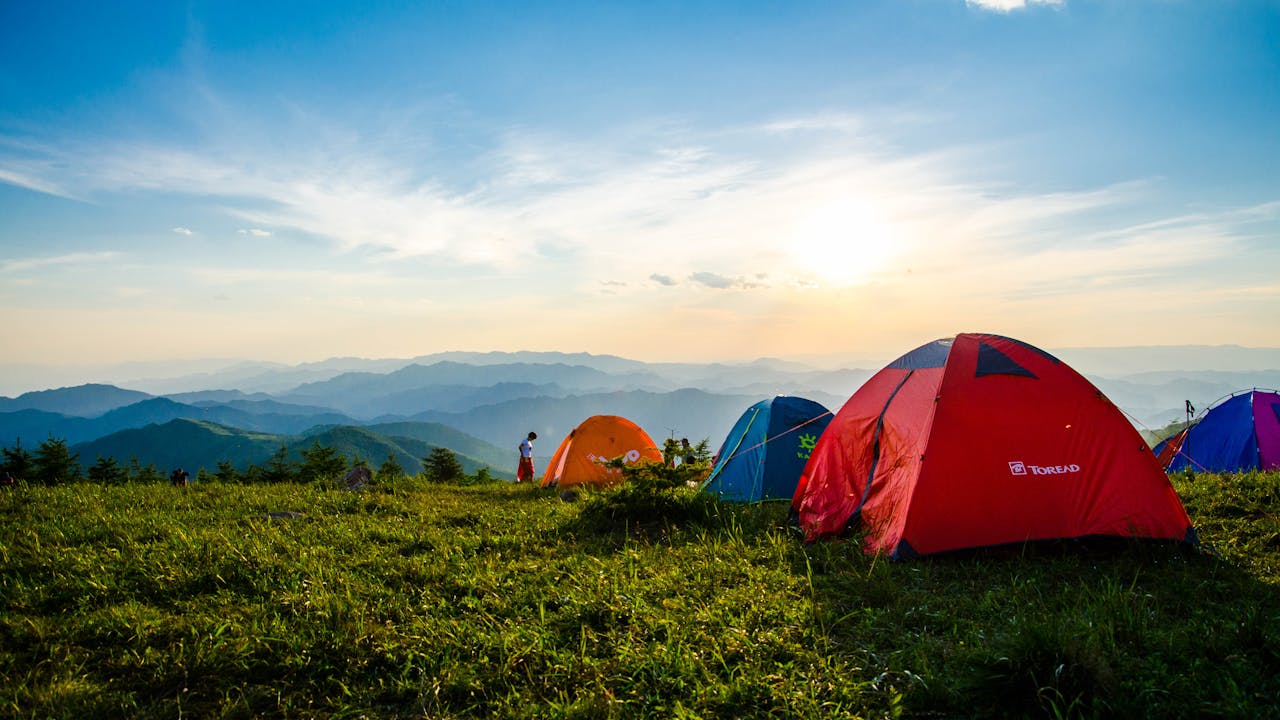
Tents represent the biggest camping investment besides sleeping bags. Three-season tents handle spring through fall for most regions, ranging from $200-$600 for quality two to four-person models. Lightweight backpacking tents sacrifice space for portability, weighing under three pounds for $300-$500. Car camping tents prioritize comfort and space over weight, offering standing height and multiple rooms for $150-$400.
Modern camping chairs have moved far beyond the basic folding design. Lightweight backpacking chairs pack down to bottle size for $80-$120. Rocking camp chairs add comfort for car camping at $70-$100. Zero-gravity loungers provide exceptional relaxation for $60-$150. Some newer designs include insulation for cold-weather camping or built-in coolers for convenience.
Portable power stations changed camping significantly over recent years. These lithium battery packs keep phones, cameras, and devices charged far from outlets. Capacity ranges from 150 watt-hours for basic needs around $150 to 1,500+ watt-hours powering refrigerators and medical devices for $1,000-$2,000. Solar panels pair with these stations for truly off-grid capability.
Camping lanterns and headlamps provide essential lighting. Modern LED lanterns offer 100-400 hours of runtime on a single charge with brightness up to 1,000 lumens for $30-$80. Headlamps free both hands for camp tasks, ranging from basic 100-lumen models at $20 to 500+ lumen rechargeable versions for trail running and technical use at $60-$120. Some include red light modes that preserve night vision.
Coolers determine how long camping trips can last. Rotomolded coolers like YETI, Pelican, or RTIC keep ice for 5-10 days through thick insulation and superior seals, costing $200-$400 for 35-65 quart capacity. Soft-sided coolers work better for day trips or as secondary storage, ranging $100-$250. Electric coolers run from 12-volt outlets, functioning as refrigerators or freezers for $300-$900.
Camping hammock systems appeal to minimalist backpackers and casual loungers equally. Complete hammock camping setups including bug net and rain fly run $150-$300. Ultralight hammocks for serious backpackers weigh under a pound for $60-$100. Tree straps protect bark while simplifying setup for $20-$40. Underquilts provide essential insulation under hammocks for cold-weather camping at $100-$250.
Water filtration systems range from simple to sophisticated. Squeeze filters like Sawyer products handle individual or small group needs for $25-$45. Pump filters process larger volumes faster for $80-$120. Gravity filters let you process several liters hands-free for $100-$140. UV purifiers kill all pathogens in seconds but require battery power, costing $80-$100.
Camp kitchen gear makes outdoor cooking actually enjoyable. Portable camp kitchens organize cooking supplies and provide working surfaces for $50-$150. Cookware sets designed for camping nest together efficiently, with anodized aluminum offering durability for $60-$150. Cast iron remains popular for car camping despite weight, with quality pieces running $30-$80. Portable coffee makers range from simple French presses at $20 to espresso-capable systems for $100-$200.
Hiking gifts for trail lovers
Hikers need specific gear that performs mile after mile. The Outdoor Industry Association reports over 58 million Americans hiked in recent years, creating massive demand for quality hiking products. Smart gifts match hiking style and experience level.
Hiking boots represent the most critical gear choice. Trail shoes work best for maintained paths with light loads, offering flexibility and comfort for $100-$150. Mid-height hiking boots provide ankle support for rougher terrain and heavier packs, ranging $150-$250. Full leather backpacking boots handle off-trail travel and heavy loads for $200-$400. Fit matters more than brand, so gift cards to specialty retailers make sense for boot purchases.
Trekking poles reduce joint impact and improve stability on challenging terrain. Aluminum poles offer durability for $50-$80. Carbon fiber poles save weight for $100-$180. Collapsible designs pack away easily when not needed. Some include shock absorption for steep descents or built-in cameras mounts for photography while hiking.

Hiking backpacks need proper sizing and adjustment for comfort. Daypacks for short hikes with minimal gear run 20-30 liters for $60-$120. Multi-day packs ranging 40-65 liters handle overnight to week-long trips, costing $150-$350. Internal frames work better for most hiking, while external frames suit heavy or awkward loads. Women-specific designs account for torso length and shoulder width differences.
Navigation tools prevent getting lost. GPS watches track routes, distance, and elevation while providing turn-by-turn directions from $200-$400 for basic models up to $600-$900 for advanced features like satellite communication and topographic maps. Handheld GPS units offer larger screens and longer battery life for $200-$600. Traditional compasses never need batteries and work anywhere for $15-$80, with advanced models including declination adjustment and sighting mirrors.
Hydration systems keep water accessible on the trail. Hydration bladders integrate with backpacks for hands-free drinking, holding 2-3 liters for $30-$50. Insulated water bottles maintain temperature for hours in stainless steel construction, ranging $25-$45 for quality brands like Hydro Flask or YETI. Collapsible bottles pack flat when empty for $15-$25. Filtration bottles purify water from streams and lakes for $35-$50.
Clothing layers matter more than single perfect garments. Base layers wick moisture in merino wool or synthetic fabrics for $40-$100. Mid layers provide insulation through fleece or synthetic fills for $60-$150. Outer shells block wind and rain in breathable waterproof fabrics for $100-$400. Hiking pants often convert to shorts via zip-off legs for $50-$100.
Hiking accessories solve specific trail challenges. Gaiters keep debris out of boots in dusty or snowy conditions for $30-$60. Sun protection includes wide-brim hats for $25-$50 and UV-blocking clothing for $40-$100. Insect protection ranges from treated clothing at $40-$100 to clip-on repellent devices for $25-$40. Blister prevention kits include specialized tape and treatments for $15-$30.
Emergency gear provides essential safety backup. Personal locator beacons send SOS signals via satellite from anywhere for $250-$400, plus annual subscriptions around $20. Satellite messengers enable two-way communication beyond cell coverage for $300-$400 plus service plans. First aid kits designed for hiking include blister treatment and injury supplies for $25-$80. Emergency shelters provide waterproof protection for $15-$50.
Technical hiking gear suits experienced adventurers. Microspikes attach to boots for traction on ice and hard snow for $60-$80. Crampons handle steeper terrain and glacier travel for $80-$200. Ice axes enable safe travel on snow slopes, ranging from basic models at $50 to technical axes for mountaineering at $150-$300. Avalanche safety gear including beacons, probes, and shovels runs $400-$600 for complete setups.
Trail documentation helps hikers plan and remember trips. Waterproof notebooks record observations and memories for $10-$20. Trail maps from sources like National Geographic Trails Illustrated provide detailed topography for $12-$15. Hiking journals include prompts for documenting experiences for $15-$25. Camera accessories like peak design capture clips keep cameras accessible for $40-$70.
The blog features additional guides covering specific outdoor interests and gift ideas. Browse through for more inspiration matching your recipient's exact outdoor passions.
Fishing gifts that land perfect catches
Anglers appreciate gear that improves their time on water. The American Sportfishing Association reports over 54 million Americans fished recently, with fishing gift purchases representing a significant market segment. Quality fishing gifts match fishing style and target species.
Rod and reel combinations provide complete setups ready to fish. Spinning combos work best for beginners and versatile fishing situations, ranging $50-$150 for freshwater use and $80-$300 for saltwater. Baitcasting combos offer precision for bass and larger fish, running $100-$400. Fly fishing outfits include rod, reel, and line for $150-$500 in beginner setups and $500-$2,000+ for advanced equipment.
Tackle storage keeps lures and accessories organized. Tackle boxes range from simple trays at $15-$30 to large multi-level systems with specialized compartments for $50-$150. Tackle bags offer portability with multiple pockets and waterproof construction for $40-$100. Backpack tackle systems distribute weight comfortably for bank fishing and hiking to remote spots, costing $80-$200.
Lures and baits represent consumable gifts anglers always need. Quality lure assortments targeting specific fish species run $30-$80. Soft plastic baits in popular colors and sizes cost $5-$15 per pack. Crankbaits, spinnerbaits, and topwater lures range $5-$20 individually. Premium handcrafted lures from specialty makers run $15-$40 each. Fly fishing fly assortments include 50-100 patterns for $30-$60.
Electronics transform modern fishing. Fish finders use sonar to locate fish and map bottom structure, ranging from basic units at $100-$200 to advanced systems with GPS, side-scanning, and networking for $500-$2,000+. Underwater cameras let you watch fish behavior in real-time for $150-$500. Action cameras like GoPro capture fishing moments from multiple angles for $200-$500.
Fishing clothing provides comfort and protection. Performance fishing shirts offer sun protection and moisture wicking for $40-$80. Fishing pants include water-resistant fabrics and multiple pockets for $50-$100. Waders keep you dry in cold water, with breathable chest waders running $150-$500. Wading boots provide traction on slippery rocks for $100-$250.
Accessories improve fishing efficiency and success. Line cutters and fishing pliers handle hooks and line for $15-$40. Fishing scales measure catches accurately from $15 for basic digital scales to $100+ for tournament-grade models. Landing nets sized appropriately for target species range $25-$100. Tackle management includes line spoolers for $15-$30 and hook sharpeners for $8-$20.
Fishing packs and vests carry essentials on the water. Fishing vests include numerous pockets for fly fishing gear, running $40-$120. Chest packs provide organized storage without back weight for $50-$150. Sling packs rotate to front for access while wearing waders for $80-$200. Waterproof bags protect phones and valuables for $20-$60.
Specialized fishing gear suits particular styles. Kayak fishing accessories include rod holders for $30-$60, fish finders designed for kayaks at $150-$400, and paddle leashes for $15-$25. Ice fishing gear includes portable shelters for $100-$300, ice augers for $50-$500, and tip-ups for multiple line fishing at $15-$30 each. Surf fishing equipment includes sand spikes for $15-$30 and cart systems for $80-$200.
Fishing tools streamline catch and release. Dehooking tools safely remove hooks for $10-$25. Fish grippers control fish without damage for $15-$35. Measuring boards ensure legal catches for $20-$40. Aeration systems keep bait or live wells oxygenated for $30-$100. Hook removal kits include forceps and extractors for $15-$30.
Gift certificates to fishing retailers work perfectly when you don't know specific preferences. Bass Pro Shops, Cabela's, and local tackle shops let anglers choose exactly what they need. Fishing guide trips provide unforgettable experiences and education, typically running $200-$600 for half-day to full-day guided fishing. Consider fishing gift ideas for more specialized recommendations.
Hunting gifts for serious sportsmen
Hunters need reliable gear that performs in challenging conditions. Over 15 million Americans hunted recently according to the U.S. Fish and Wildlife Service, with equipment purchases representing significant investment. Practical hunting gifts match hunting style and game pursued.
Hunting optics determine success in the field. Binoculars for hunting range from compact 8x25 models at $80-$150 to full-size 10x42 or 12x50 models offering superior light gathering for $200-$800. Rifle scopes vary dramatically by application, with basic hunting scopes starting around $100 and premium long-range optics reaching $2,000+. Rangefinders provide precise distance measurement from $150-$500. Spotting scopes enable long-distance game observation for $300-$1,500.
Hunting clothing provides concealment and weather protection. Camouflage patterns should match local terrain and hunting style, with complete outfits running $200-$600. Base layers in merino wool offer warmth and scent control for $60-$150 per piece. Insulated jackets and bibs handle extreme cold for $150-$400. Rain gear in quiet fabrics maintains stealth for $100-$300. Blaze orange safety clothing meets legal requirements in most states for $30-$80.
Hunting packs carry gear efficiently and quietly. Day packs for short hunts run 1,500-2,500 cubic inches for $80-$200. Backpack-style packs for all-day hunts offer 3,000-4,000 cubic inches for $150-$350. Meat hauling packs include frames to carry heavy loads out of backcountry for $250-$500. Fanny packs work for minimal gear needs at $40-$100.
Game processing equipment helps hunters handle harvests. Quality hunting knives range from $40-$150 for folders to $80-$300 for fixed blades. Knife sharpening systems maintain edges for $30-$150. Game bags protect meat from insects during cooling for $25-$60. Bone saws handle larger game for $20-$50. Gambrels and hoists simplify hanging and processing for $30-$80.
Trail cameras monitor game movement patterns. Basic trail cameras capture photos or video for $50-$100. Cellular trail cameras send images to your phone in real-time for $200-$400 plus data plans. No-glow infrared models remain invisible to game for $80-$250. Solar panels extend camera operation for $30-$60.
Hunting accessories solve specific challenges. Scent elimination includes sprays for $10-$20, clothing wash for $15-$25, and storage bags for $20-$40. Calls for various game species range from $15-$80 depending on complexity and realism. Decoys create visual attraction from $30-$150 for turkey decoys to $200-$400 for deer decoys. Tree stand safety harnesses prevent falls for $80-$200.
Shooting accessories improve accuracy and comfort. Shooting sticks provide stable rifle support from $30-$150. Bipods attach to rifles for $50-$200. Shooting bags filled with sand or beads create rests for $20-$60. Hearing protection ranges from basic foam plugs at $5 to electronic muffs amplifying conversation while blocking shots for $50-$400.
Hunting boots handle diverse terrain and weather. Rubber boots work best for wet conditions and scent control, running $80-$250. Leather boots provide durability and support for mountain hunting at $150-$400. Insulated boots handle extreme cold in ratings from 400-2,000 grams of insulation for $100-$300. Gaiters add protection and warmth for $30-$80.
Specialized hunting gear suits particular game. Waterfowl hunting requires waders for $150-$500, layout blinds for $150-$300, and decoy spreads running $100-$500. Turkey hunting uses friction calls for $15-$40, box calls for $25-$80, and lightweight face masks for $10-$25. Predator hunting employs electronic callers for $100-$400 and shooting lights for $80-$300.
Hunting education and skills development make meaningful gifts. Hunter safety courses fulfill legal requirements and teach ethics for $20-$50. Shooting range memberships provide practice facilities for $200-$600 annually. Guided hunts offer mentorship and access to prime locations for $1,000-$5,000+ depending on location and species. Check hunting gift ideas for comprehensive recommendations.
GPS watches and outdoor tech
Technology enhances outdoor experiences without replacing the experience itself. The global GPS watch market grew substantially in recent years, with outdoor-focused models gaining popularity among serious adventurers. Smart outdoor tech gifts provide genuine utility.
GPS watches designed for outdoor use combine navigation with fitness tracking. Garmin dominates this category with models ranging from the Instinct at $300-$400 offering basic GPS and tracking to the Fenix series at $600-$900 providing topographic maps, multi-band GPS, and advanced training features. Suunto offers alternatives in similar price ranges with different interface philosophies. Battery life in GPS mode runs 15-40 hours for mid-range models and up to 60-100 hours for premium versions.

Satellite communicators enable two-way messaging beyond cell coverage. The Garmin inReach series allows text messaging, weather forecasts, and SOS functions via satellite for $300-$450 plus subscription plans starting around $15 monthly. ZOLEO and Somewere offer competing devices with similar capabilities. These provide essential safety backup for solo adventurers or remote expeditions.
Portable solar chargers keep devices powered off-grid. Foldable solar panels ranging 10-28 watts charge phones and battery banks for $60-$200. Larger panels designed for base camps offer 50-100 watts for $200-$400. Output needs depend on what you're charging, with 14-21 watts handling phones and small devices adequately. Built-in battery storage adds convenience for $80-$150 over panel-only models.
Weather monitoring devices help outdoor enthusiasts plan and stay safe. Portable weather stations measure temperature, humidity, pressure, wind, and precipitation for $100-$300. Barometric altimeter watches track elevation and predict weather changes for $200-$600. Lightning detectors warn of approaching electrical storms for $150-$250. These matter most in mountain environments where weather changes rapidly.
Action cameras document outdoor adventures. GoPro remains the standard with current models ranging $200-$400 depending on resolution and stabilization features. DJI offers competing cameras with superior stabilization for $300-$400. Mounting accessories suit every outdoor activity from helmet mounts at $15-$30 to chest harnesses for $30-$50. Waterproof housings extend depth ratings for diving and water sports at $40-$80.
Drones capture aerial perspectives of outdoor landscapes. Consumer drones suitable for outdoor use range from compact models at $400-$600 to professional systems offering superior image quality and flight time for $1,000-$2,000. Regulations require registration and limit where drones can fly, particularly in national parks and wilderness areas. Extra batteries extend flight time for $80-$150 each.
Headlamps and flashlights using modern LED technology provide powerful portable lighting. Rechargeable headlamps offering 400-1,000 lumens run $50-$120. Flashlights with similar output range $40-$100. Runtime varies significantly based on brightness level, with maximum output sustainable for 2-4 hours and lower modes running 10-40+ hours. Some include USB charging ports for emergency phone charging.
Outdoor apps enhance trip planning and navigation. Many operate on subscriptions from $30-$100 annually. Gaia GPS provides detailed topographic maps and route planning. AllTrails offers trail databases and user reviews. OnX Hunt maps public and private land boundaries for hunters. These work offline after downloading map areas, using phone GPS without cell signal.
Fitness trackers monitor outdoor activity even in basic models. Entry-level trackers counting steps and basic activity cost $50-$100. Mid-range models add GPS for route tracking at $150-$250. High-end fitness-focused watches provide advanced training metrics for $300-$600. Sleep tracking, heart rate monitoring, and smartphone notifications come standard in most current models.
E-readers provide entertainment for camping and long trips. Basic models offer weeks of battery life for $100-$150. Waterproof versions handle outdoor conditions better for $200-$250. Large-screen models improve readability for $250-$300. The lightweight design and glare-free screens work better than tablets in bright sunlight.
The shift toward sustainable and solar-powered outdoor technology reflects growing environmental consciousness among outdoor enthusiasts. Gifts incorporating renewable energy appeal to those minimizing their environmental impact while pursuing outdoor activities.
Outdoor clothing that performs
Performance outdoor clothing separates enthusiasts from uncomfortable amateurs. The technical outdoor apparel market reached substantial size recently, driven by materials science advances and increased participation in outdoor activities. Thoughtful clothing gifts match intended use and climate conditions.
Insulated jackets provide critical warmth layer. Down jackets offer superior warmth-to-weight ratio with 600-800 fill power running $150-$300 and premium 850-900 fill power reaching $300-$600. Synthetic insulated jackets cost less and perform better when wet, ranging $100-$300. Hybrid jackets combine down in core areas with synthetic in moisture-prone zones for $200-$400. Packability matters for backpacking applications.
Rain jackets using waterproof breathable fabrics keep you dry without overheating. Entry-level rain jackets with basic waterproofing run $60-$120. Mid-range jackets using Gore-Tex or equivalent fabrics offer better breathability for $150-$300. Premium mountaineering shells provide maximum durability and weather protection for $400-$800. Pit zips and hem adjustments improve ventilation and fit.
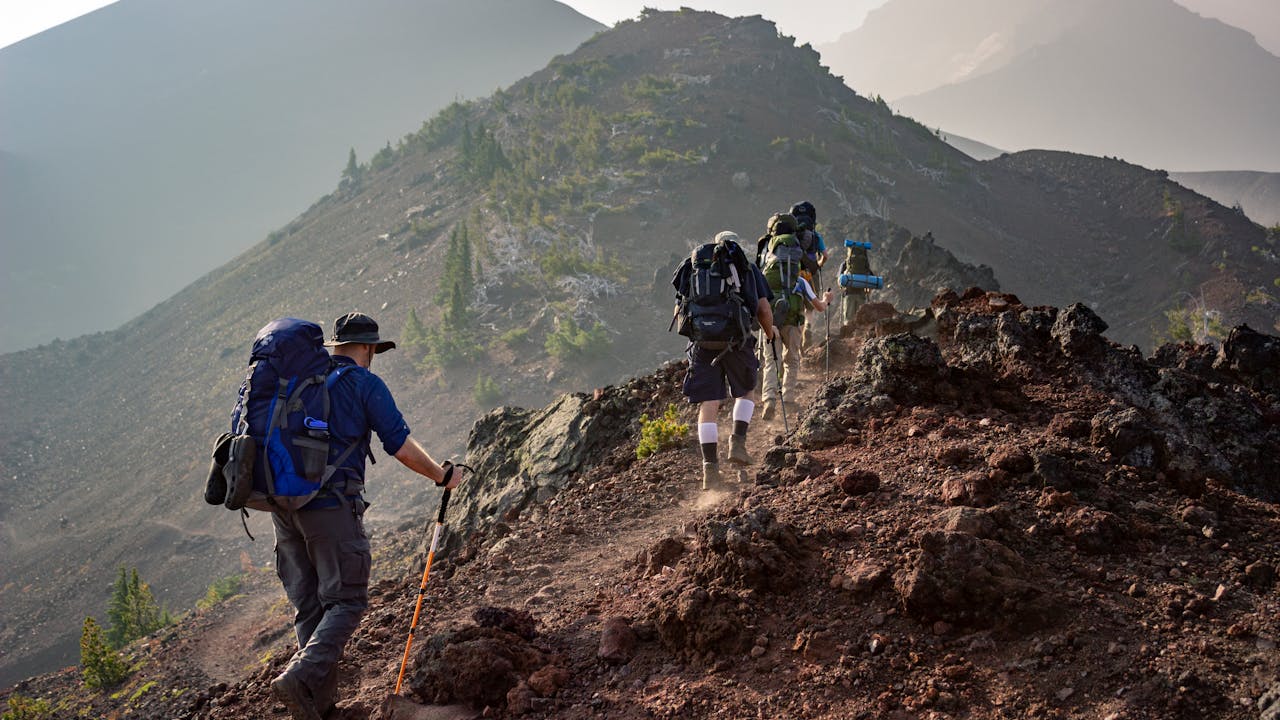
Base layers manage moisture next to skin. Merino wool base layers provide natural odor resistance and warmth retention when wet, costing $60-$120 per piece. Synthetic base layers dry faster and cost less at $30-$80. Silk base layers offer exceptional warmth for weight in extreme cold for $50-$100. Weight categories from lightweight to expedition determine appropriate use temperature.
Fleece mid-layers insulate while allowing moisture vapor escape. Lightweight fleece works for high activity in cool conditions at $40-$100. Midweight fleece suits moderate activity in cold weather for $60-$150. Heavyweight fleece provides maximum warmth for low activity at $80-$200. Grid fleece designs improve breathability for active use.
Hiking pants balance durability with comfort. Synthetic hiking pants resist abrasion and dry quickly for $60-$100. Convertible pants zip off to shorts for $50-$90. Soft shell pants stretch for climbing and scrambling at $80-$150. Insulated pants handle cold weather hiking for $100-$200. Features like reinforced knees and gusseted crotches improve performance.
Technical shirts wick moisture and dry quickly. Long-sleeve sun shirts provide UV protection for $40-$80. Merino wool shirts offer natural performance for $60-$120. Hooded sun shirts add neck and head protection for $50-$90. Button-front designs offer ventilation control compared to pullovers.
Hats provide critical sun and cold protection. Wide-brim sun hats shield face and neck for $25-$50. Insulated winter hats retain heat in merino or synthetic fabrics for $20-$40. Buffs and neck gaiters adapt to multiple wearing styles for $20-$35. Caps with sun shields protect ears and neck for $25-$40.
Gloves suit varied temperature ranges and activities. Liner gloves provide light protection or layer under shells for $15-$30. Insulated gloves handle cold weather for $30-$80. Waterproof gloves keep hands dry in wet conditions for $40-$100. Mittens offer maximum warmth for extreme cold at $50-$150. Touch-screen compatible fabrics maintain phone access.
Socks prevent blisters and provide cushioning. Merino wool hiking socks offer cushioning and moisture management for $18-$30 per pair. Synthetic hiking socks dry faster for $12-$20. Liner socks reduce friction for blister prevention at $10-$15. Compression socks improve circulation on long hikes for $20-$40.
Gaiters keep debris out of boots and add weather protection. Low gaiters for trail running and day hiking run $20-$40. Mid-height gaiters suit most hiking for $30-$60. Expedition gaiters provide maximum protection for mountaineering at $60-$120. Waterproof breathable fabrics work better than basic nylon.
Outdoor clothing fits differently than casual wear. Technical fits allow layering and unrestricted movement. Women-specific designs account for proportional differences beyond simple sizing. Trying clothing on while moving and reaching verifies appropriate fit.
Budget outdoor gifts under fifty dollars
Effective outdoor gifts don't require huge budgets. Many sub-$50 items provide genuine utility and lasting value. Smart budget gifts focus on consumables, accessories, and frequently replaced items.
Quality water bottles keep beverages at temperature for hours. Insulated stainless steel bottles hold 20-32 ounces for $25-$45. Wide-mouth designs ease cleaning and ice loading. Narrow spouts prevent spills. Brands like Hydro Flask, Klean Kanteen, and YETI compete in this category. Most outdoor enthusiasts use multiple bottles for different purposes.
Headlamps provide hands-free lighting for camping and hiking. Rechargeable LED headlamps offering 200-400 lumens run $30-$50. Multiple brightness modes extend battery life. Red light modes preserve night vision. Comfortable headbands ensure all-night wear. Budget headlamps work fine for casual use while saving money.
Multi-tools combine essential implements in pocket-sized packages. Basic multi-tools with pliers, knife, and screwdrivers cost $25-$40. Leatherman and Gerber offer reliable options across price ranges. Keychain multi-tools provide minimal capability for $15-$25. Most outdoor activities eventually need a multi-tool.
Trekking poles improve stability and reduce joint stress. Adjustable aluminum poles range $35-$50. Cork grips resist moisture better than foam or plastic. Twist-locks prove more reliable than flip-locks in dusty conditions. Affordable poles perform adequately for most hiking.
Stuff sacks and dry bags organize and protect gear. Lightweight stuff sacks in various sizes run $8-$20. Waterproof dry bags for rafting or kayaking cost $15-$40 depending on size. Compression stuff sacks reduce sleeping bag volume for $15-$30. Color-coding simplifies finding gear in packs.
Outdoor cooking accessories improve camp meals. Portable coffee makers bring morning rituals outdoors for $20-$45. Collapsible silicone bowls and cups pack small for $10-$25. Lightweight cutting boards suit camp kitchens for $10-$20. Spice kits organize seasonings for $15-$30.
Fire starters ensure reliable flames in any conditions. Waterproof matches cost $5-$10. Ferrocerium fire starter rods work indefinitely for $10-$25. Fire starter cubes ignite easily for $8-$15. Lighters belong in every outdoor kit for under $5. Multiple fire starting methods provide redundancy.
Insect protection makes outdoor time more pleasant. Insect repellent in various formulations runs $8-$15. Mosquito head nets protect during peak bug season for $10-$20. Permethrin spray treats clothing for lasting protection at $12-$20 per bottle. Thermacell devices create protection zones for $25-$40.
Paracord serves countless outdoor purposes. 50-100 foot hanks of quality paracord cost $10-$20. Uses include bear bag hanging, gear repair, clotheslines, and emergency lashing. Paracord bracelets provide wearable cordage for $8-$15. Real 550-pound test cord outperforms cheaper imitations.
Camping pillows improve sleep comfort at minimal weight. Inflatable camping pillows pack tiny for $15-$30. Compressible foam pillows feel more natural for $20-$35. Stuff sack pillows repurpose clothing storage for $10-$15. Good sleep makes everything else better outdoors.
Outdoor towels dry quickly and pack small. Microfiber camping towels absorb well while weighing little for $10-$25. Quick-dry fabric prevents mildew. Various sizes suit backpacking to car camping. These towels prove useful beyond camping for gym and travel.
Emergency whistles signal for help when lost or injured. Pealess whistles work in any conditions for $5-$10. Loud whistles carry farther than shouting with less effort. Attaching whistles to pack straps ensures availability. Simple equipment sometimes makes the biggest difference.
Repair kits extend gear life in the field. Tenacious Tape patches rips and tears for $5-$10. Shoe Goo fixes boot separation for $6-$12. Duct tape wraps around trekking poles for $4-$8. Sewing kits with heavy thread repair fabric gear for $8-$15. Field repairs prevent early trip exits.
Consider 25 dollar gift ideas for coworkers for more budget-friendly options that work well for outdoor enthusiasts too.
Frequently asked questions
What are the most practical outdoor gifts?
The most practical outdoor gifts solve real problems without requiring storage for rarely used specialty items. Quality insulated water bottles see daily use across seasons. Headlamps provide essential hands-free lighting for camping. Multi-tools handle countless small tasks. Trekking poles reduce joint stress on hikes. These items work for beginners and experts, justify their cost through frequent use, and last for years with basic care.
How do I choose outdoor gifts for beginners versus experienced enthusiasts?
Beginners need versatile, approachable gear that builds confidence rather than intimidates. Focus on quality basics like comfortable hiking boots, simple backpacks, or beginner-friendly tents that work for many situations. Experienced outdoor enthusiasts often have specific preferences and already own fundamentals, so they appreciate specialized equipment for their particular pursuits, consumables they regularly need to replace, or upgrades to gear they've worn out. Gift cards work well when you're uncertain about specific technical preferences.
What outdoor gifts work for all seasons?
Year-round outdoor gifts include GPS watches that track activities regardless of weather, high-quality water bottles maintaining temperature in any season, multi-layer clothing systems adapting to varied conditions, and portable power stations powering devices throughout the year. Navigation tools, multi-tools, and first aid kits prove useful in every season. Custom Fable portraits celebrating outdoor memories work perfectly for any time of year since they commemorate past adventures rather than requiring current weather conditions.
Are expensive outdoor gifts always better?
Expensive outdoor gifts aren't automatically better, but price often reflects durability, performance, and features. Budget gear works fine for casual users trying new activities, while enthusiasts pursuing activities frequently benefit from premium equipment that performs better and lasts longer. A $30 headlamp adequately lights camp tasks, while a $100 model offers brighter output, longer runtime, and better weather resistance. Consider the recipient's commitment level and how they'll actually use the item before assuming the highest price represents the best choice.
What outdoor gifts support environmental conservation?
Outdoor gifts supporting conservation include National Park passes funding public lands management, memberships in conservation organizations protecting natural areas, and products from companies donating profits to environmental causes. Sustainable gear made from recycled or organic materials reduces manufacturing impact. Education in Leave No Trace principles promotes minimal impact recreation. Used gear purchases extend product life while reducing new manufacturing. Perhaps most importantly, anything getting someone outdoors builds personal connection with nature that motivates conservation support.
How can I personalize outdoor gifts?
Personalization makes outdoor gifts more meaningful. Custom embroidery adds names or messages to packs, clothing, or gear bags for $10-$30. Engraving puts initials on multi-tools, water bottles, or compasses. But the most personal outdoor gift captures their actual outdoor memories. Fable creates custom portraits transforming their favorite outdoor photos into museum-quality art. That summit photo, that perfect catch, that campsite sunset becomes a portrait worth displaying forever. This personalization honors their specific outdoor passion rather than just adding their name to generic gear.
What are good last-minute outdoor gifts?
Last-minute outdoor gifts include gift cards to outdoor retailers letting recipients choose exactly what they need. Digital subscriptions to outdoor apps or magazines deliver immediately via email. Books about outdoor skills or destinations ship quickly or download instantly. Small accessories like headlamps, multi-tools, or water bottles stock most stores and online retailers with fast shipping. Custom Fable portraits typically complete within days, making them viable for relatively quick gifting despite being fully customized art.
Should outdoor gifts match specific activities or be more general?
Activity-specific outdoor gifts work best when you're certain about the recipient's primary outdoor pursuits. Climbing shoes only help climbers, while fishing lures waste space for non-anglers. General outdoor gifts suit people exploring multiple activities or those whose specific interests you're uncertain about. Items like quality water bottles, headlamps, first aid kits, and navigation tools serve almost any outdoor pursuit. Consider whether the person has a clear outdoor focus or enjoys varied outdoor experiences before choosing specialized versus versatile gifts.
Related guides
- Fishing gift ideas for anglers who live for time on the water
- Hunting gift ideas covering gear for serious sportsmen
- Gift ideas for engineers including outdoor tech enthusiasts
- Godparent gift ideas for meaningful relationship gifts
- How it works explains creating custom portraits from your photos
Sources
- Outdoor Industry Association - Outdoor Participation Trends Report
- American Sportfishing Association - Sportfishing in America Report
- U.S. Fish and Wildlife Service - National Survey of Fishing, Hunting, and Wildlife
The best outdoor gifts honor why someone loves being outside. They don't just add to their gear pile. They solve problems. They capture memories. They show you understand what makes them happy.
Generic gear gets used once and forgotten. Thoughtful outdoor gifts see constant use because they match real needs. They last for years. They improve every adventure. And sometimes, like a custom portrait from Fable, they preserve the moments that make outdoor life worth living.
Give something that matters. Give something they'll actually use. Give something that celebrates their passion for being outdoors.