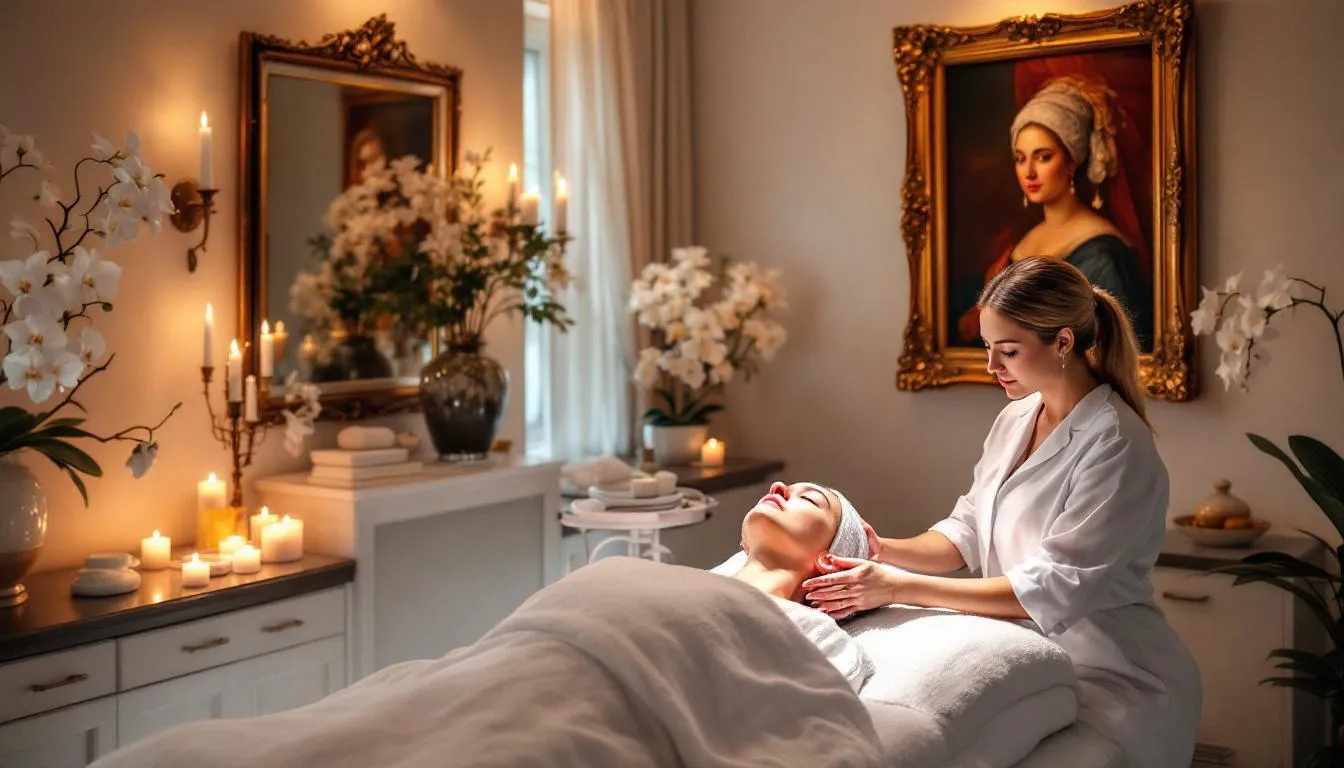
How Much to Tip for a Facial: A Complete Guide for 2026
You've just had a facial. Your skin is glowing. You feel human again. And then comes the moment that trips up almost everyone: the tip.
How much do you leave? Do you tip at a med spa? What about when you're on a spa day at a hotel? Does a quick 30-minute express facial get the same percentage as a 90-minute deep treatment? These questions feel awkward to ask out loud, so most people just guess. Some overtip. Some undertip without knowing it. And a few walk out without leaving anything, feeling vaguely guilty the whole drive home.
This guide answers all of it. You'll find the standard percentages, the exceptions, what estheticians actually prefer, how to tip with cash versus card, and how to handle tipping at every kind of spa setting from a quick wax boutique to a five-star hotel spa. You'll also find a section on going beyond the tip because sometimes the most meaningful thing you can give isn't money at all.
The standard: how much to tip for a facial
The short answer is 15 to 20 percent. That's the industry standard across nearly every spa and salon setting in the United States, and it applies to facials the same way it applies to massage therapy and most other hands-on beauty services.
But let's put that in real numbers. If your facial costs $100, a standard tip is $15 to $20. If it costs $150, you're looking at $22 to $30. For a $200 facial, $30 to $40 is appropriate. And at the higher end, like a $300 signature treatment at a luxury spa, $45 to $60 is the range most estheticians would consider thoughtful.
Most regulars land around 20 percent as their default, especially if they see the same esthetician consistently. That's not generosity. That's just the norm in the beauty service world, where commission structures and pay rates often depend heavily on gratuity.
The 18 percent middle ground is a perfectly respectable tip if 20 percent feels like a stretch on a pricier service. Some people think of it this way: 15 percent means the service was fine, 18 percent means it was good, and 20 percent or more means it was genuinely excellent. Any of these is appropriate. What you want to avoid is the 10 percent (or nothing) that signals dissatisfaction unless something actually went wrong.
When to tip more than 20 percent
There are situations where tipping above 20 percent is warranted. Your esthetician spent extra time working on a problem area without charging you. She remembered your skin concerns from three visits ago without looking at your file. She stayed late because your appointment ran over. He gave you a scalp massage nobody asked for because he could tell you were stressed.
Those little things add up. In those situations, 25 percent is not excessive. It's just accurate.
If your esthetician is also your aesthetics mentor of sorts, someone who has genuinely helped you understand your skin and transformed how you approach skincare, a tip at the high end of the range is one of the clearest signals you can send that you recognize the expertise she's bringing to the table.
When tipping less is acceptable
There are scenarios where a lower tip is understandable. If the service was genuinely disappointing, the product stung without warning, the esthetician was visibly distracted, or the treatment felt rushed, dropping to 10 or 12 percent is fair. You don't owe a full tip for a poor experience.
That said, if the problem was something outside the esthetician's control, like a noisy environment, a scheduling mix-up at the front desk, or products that just didn't work on your skin type, it's worth separating the experience from the provider. A good esthetician doing her best in an imperfect environment still deserves a fair tip.
Beyond the tip: the gift that actually lasts
Here's something worth thinking about. Tips are essential. They're expected, they're professional, and your esthetician depends on them. But there are moments when a tip alone doesn't quite capture what you want to say.
Maybe your esthetician has been seeing you every month for two years and helped you through a skin crisis that knocked your confidence. Maybe she's retiring soon, or moving to a new location, or you've become something close to friends. In those moments, a tip in an envelope starts to feel like it's not enough.
That's where Fable comes in. Fable transforms personal photos into stunning custom portraits painted in classical, renaissance, and fine art styles. Think of it as commissioning a piece of art, except you start with your favorite photo and the finished product looks like it belongs in a gallery or a beautifully styled home.
Giving your esthetician a custom portrait of herself, her family, or even a beloved pet is the kind of gift she won't forget. It's not a gift card she'll spend on groceries. It's not a candle she'll light twice and forget. It's something that goes on the wall. Something that gets pointed to when people visit. Something she'll still have in twenty years.
If you want to honor a truly exceptional esthetician, browse the family portraits, self portraits, and couple portraits at Fable. See how it works and check the pricing to find something that fits the relationship. For estheticians who have pets they adore, the pet portraits and custom dog portraits are particularly popular gifts. It's a completely different category from a tip. It says "you changed something for me and I want to remember that."
A tip says thank you. A portrait says I won't forget you.
Tipping at different spa settings
The 15 to 20 percent rule is consistent, but the context changes depending on where you're getting your facial. Here's how tipping norms shift across different environments.
Day spas and standalone skincare studios
Day spas and dedicated skincare studios are the most straightforward. These are places where facials are the core service, estheticians are the main staff, and tipping is completely expected. The 15 to 20 percent range applies here without exception.
At a standalone studio where you see an independent esthetician who owns her own space, tipping may feel slightly different but it's still appropriate and appreciated. Some clients of independent estheticians ask if tipping is expected when the person they're seeing owns the business and sets their own prices. The answer is yes. Even business owners in the beauty industry welcome gratuity. They keep overhead low and their income is still tied to each individual service. Tipping an owner is not strange. It's generous.
Hotel and resort spas
Hotel spas and resort spas have their own rhythm. Many of them include a service charge or resort fee that's added automatically to your bill. Before you add a tip on top, check your receipt closely. If you see a line item for "service charge," "gratuity," or "amenity fee," ask the front desk whether that goes directly to the treatment staff.
In many cases it does not. Service charges often go to the hotel's general revenue pool rather than the individual esthetician. If that's the situation, adding a personal 15 to 20 percent on top is the right call.
At true luxury hotel spas, the prevailing norm leans toward 20 percent as the baseline, especially if the experience was exceptional. These settings often have higher treatment prices, so even 15 percent can translate to a substantial dollar amount. Use your judgment based on the service and the price.
Medical spas (med spas)
Med spas are where tipping etiquette gets genuinely complicated. The short answer is: tip the esthetician, not the medical professional.
Medical spas offer a range of services. Some are handled by licensed estheticians performing traditional facial treatments. Others are performed by registered nurses, nurse practitioners, or physicians doing Botox, filler, laser resurfacing, or medical-grade chemical peels. Tipping norms differ entirely based on who's doing what.
For estheticians at a med spa: If you're getting a hydrafacial, a basic chemical peel, extractions, LED light therapy, or a dermaplaning treatment performed by a licensed esthetician, tipping is standard and expected. Use the same 15 to 20 percent range you'd use anywhere else.
For nurses and medical professionals: Tipping a nurse or physician is generally not expected and in many facilities it's actually against policy. It's the same reason you don't tip your doctor. The professional and medical nature of the relationship changes the dynamic. If you're unsure, ask the front desk when you check in. Most medical spas have a clear policy posted or will tell you directly.
Some med spas post a sign or include a note on their menu that reads "gratuity is not expected for medical services." Others actively encourage tipping for all staff. When in doubt, ask. Nobody will be offended by the question.
Chain spas: Massage Envy, Hand and Stone, and similar
Chain wellness spas like Massage Envy and Hand and Stone are membership-based businesses where you pay a monthly fee for discounted services. These places offer facials alongside massages and other treatments, and tipping etiquette here is the same as anywhere else: 15 to 20 percent on the service value.
One thing to note at these chains is that you're often tipping on the discounted member price, not the walk-in rate. That's acceptable. Your esthetician is still doing the same work regardless of what you paid through your membership. Some regular clients choose to tip on the full retail value as a way of showing extra appreciation. That's never wrong, but it's not expected.
The front desk at most chains will prompt you for a tip at checkout through their digital payment system. The suggested amounts are usually reasonable. It's worth remembering that estheticians at chain spas often work for modest hourly wages with tips making up a meaningful portion of their take-home income.
Wax studios and quick-service skincare
Places like European Wax Center and similar quick-service wax and skincare studios often offer basic facial treatments alongside their core wax services. Tipping norms here are consistent with the broader beauty industry: 15 to 20 percent.
For shorter express services, like a 15-minute brow wax with a skin touchup, some clients tip a flat amount rather than a percentage because the percentage math feels awkward on a $20 service. Anywhere from $3 to $5 for a very quick service is reasonable, though 20 percent is always appreciated.
Does the length of the facial change how much you tip?
The percentage stays the same. The dollar amount changes because the price changes.
A 30-minute express facial might cost $60 to $80. A 60-minute signature facial often runs $100 to $150. A 90-minute or two-hour indulgent treatment could cost $200 or more. In each case, tipping 15 to 20 percent of the service price is standard.
Where it gets interesting is when you're comparing the actual effort and attention required. A 90-minute custom facial typically involves your esthetician staying deeply present and responsive for the entire treatment, adjusting techniques, making real-time decisions about your skin, and often including multiple modalities. In that sense, a 90-minute service earns a generous tip on its own merits, not just because the price is higher.
A 30-minute express session is shorter, but your esthetician still set up the room, customized her approach, managed the time efficiently, and provided hands-on care for the full half hour. A lower dollar tip makes sense, but the percentage logic holds.
There's one nuance worth noting from the esthetician perspective. Some providers have shared that quick services like brow shaping or mini facials tend to generate lower percentage tips than longer treatments, not because clients are stingy, but because the math on a small base price often produces an amount that feels too low and clients round up to a flat number instead. That's fine. A flat $8 tip on a $40 mini facial is more than 20 percent. Use judgment over math when the numbers get small.
Tipping for facial add-ons and upgrades
Facials frequently come with options to add on services: extractions, LED light therapy, microdermabrasion, dermaplaning, gua sha, high-frequency treatment, or a targeted mask. When you add these services, the total price of your treatment goes up, and so should your tip.
The simplest approach is to tip on the full combined price of your service including add-ons. If your base facial was $120 and you added dermaplaning for $30, your total is $150 and a 20 percent tip is $30.
There's one exception to think through. Some add-on services are heavily machine-driven with relatively little additional hands-on time from your esthetician. An LED panel treatment, for example, involves your esthetician setting up the device and positioning it correctly, but then stepping away while the light does its work. In those cases, you're still getting value from the service and your esthetician's expertise in selecting and applying it, so tipping on the full price is still appropriate. But you wouldn't be out of line tipping on the base facial price if the add-on felt largely passive.
For add-ons that require skilled hands, like extractions, dermaplaning, or manual lymphatic drainage, always tip on the full total. These require more from your esthetician, not less.
What about packages and prepaid services?
Spa packages that bundle multiple services, like a facial plus a massage plus a body wrap, should be tipped on the total value of all services received. Don't tip only on what you paid out of pocket if you got a package discount. The esthetician and massage therapist provided the full service regardless of your package price.
If you're using a Groupon, a gift certificate, or a prepaid spa package, the tip should be based on the full retail value of the service, not the discounted price you paid. This is one of the most common mistakes clients make, and it genuinely impacts estheticians who provide the same quality service whether you paid full price or used a voucher.
Cash versus card: which one should you choose?
Cash wins. Estheticians are nearly unanimous on this one.
When you tip on a credit or debit card, the spa's payment processor typically takes a percentage of the total transaction as a fee. Depending on the agreement, some of that fee comes out of the tip. The esthetician may not receive the full amount you intended.
Card tips also come with a timing issue. At many spas, credit card tips are paid out on the next paycheck cycle, which could be weekly or bi-weekly. Cash, on the other hand, goes directly into the esthetician's hands at the end of the appointment. For estheticians managing day-to-day finances, cash tips after a shift can matter a lot more than a paycheck addition two weeks later.
There's also a tax dimension. Card tips are automatically reported as income. Cash tips are technically still taxable income, but estheticians have more flexibility in how they account for them. That's a personal financial matter for each provider, but it's part of why cash is often preferred.
That said, cash isn't always realistic. If you didn't stop at an ATM and you genuinely don't have cash on you, a card tip is infinitely better than no tip. Nobody expects you to keep exact change on hand for every beauty service you get. Just tip through the card terminal and know it's still the right thing to do.
Some spas have moved to digital tipping apps or include a tip prompt directly on the payment screen. These work fine. The key is to tip something, and to do it intentionally rather than clicking past the screen quickly because the moment feels awkward.
What estheticians actually want
Beyond the standard tip, estheticians consistently mention a few things that mean a great deal to them and don't cost money.
Leave a review. A genuine Google or Yelp review describing what you loved about the service helps your esthetician build her client base. New clients search for reviews before booking. A specific, honest review mentioning her name is worth real money to her career over time.
Rebook before you leave. When a client books their next appointment at the end of a session, it signals loyalty and trust. For estheticians building a regular clientele, consistent repeat bookings are how they achieve stability. It's also a practical act of respect for their time.
Refer friends directly. Word of mouth is the most powerful marketing in the beauty industry. If you love your esthetician, tell people specifically. Text a friend her name and the name of the spa. That referral could become a loyal client for years.
Give specific feedback. Telling your esthetician what worked, what your skin responded to, and what you want to explore next makes her job better. It builds the relationship and helps her serve you more effectively on every visit.
All of these things sit alongside the tip, not instead of it. But for estheticians you truly value, going beyond the transaction matters.
Tipping at the end of a series of treatments
Some facial services are booked as a series. You might commit to six microdermabrasion sessions, a series of chemical peels, or monthly facials as part of a skincare program. When treatments are sold as a series and often discounted as a package, the same tipping principle applies: tip on the value of each individual treatment.
Don't wait until the final session of a series to tip. Your esthetician is doing the work at each appointment, not just the last one. Tip at each visit, even if you're running through a prepaid series. If sessions are short or quick and you feel awkward tipping every time, a slightly larger tip on alternating visits is better than nothing.
For longer-running treatment relationships, like a client who has seen the same esthetician quarterly for several years, holiday tips and appreciation gifts carry a lot of weight. Think of the end of year as a natural opportunity to give something extra, whether that's a larger cash tip, a gift card to a place she loves, or something more personal and lasting.
When not to tip
There are a few situations where a tip is genuinely not expected.
At many medical spas, when the service is performed by a licensed medical professional like a nurse or physician's assistant performing medical-grade treatments such as laser resurfacing, injectables, or prescription chemical peels, tipping is not standard. These professionals operate under a medical model where gratuity is not built into the professional relationship. Many facilities actively discourage tipping their medical staff.
If you're unsure whether your provider at a med spa is an esthetician or a medical professional, just ask. "Do you accept gratuity for this service?" is a completely appropriate question at checkout.
Similarly, some newer spas and skincare studios have adopted a no-tip model, pricing their services higher and explicitly telling clients that tips are not accepted. If the spa's policy is no tipping, respect it. Don't try to sneak cash to an individual staff member when the business has communicated a clear stance.
Quick reference: tipping by service and setting
Here's how it all breaks down at a glance.
Standard facial at a day spa: 15 to 20 percent of the service price.
Express or mini facial (under 30 minutes): 15 to 20 percent, or a flat $5 to $8 minimum.
60-minute signature facial: 20 percent is the norm for a good experience.
90-minute or multi-treatment session: 20 percent or more if the service was excellent.
Facial at a hotel or resort spa: 20 percent, after checking whether a service charge is already included.
Facial at a med spa (performed by esthetician): 15 to 20 percent, same as a day spa.
Facial or treatment at a med spa (performed by a nurse or physician): Not expected, often against policy.
Chain spa (Massage Envy, Hand and Stone): 15 to 20 percent on the service value, even on a discounted membership price.
Facial add-ons (extractions, dermaplaning, microdermabrasion): Tip on the full combined total.
Groupon, gift certificate, or prepaid service: Tip on the full retail value, not the discounted price.
Series of treatments: Tip at each session, not just the last one.
Cash versus card: Cash preferred, but card tips are completely acceptable if that's what you have.
How the relationship changes over time
When you find an esthetician you trust and you keep coming back month after month, the tipping dynamic naturally evolves. You're no longer a stranger paying for a one-time service. You're a regular client with a real relationship.
Most long-term clients of a dedicated esthetician tip at the high end of the range, between 20 and 25 percent, as a matter of course. They also look for moments to do a little more. A holiday tip in December. A kind note left with the payment. A referral sent her way when a friend asks for a skincare recommendation.
For relationships like these, going further with a meaningful gift is not unusual. A personalized portrait from Fable makes an especially memorable gift for someone whose hands you trust with your face. Pairing a generous cash tip with something lasting and personal tells the story of a relationship that has genuinely mattered to you.
Browse gift ideas for the people who care for you and think about what would reflect the specific relationship you have with your esthetician. You know her better than any gift guide does.
A note on tipping etiquette in general
Tipping in the beauty and wellness industry sits in a cultural space that can feel confusing. You don't tip your dentist. You don't tip your pharmacist. But you do tip your hairdresser, your massage therapist, your nail technician, and your esthetician. Why?
The answer lies in how these industries developed historically. Beauty services, massage therapy, and personal care grew into tip-based industries because service workers in those fields were traditionally paid lower base wages with the expectation that gratuity would supplement their income. That model has been part of the industry for decades and it hasn't changed, even as prices for individual services have risen.
Whether that's the right system is a separate conversation. But within the current reality, estheticians rely on tips. Choosing not to tip when tipping is the clear norm of the industry means effectively reducing the compensation of someone doing skilled physical work on your behalf. The 15 to 20 percent standard isn't charity. It's the actual expectation built into how these businesses price their services and pay their staff.
Understanding that makes tipping feel less like a confusing social performance and more like a simple professional courtesy. You received skilled, personal care. You pay for it in full, which includes the tip.
Showing your appreciation beyond the transaction
The best client-esthetician relationships are built on more than good tips. They're built on trust, consistency, and genuine appreciation. You trust her with your skin. She trusts you to be honest about what you want and how your skin responds. That mutual respect is what makes the relationship work.
A tip is the baseline of that respect. But the most memorable clients, the ones estheticians love to see on their schedule, are the ones who show up on time, communicate clearly about their skin, say thank you and mean it, and occasionally go a step beyond the transaction to recognize the person behind the service.
If you're thinking about a gift that does exactly that, Fable's custom portrait service gives you something handmade, lasting, and personal. It's not for every client-esthetician relationship. But for the ones that have genuinely mattered to you, it's worth considering.
Check out anniversary gift portraits, birthday portrait gifts, and the full range of gifts for art lovers to find something that fits the occasion and the relationship.
Frequently asked questions
How much should I tip for a $100 facial?
For a $100 facial, a standard tip is $15 to $20. Fifteen percent is appropriate for a good experience. Twenty percent is right for an excellent one. If your esthetician went above and beyond, $25 is a generous and appreciated gesture.
Do you tip at a medical spa?
It depends on who performed the service. If a licensed esthetician provided your facial or skincare treatment, 15 to 20 percent is standard. If a nurse, nurse practitioner, or physician performed a medical treatment such as Botox or laser resurfacing, tipping is generally not expected and may be against the spa's policy. When in doubt, ask the front desk.
Should I tip if I use a Groupon or discount code?
Yes. Tip on the full retail value of the service, not the discounted price you paid. Your esthetician provided the same treatment regardless of what you paid for it, and her tip should reflect the full value of that work.
Is it better to tip in cash or on a card?
Cash is generally preferred. It goes directly to your esthetician immediately, without processing fees or paycheck delays. That said, a card tip is always better than no tip. If you don't have cash, use the card terminal without hesitation.
Do you tip for facial add-ons like extractions or LED therapy?
Yes, tip on the full combined price including any add-ons. Services like extractions and dermaplaning require additional skilled hands-on work, which deserves appropriate recognition in your tip.
What if I'm unhappy with my facial?
If something genuinely went wrong, dropping to 10 percent is acceptable. If you're unsatisfied, it's also worth mentioning it politely to the front desk or your esthetician directly. Many issues can be addressed or corrected. A reduced tip signals dissatisfaction, but a conversation is even more useful for everyone involved.
Do I tip if a hotel spa already added a service charge?
Check your receipt carefully. If a service charge is included, ask the front desk whether it goes to the individual esthetician or to the general hotel revenue. If it doesn't go directly to your esthetician, add a personal 15 to 20 percent tip in cash or at checkout.
How much do you tip for a 90-minute facial?
Tip 15 to 20 percent of the total service price. A 90-minute facial typically costs more than a standard session, so the dollar amount of your tip will naturally be higher. The percentage principle stays the same regardless of the length of the treatment.
Related guides
- How much to tip a masseuse
- How much to tip your massage therapist
- Wellness gift ideas for the people you care about
- Gift ideas for nurses and healthcare workers
- Anniversary gift portrait ideas
Sources
- Spa Tipping Etiquette: How Much Should You Tip? - Day Spa Association
- The Dos and Don'ts of Tipping for Aesthetic Treatments - RealSelf
- Med Spa Tipping Etiquette - Mangomint
A great esthetician changes your relationship with your own skin. That's real. It deserves real recognition, starting with a fair tip and sometimes going further than that. The standard is 15 to 20 percent. The spirit behind it is gratitude for skilled, personal care given with attention and intention.
Whatever you decide to leave, make it deliberate. Don't rush past the tip screen. Don't guess at the math. Know the standard, apply it honestly, and when the relationship has earned more than a percentage, find a way to say so that lasts longer than a paycheck.
Explore how Fable turns appreciation into something lasting.